Episode 5: Girlish Body Restoration ★ Lucky Revo!! |
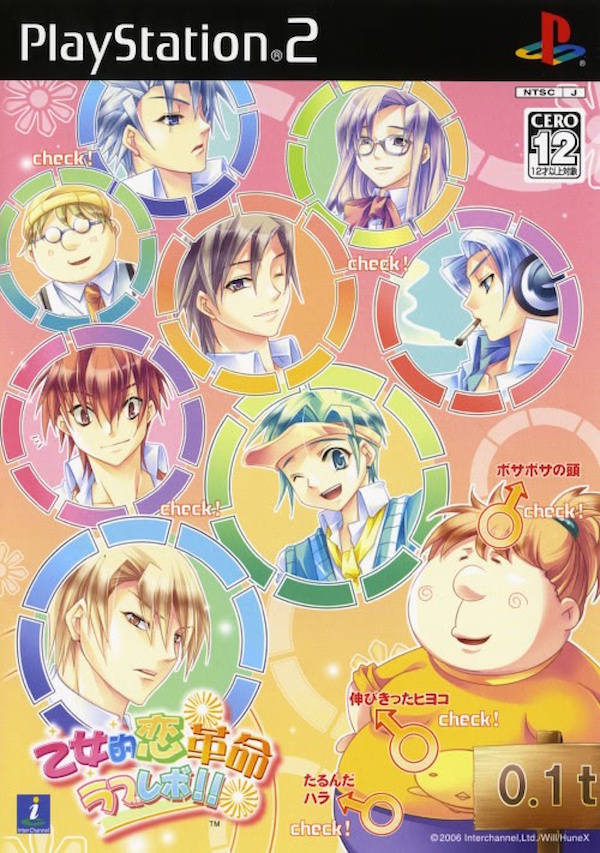
The name of the Episode itself is a reference to the 2006 otome game
"Otometeki Koi Kakumei ★ Love Revo!!". It is also sometimes called
"Girlish Body Revolution" in English. The game revolves around the
female protagonist, Hitomi Sakuragawa, formerly a very beautiful girl
who won countless beauty contests, who over time becomes increasingly
fat, reaching a weight of 100 kilograms by the time the game begins.
The goal of the game is then to help Hitomi attract the game's various
male love interests while working to reduce her weight.
Similarly, in this Episode, "Girlish Body Restoration ★ Lucky Revo!!",
the protagonist must help Kagami, Miyuki, and Kuroi Sensei lose weight
in order to fit into their dresses for the beauty pageant that's going
to be held during the Outou Festival.
|
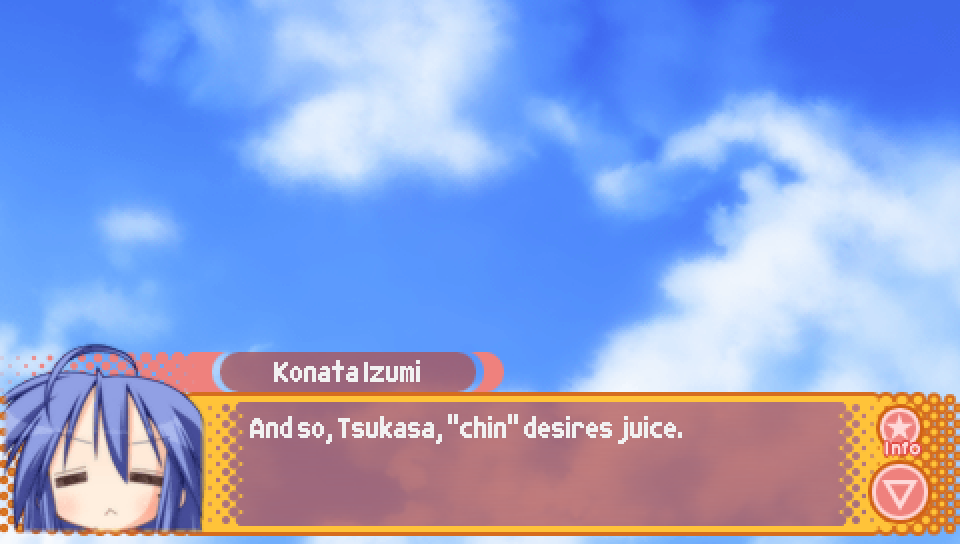
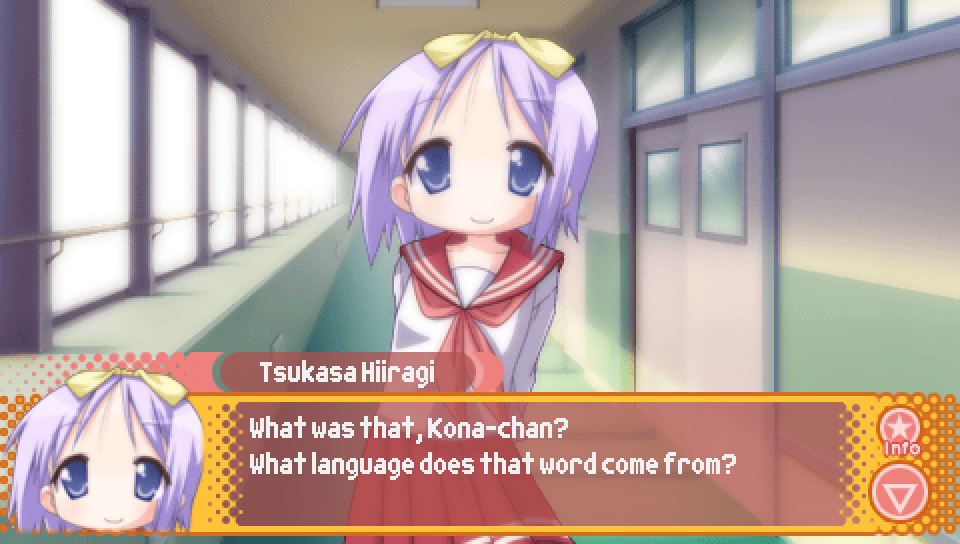
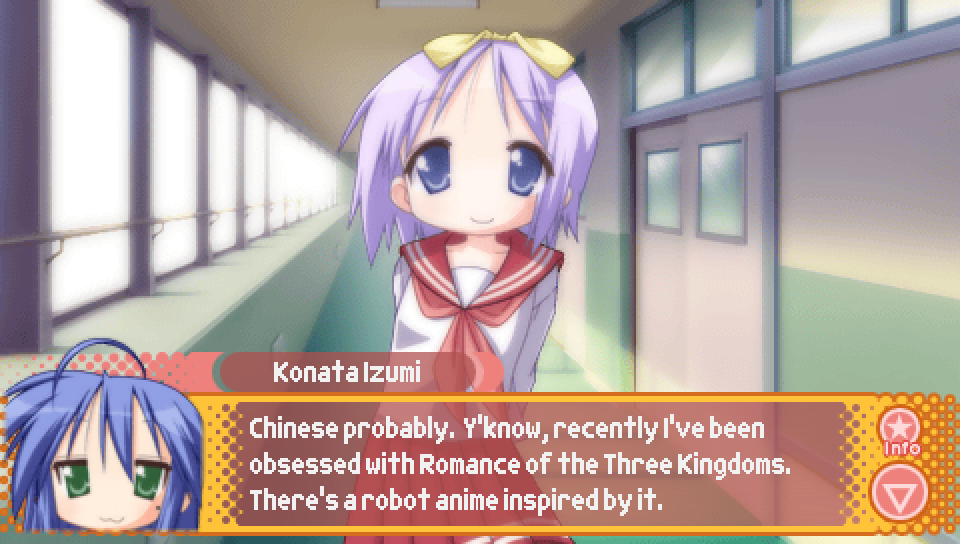
In the intro, Konata and Tsukasa talk about "Romance of the Three Kingdoms", a historical novel taking place
in China following the fall of the Han dynasty, in which China broke off into the titular three kingdoms of
Cao Wei, Shu Han, and Eastern Wu. It's one of the most notable and influential works of literature in East Asia.
Consequently, as Konata goes on to talk about after the above lines, it has many adaptations and alternative
versions made based on it.
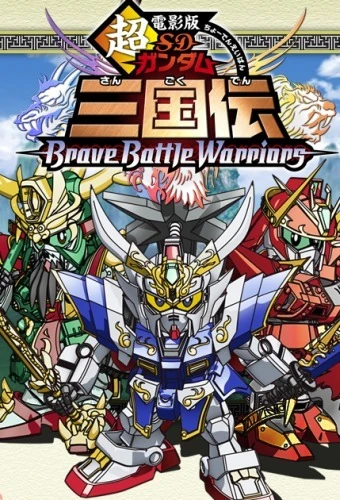
The "robot anime inspired by it" Konata is talking about is "SD Gundam Sangokuden Brave Battle Warriors",
an adaptation that substitutes characters in "Romance of the Three Kingdoms" with different mobile suits
from the Gundam franchise.
As for the word "chin" that Konata says is Chinese, she's talking about the first person pronoun
朕, which when used in Japanese is romanized as "chin" and is how Konata pronounces it.
This pronoun is similar to the "royal we" in English, used by the emperor to refer to himself.
|
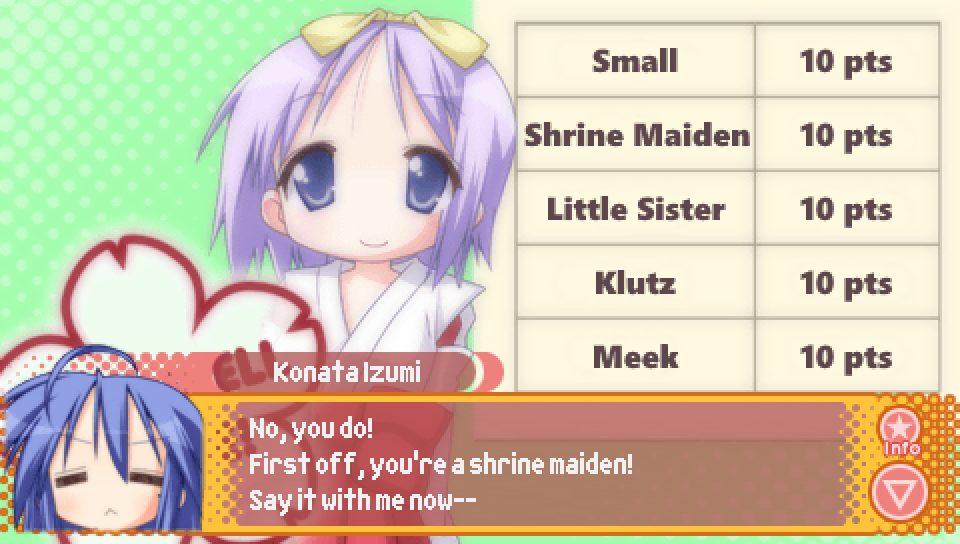
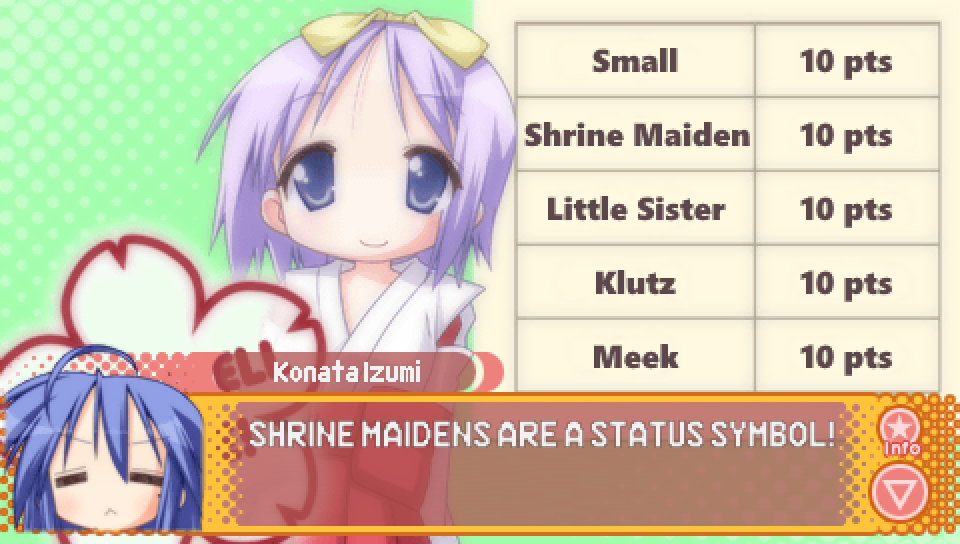
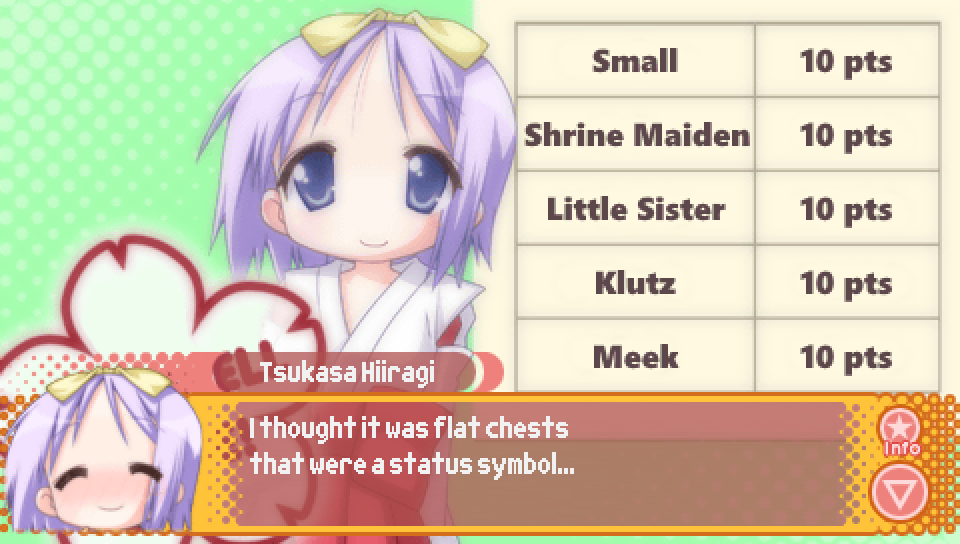
Once again, this moment from the intro is a reference to the "flat chests are a status symbol" line
Konata is famous for quoting.
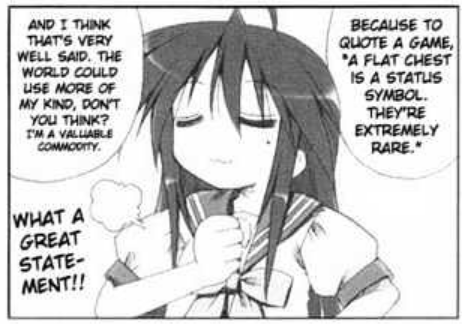
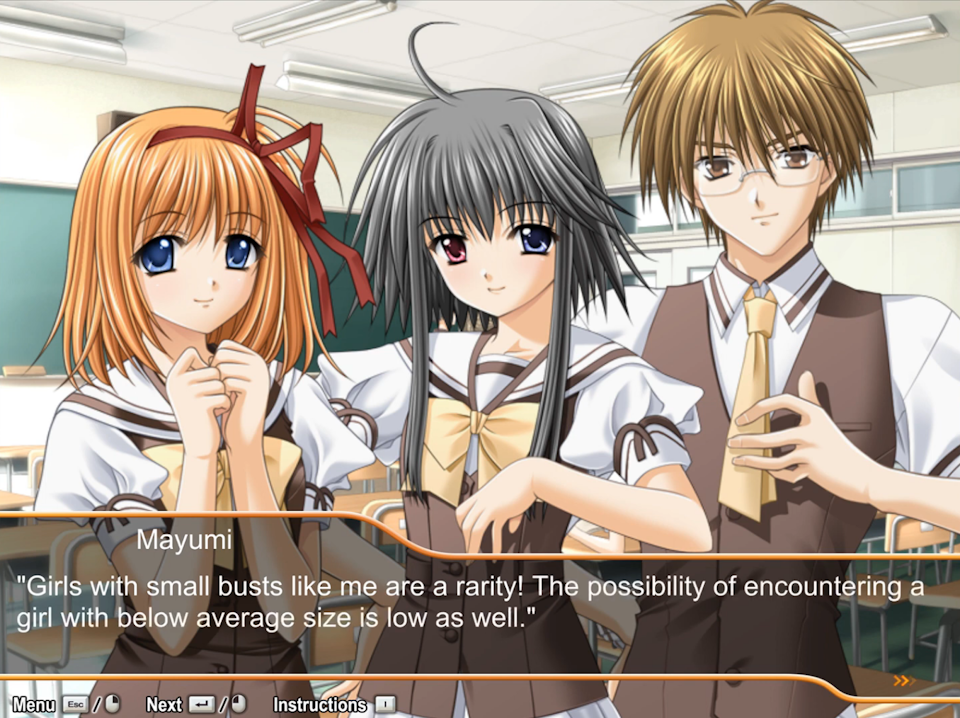
As mentioned in the translator's notes for Episode 2, the game she is quoting is the 2004 visual novel "Shuffle!".
Specifically the character Mayumi Thyme, who takes a lot of pride in her small bust.
|
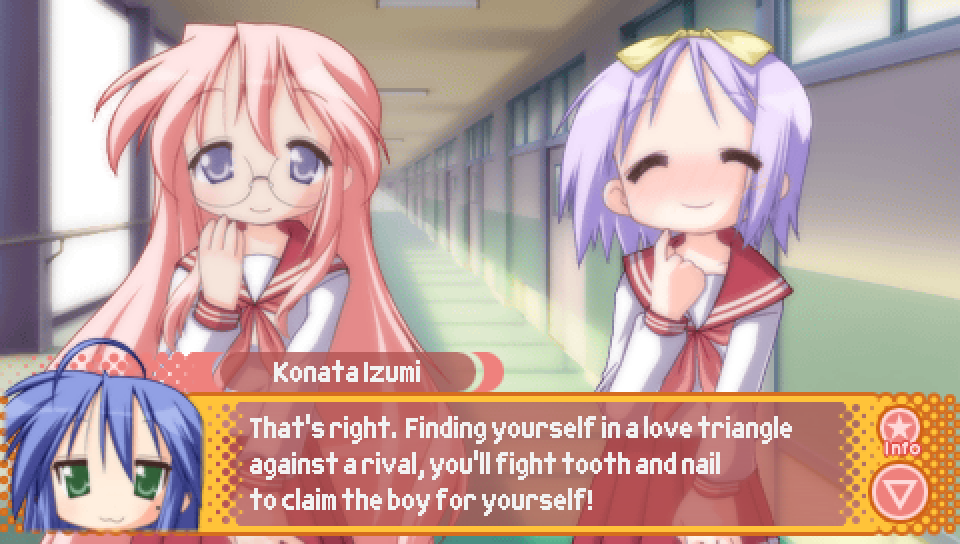
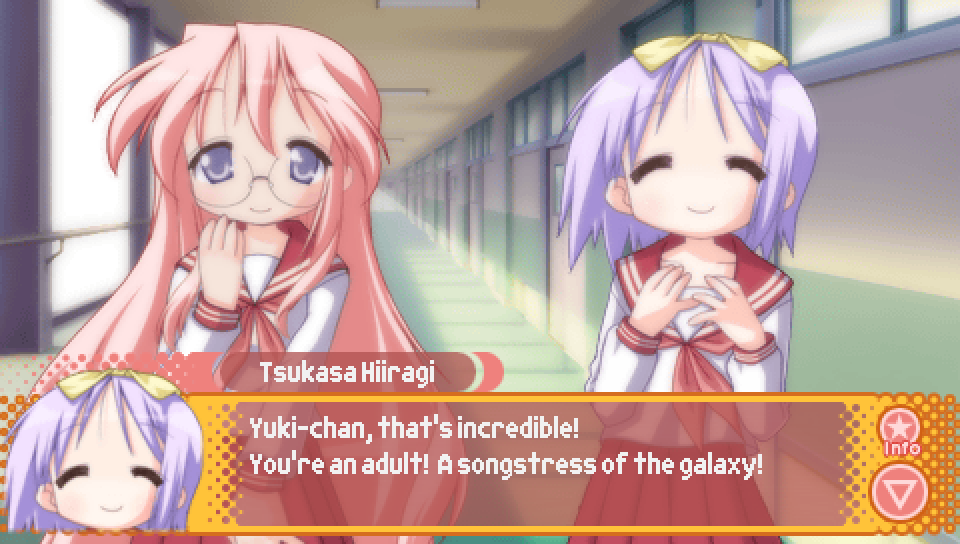
In the intro, Konata tells Miyuki that she has the vibes of a yandere, leading to the above lines as she
explains what a yandere is.
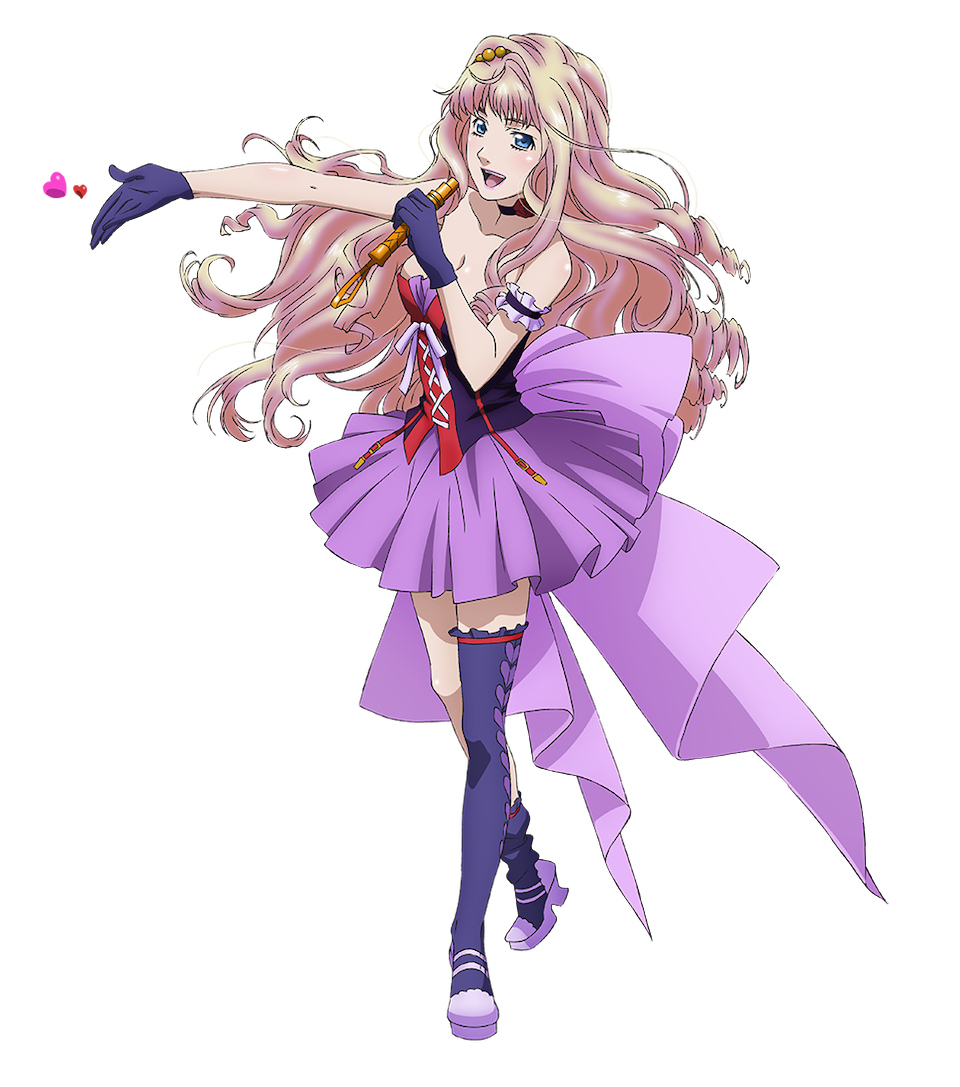
This is a reference to the character Sheryl Nome from the anime "Macross Frontier", who is voiced by
the same person who voices Miyuki, that being Aya Endou. In the universe of "Macross Frontier", Sheryl Nome
is a famous singer who aims to become the best in the galaxy, which is why Tsukasa calles Miyuki a
"songstress of the galaxy". Though, ironically, Aya Endou doesn't actually perform Sheryl's singing.
That's instead done by the Japanese singer, May'n.
Additionally, while it is true that, matching Konata's description, the events of Macross Frontiers
has Sheryl Nome in a love triangle, Sheryl doesn't really have the characteristics most think of
when it comes to yandere, in particular the extreme and often violent lengths they will go to in order
to get the boy they love. In general, Konata's classification of Miyuki as a yandere is admittedly a bit dubious.
|
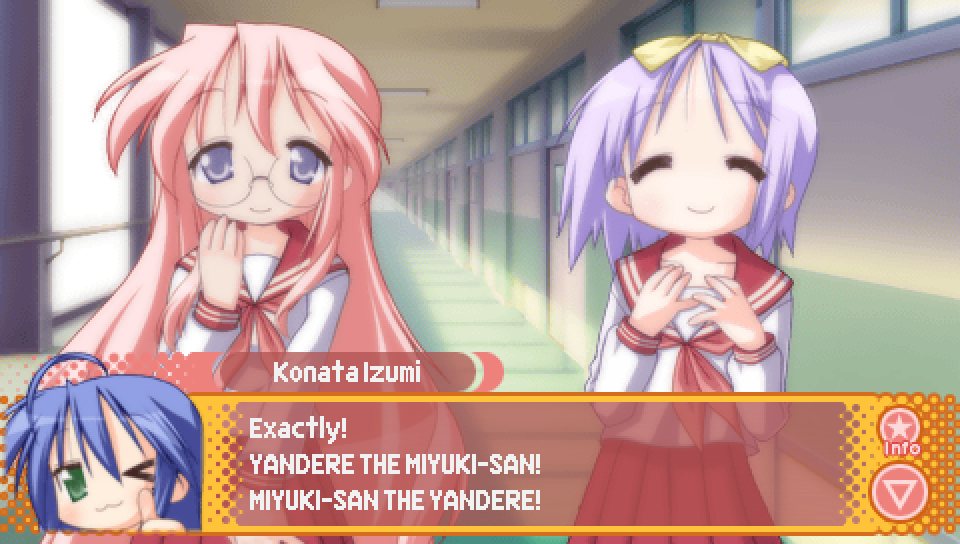
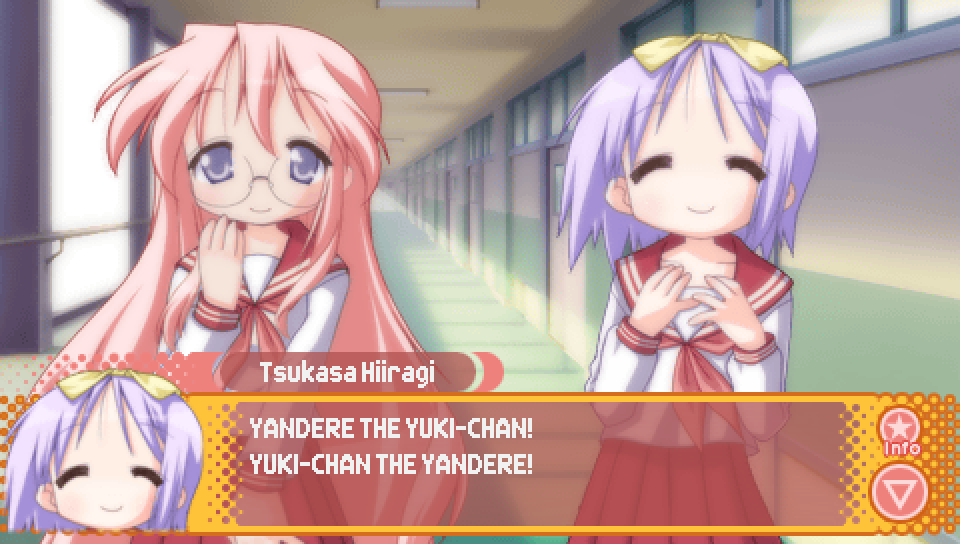
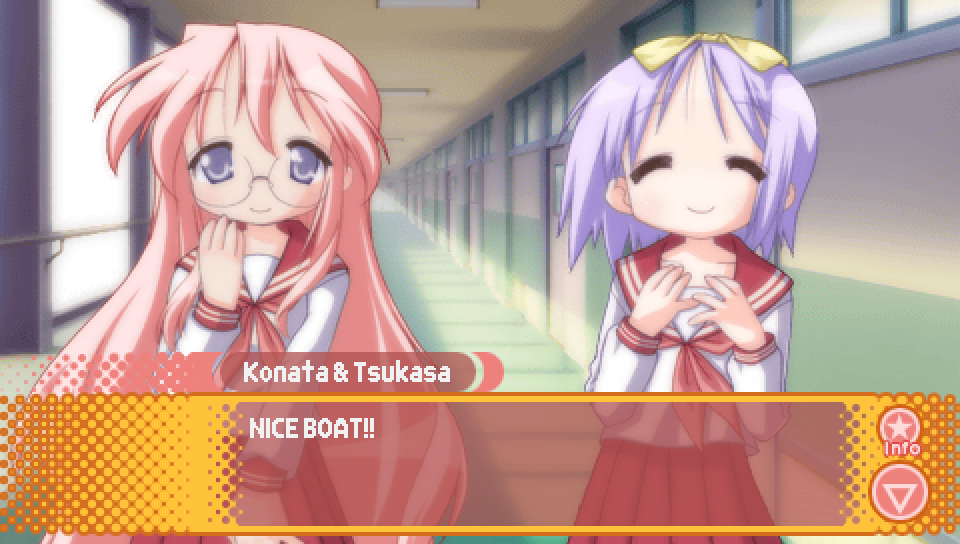
A continuation of Konata and Tsukasa calling Miyuki a yandere following the lines in the previous note.
As mentioned in the translator's notes for Episode 1, this is a reference to a famous 4chan thread,
the "nice boat" thread, reacting to the airing of the final episode of the anime "School Days"
being replaced with scenic live action footage. This decision to not air the episode was due to the
at the time recent axe murder of a teenage girl by her father in Japan, as the "School Days" episode
features similar murder scenes involving characters being killed with a knife and a handsaw.
The connection to yandere is a lot better here compared with the reference to Sheryl Nome, since the
murders in the "School Days" episode were committed by actual yandere characters, those being
Sekai Saionji and Kotonoha Katsura.
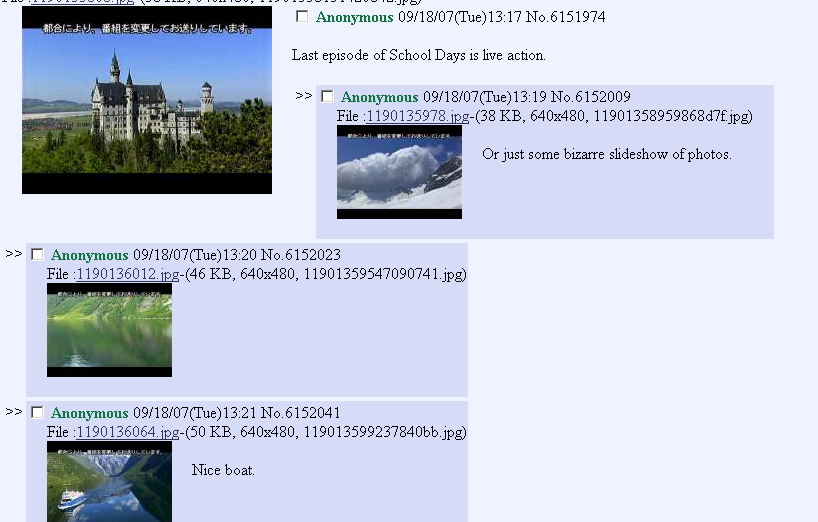
This clip shows the murder scenes contained within the episode that caused its delay.
WARNING -- GRAPHIC CONTENT: https://www.youtube.com/watch?v=9Gd6u8nCIW4
The footage that was aired instead. The "nice boat" appears on screen at the 45 second mark:
https://www.youtube.com/watch?v=YwortdC_o14
|
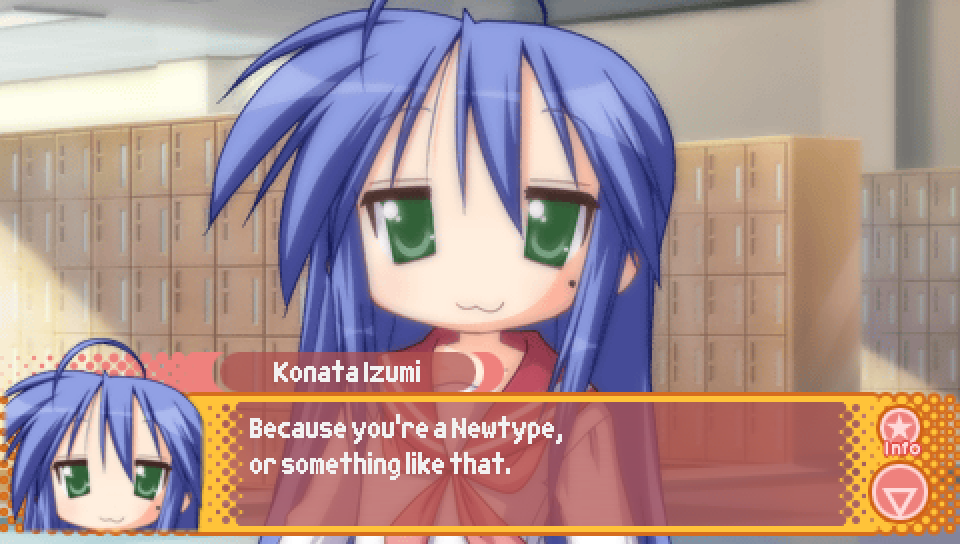
If the protagonist runs into Konata on the way to school on the first day, Konata will say the above line
as an explanation for why he knows the name of his homeroom teacher despite never being told it as far as
he can remember.
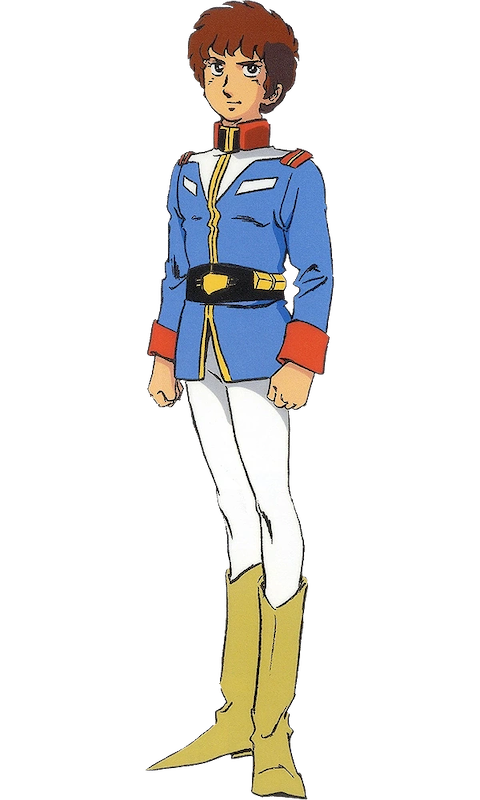
A "Newtype" is an evolved form of human beings in the "Gundam" series that came into being out of a need
for humans to adapt to living in outer space. Amuro Ray, the protagonist of "Mobile Suit Gundam", is probably
the most notable example of a Newtype in the series, though he is far from the only one.
The primary ability of a Newtype that distinguishes them from regular human beings, sometimes referred to
as "Oldtype", is heightened mental awareness and empathy. However, the exact nature of Newtype and their abilities
is not something that is fully understood and can be a bit convoluted. That is, a character being a Newtype
can at times be a hand-wave explanation for how a character is able to do something they logically
shouldn't be able to in the Gundam series.
So, when Konata says that the protagonist inexplicably knows Kuroi Sensei's name "Because you're a Newtype",
she's not necessarily saying that him being a Newtype would actually explain what's going on, but rather that
being a Newtype is a catch-all explanation for anything that doesn't make sense.
|
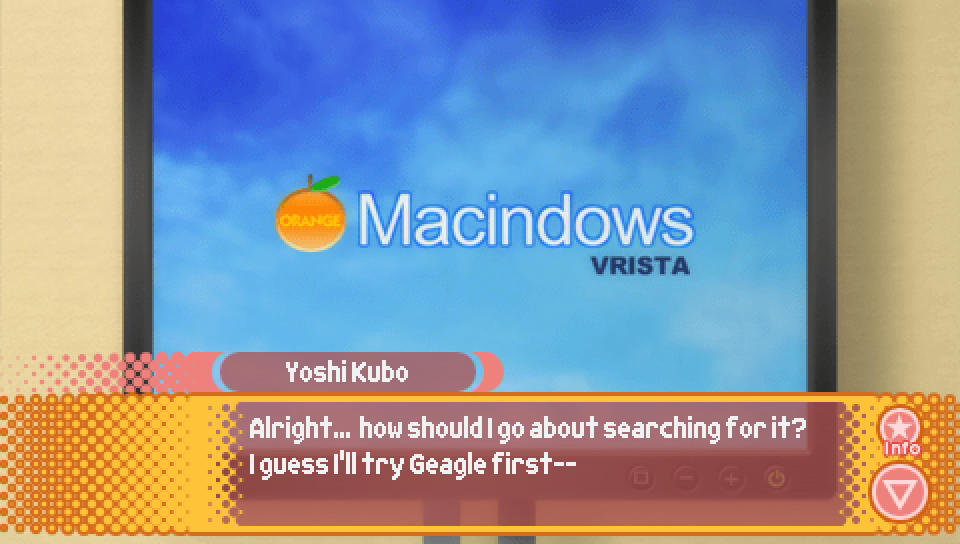
If the protagonist decides to look up the location of the school online before heading out on his first day,
he'll decide the best way to start his search is to try "Geagle".
Though it likely goes without saying, this is in reference to the popular search engine "Google".

Additionally, while it also likely goes without saying, and it is something that's been seen
in Episode 1 as well, the operating system that the protagonist uses, "Macindows VRISTA" by "Orange",
is in reference to the "Macintosh" operating system by Apple and the "Windows Vista" operating system by Microsoft.


|
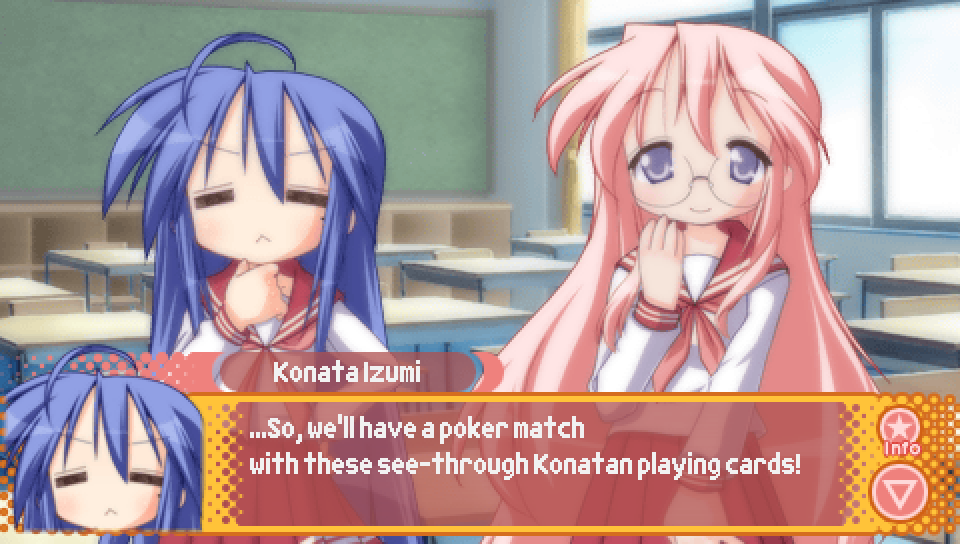
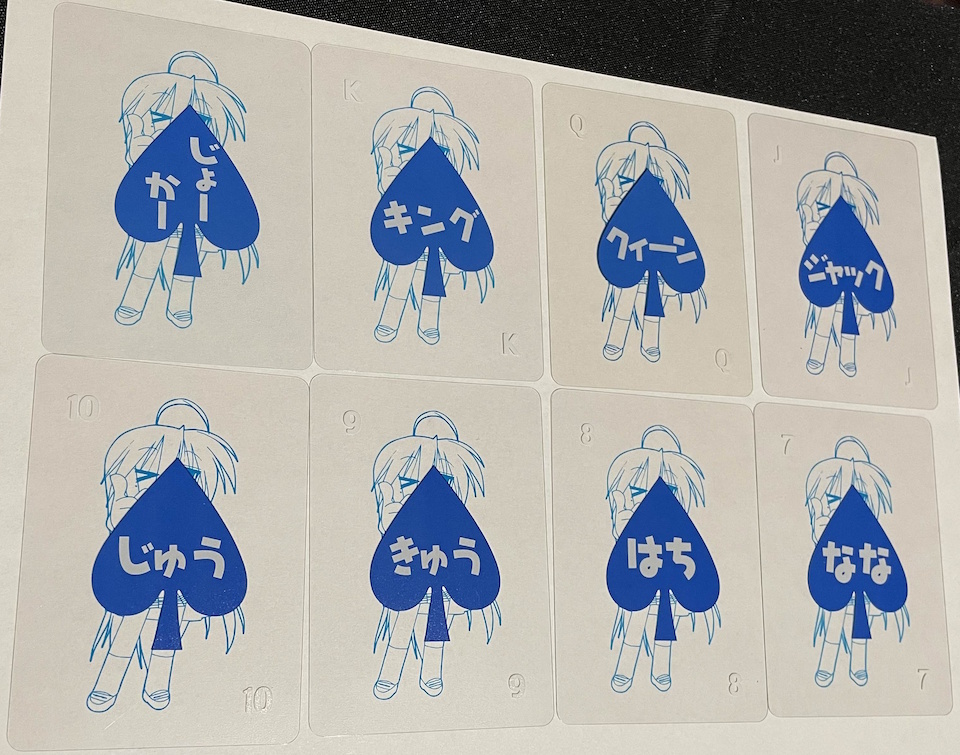
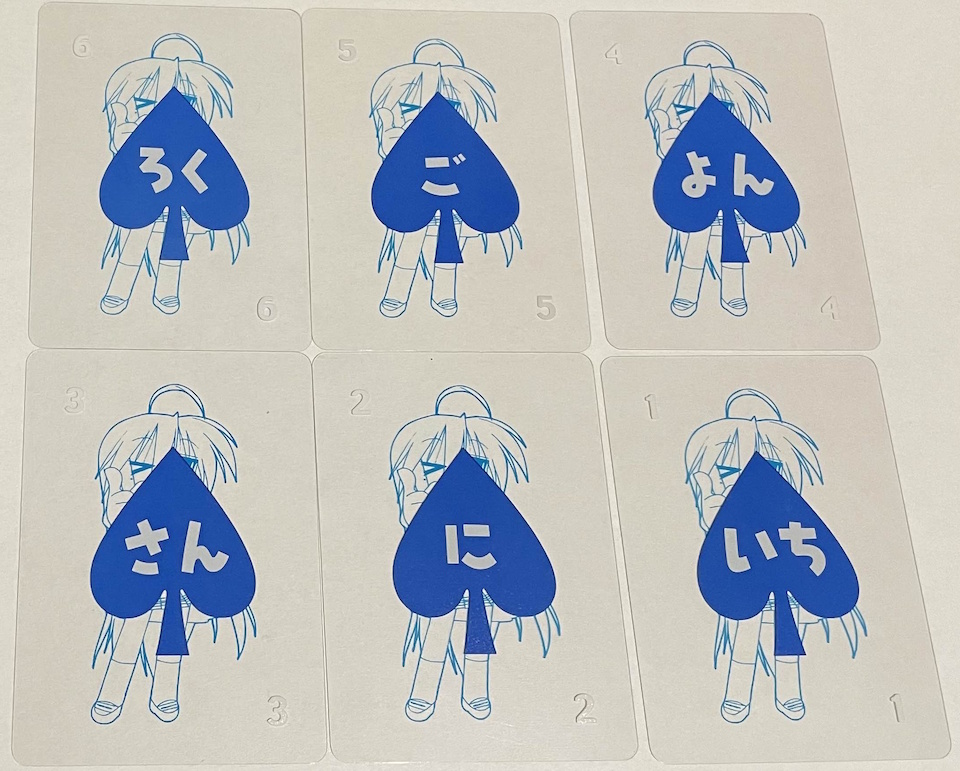
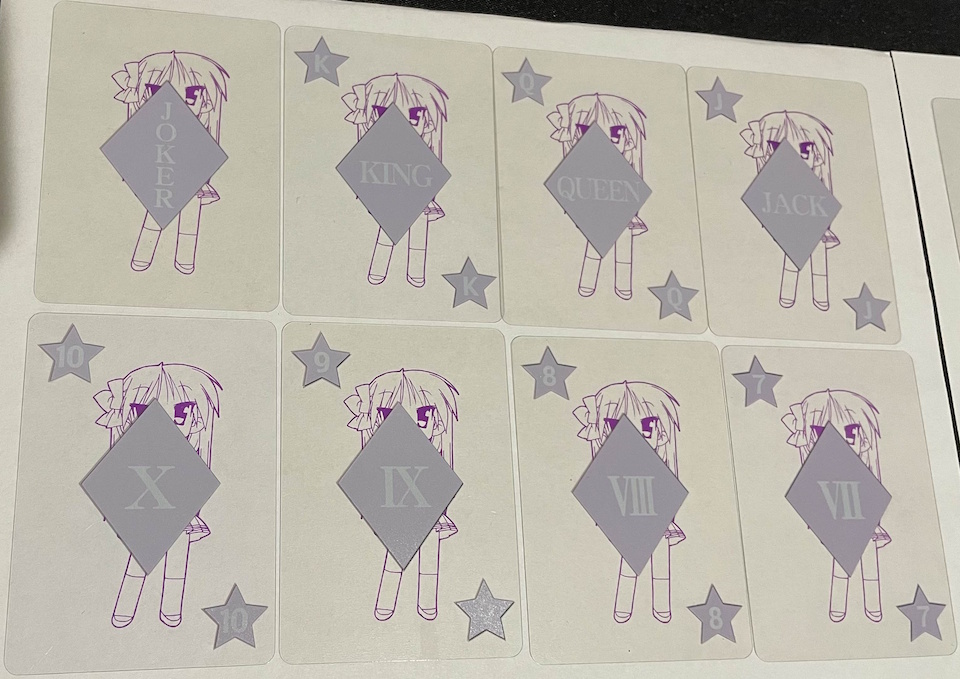
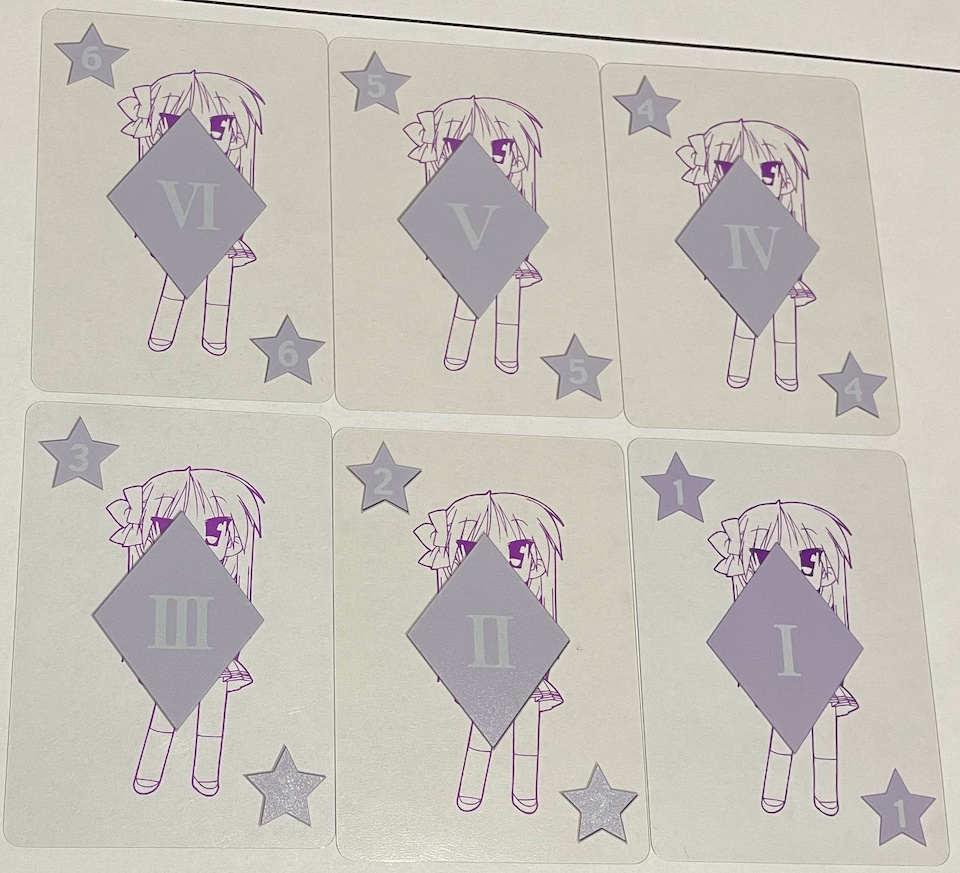
When Konata challenges Miyuki to a game of poker near the start of the Episode, the playing cards
they play with, the "see-through Konatan playing cards", are based on a real set of playing cards
that came as a bonus physical good with the DX pack of the 2007 Nintendo DS game
"Shin Lucky ★ Star Moe Drill ~Tabidachi~".
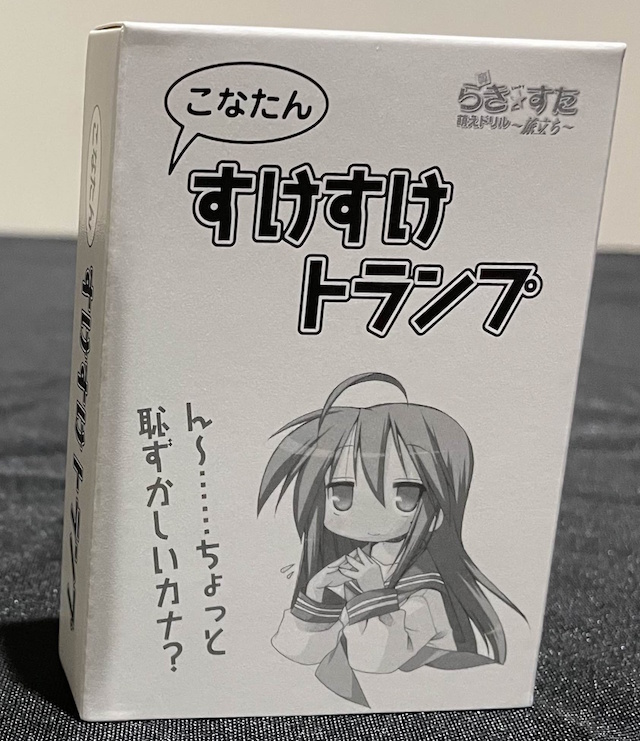
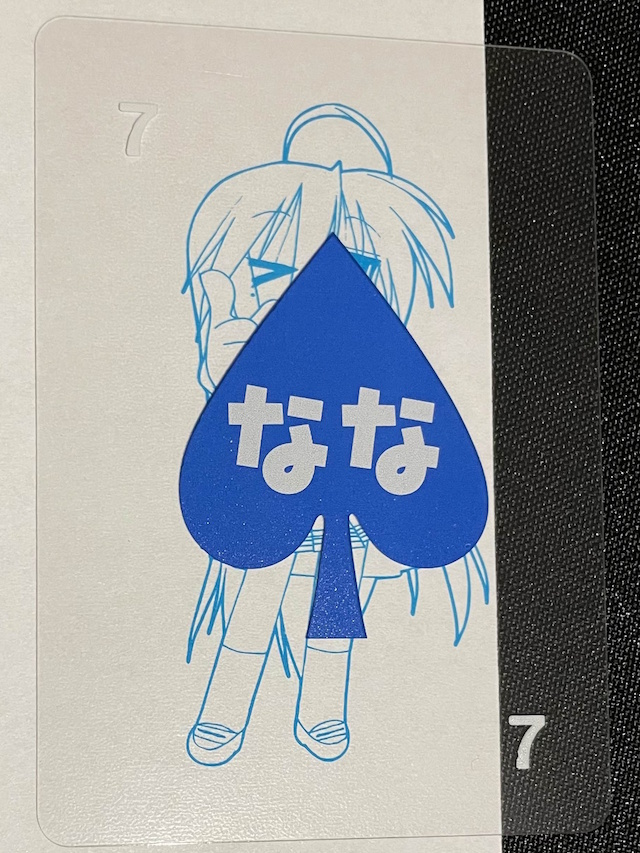
As the name implies, the main feature of the cards is that they are mostly see-through.
Consequently, you are able to see the suit of the card from both sides, and for cards of the
spade suit, you are even able to see the number from both sides as well.
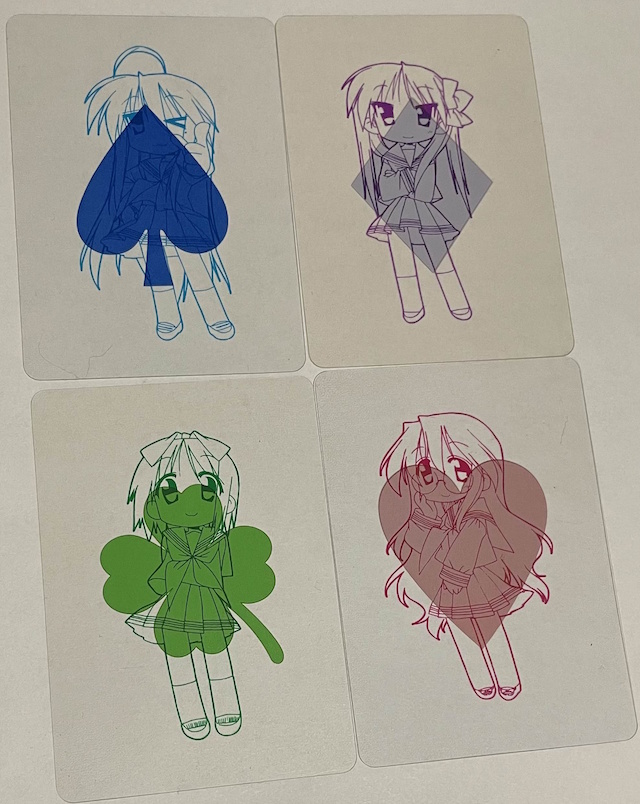
Each suit features one of Lucky Star's main 4 girls.
Konata is spades.
Kagami is diamonds.
Tsukasa is clubs.
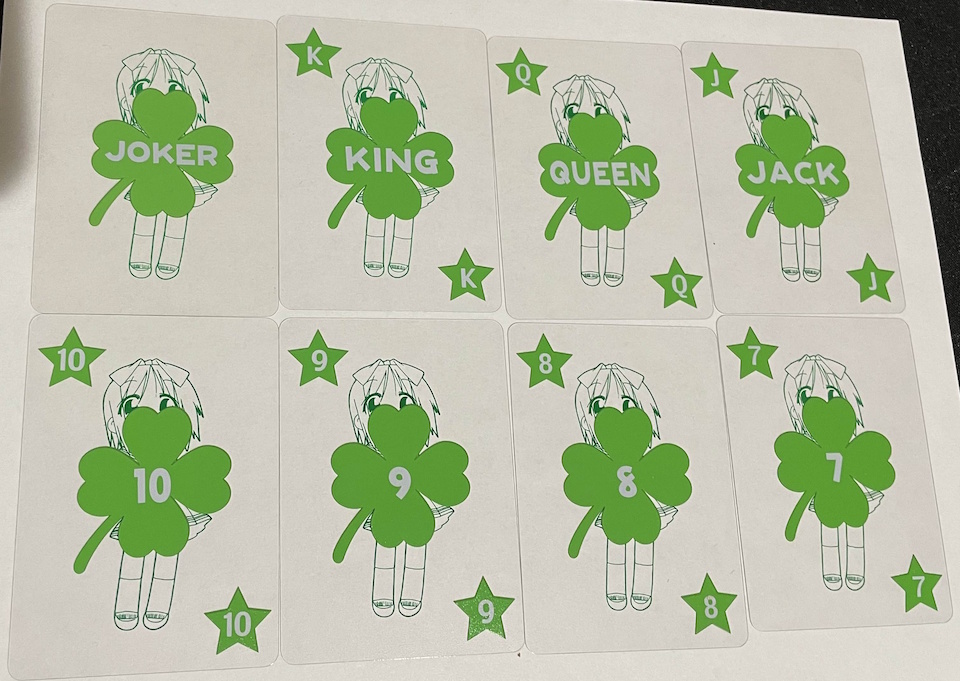
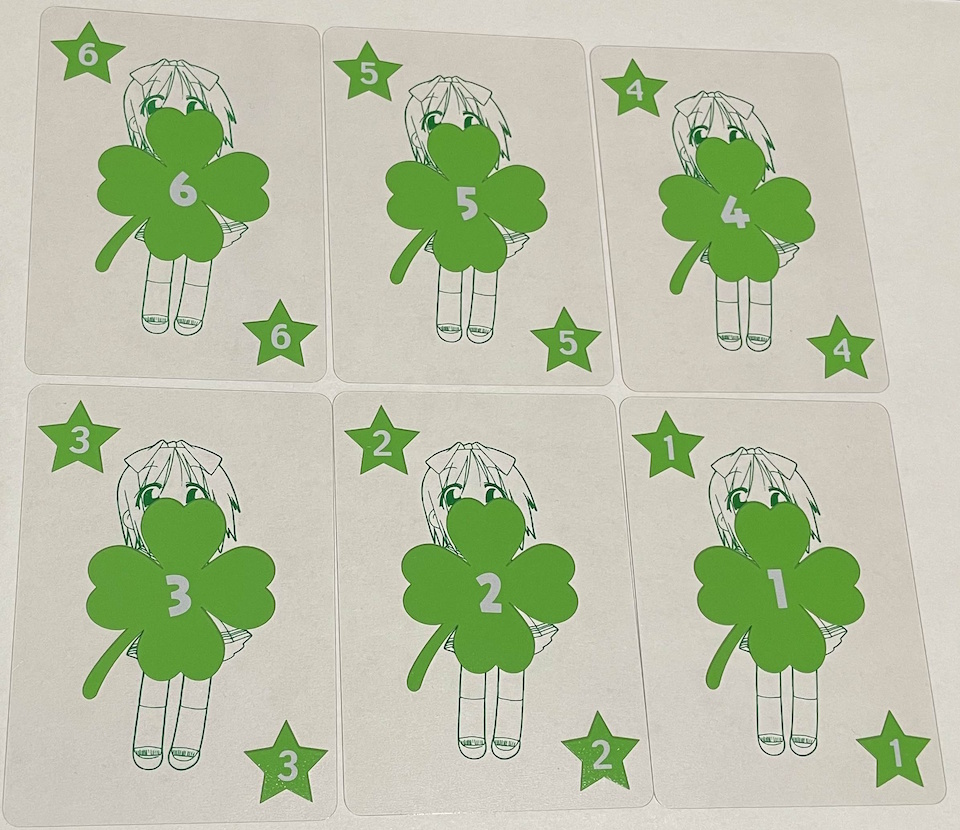
And Miyuki is hearts.
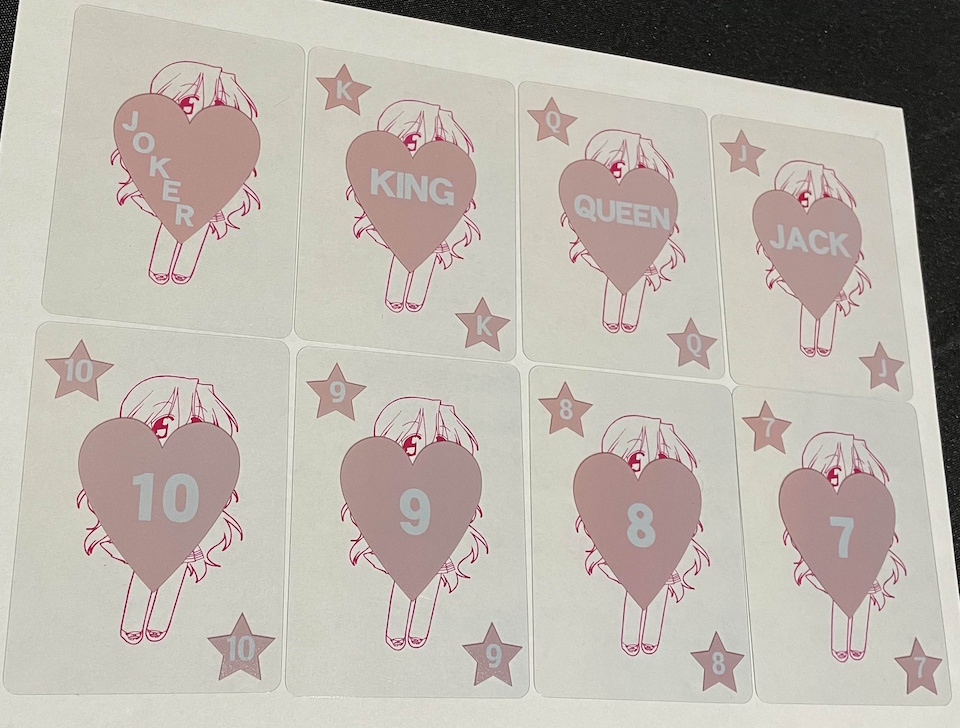
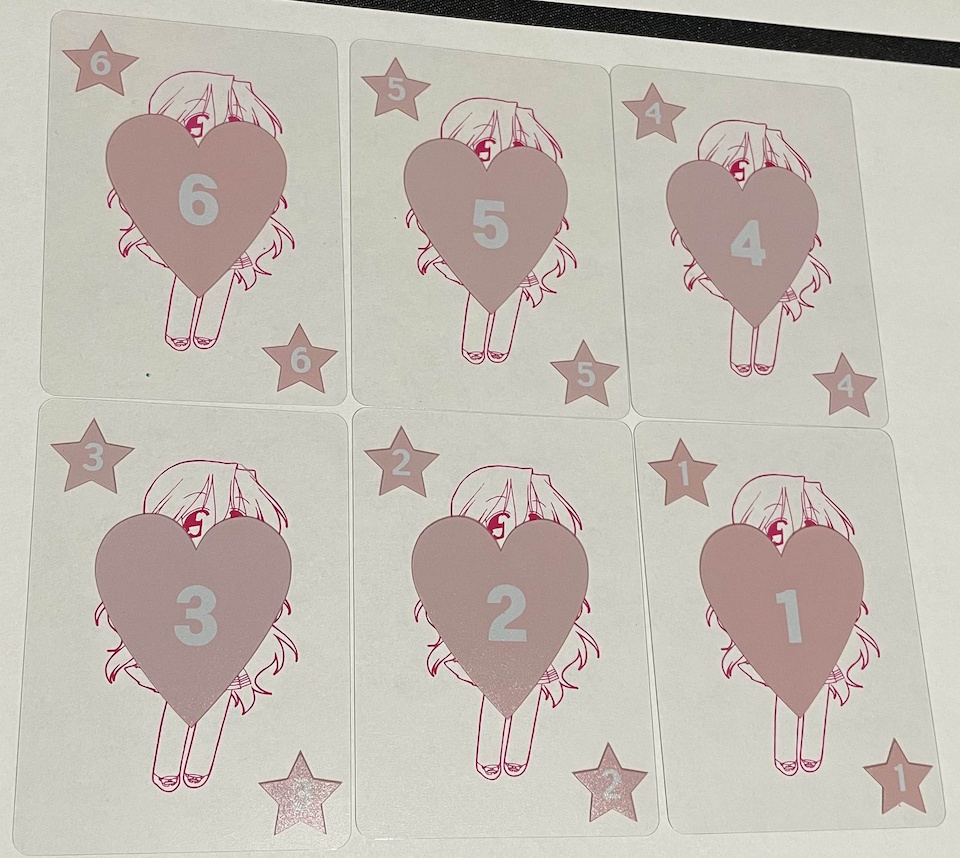
Looking at the CG used during the match--specifically the PS2 version, which allows
one to get a better look at the cards--you can see that they are in fact using these
same playing cards.
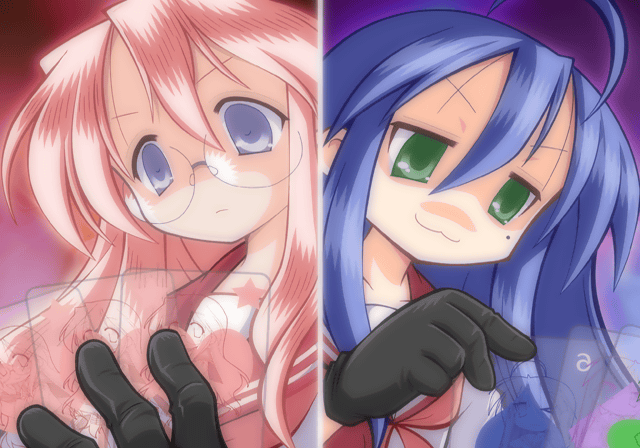
Additionally, the cards themselves and the element of Miyuki and Konata wearing black gloves
during the match are a reference to a variant of Japanese mahjong called "Washizu mahjong".
Washizu mahjong originates from the mahjong series "Akagi" and is named after one of the
series' villians, Iwao Washizu. In this version of mahjong, three of each tile type are
transparent, allowing other players to be able to see them at all times, even when part of
another player's hand. Players are also required to handle the pieces with black gloves so as to not
create smudges and thus prevent the transparent pieces from being seen through.
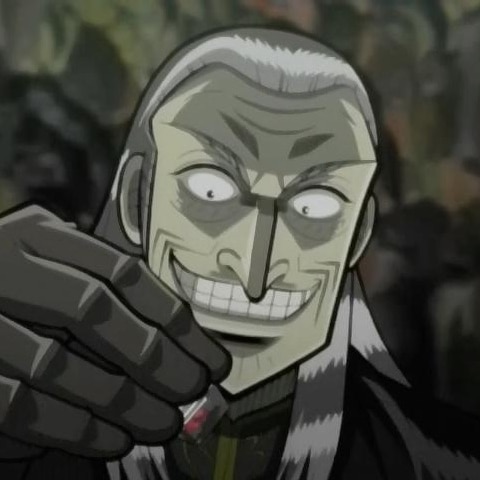
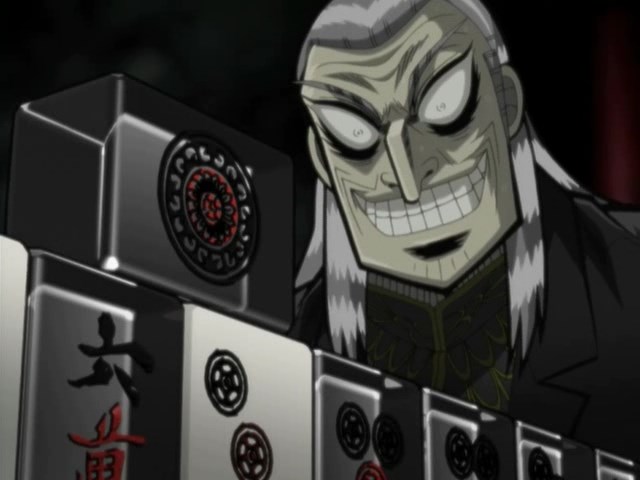
A clip from "Agaki" where Akagi beats Iwao Washizu in a game of Washizu mahjong
can be viewed here (English subtitles are available if enabled in the YouTube player):
https://www.youtube.com/watch?v=vAkUFHP1iUg
|
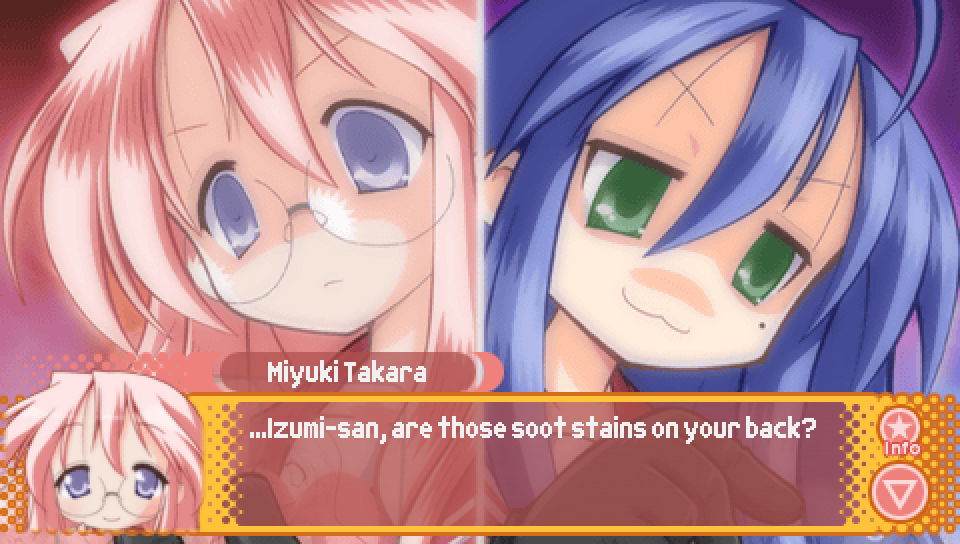
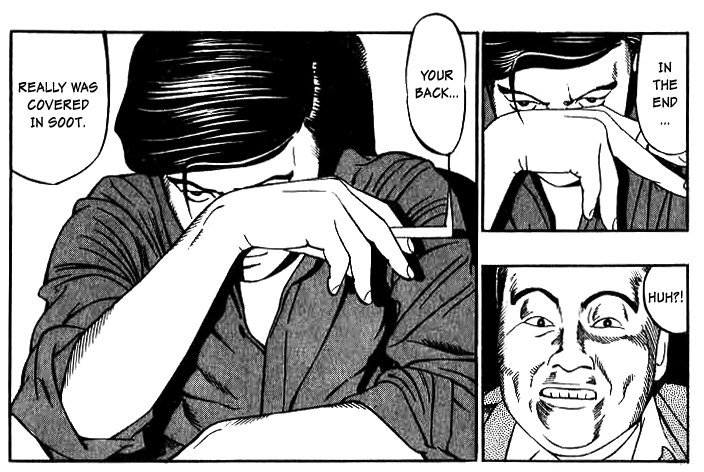
During the poker match between Konata and Miyuki,
Miyuki says the above line as part of their banter.
This line is in reference to a famous line from the mahjong series "Mahjong Hishouden: Naki no Ryuu",
in which the protagonist, often referred to as his title "Ryuu", meaning "dragon", says something similar
to his opponent just before beating them in a game of mahjong. The exact meaning of this line is left
up to interpretation, but it's said in contrast to something a yakuza leader once told Ryuu during a mahjong match
prior to his assassination, which was that he had the burden of thousands of people on his back. One possible
interpretation of this line is that a back covered in soot doesn't hold the burden of anyone, meaning that such
a person is not depended on by anyone and therefore is unimportant.
|
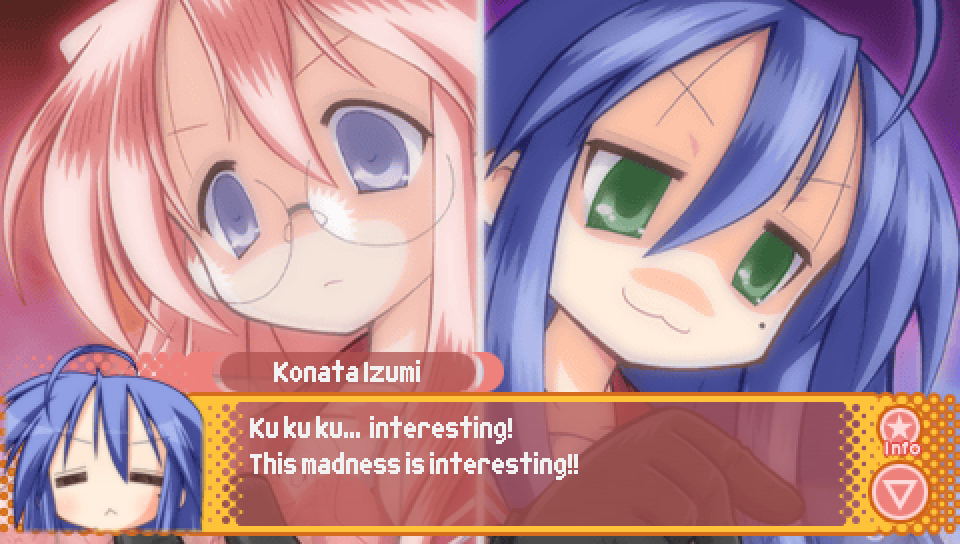
During the poker match between Konata and Miyuki,
Konata says the above line as part of their banter.
This line is in reference to a famous line from the mahjong series "Akagi".
During a pre-match confrontation against an opponent named Ichikawa, the titular character,
Shigeru Akagi, forces Ichikawa into playing Russian roulette. However, Ichikawa confidently
allows Akagi to attempt to fire at him, knowing it wasn't the bullet's time to fire based
on the number of times he heard the chamber revolve as Akagi loaded the gun.
However, Ichikawa then forces Akagi to take a turn, placing the gun into Akagi's mouth,
leading to Akagi saying the line in question.
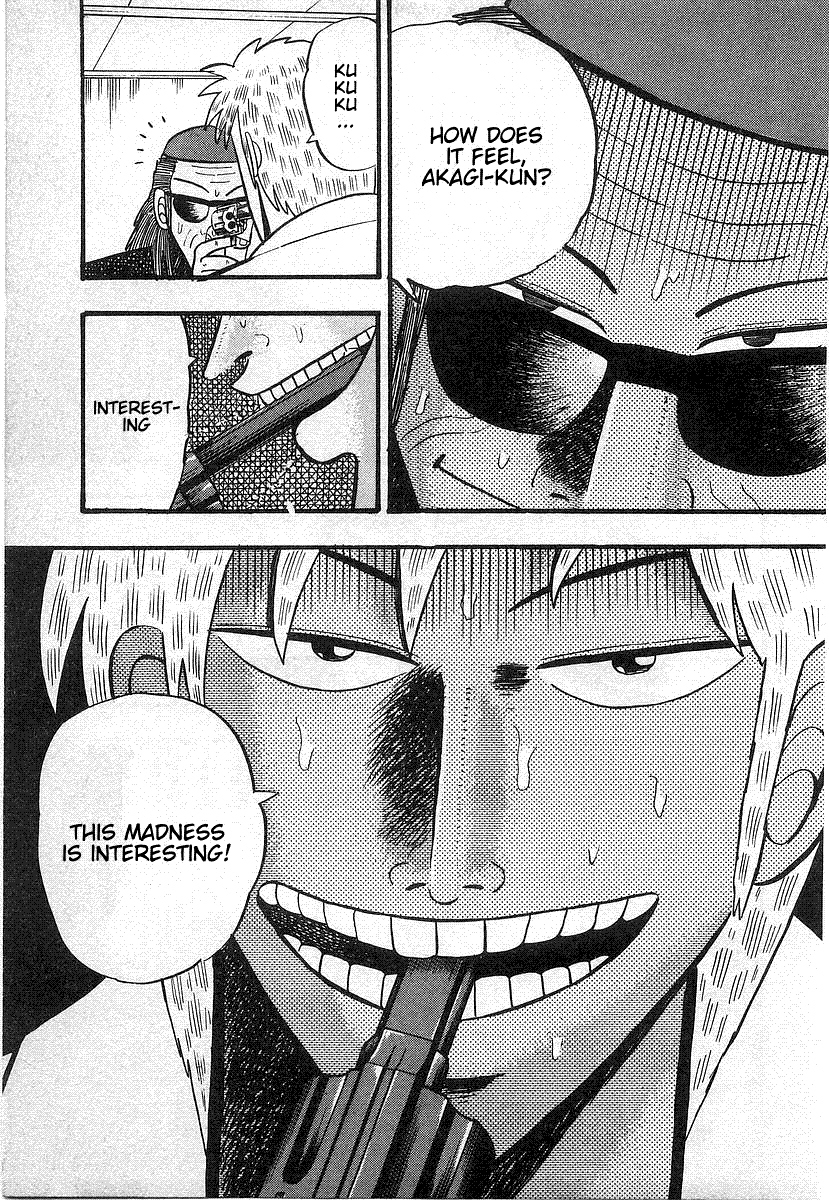
It's worth noting that this represents a rare moment in which Akagi is genuinely shaken up,
as based on the number of times Ichikawa said he heard the chamber revolve, the next shot
was certain to be the one that would discharge the bullet. Akagi trusted that Ichikawa's
hearing was infallible due to the fact that Ichikawa is blind, even though it would turn out
that Ichikawa had actually based the assumption that he wouldn't be shot more on chance
than his hearing, and so Akagi ends up surviving.
Thus, the kind of "madness" Akagi and also Konata are referring to is one
in which you come face-to-face with what you perceive to be certain death.
|
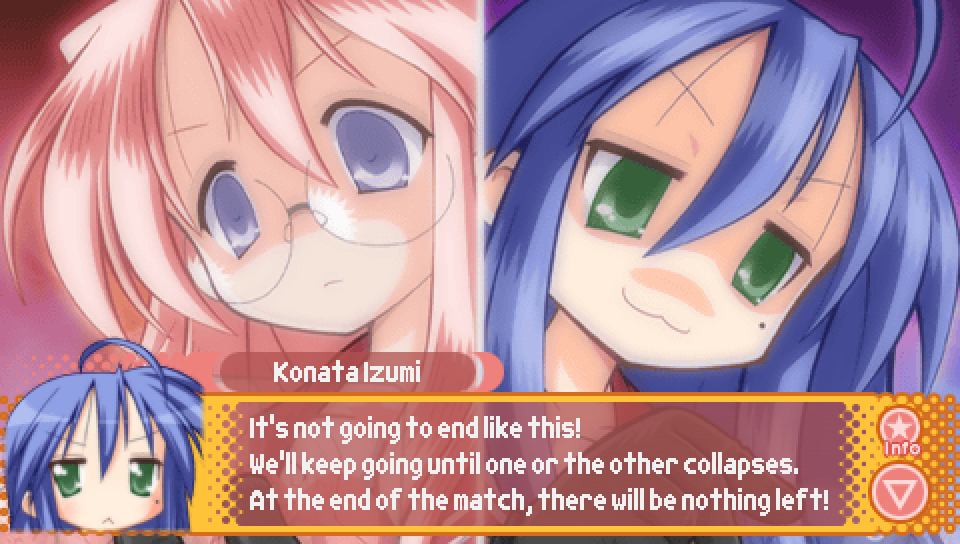
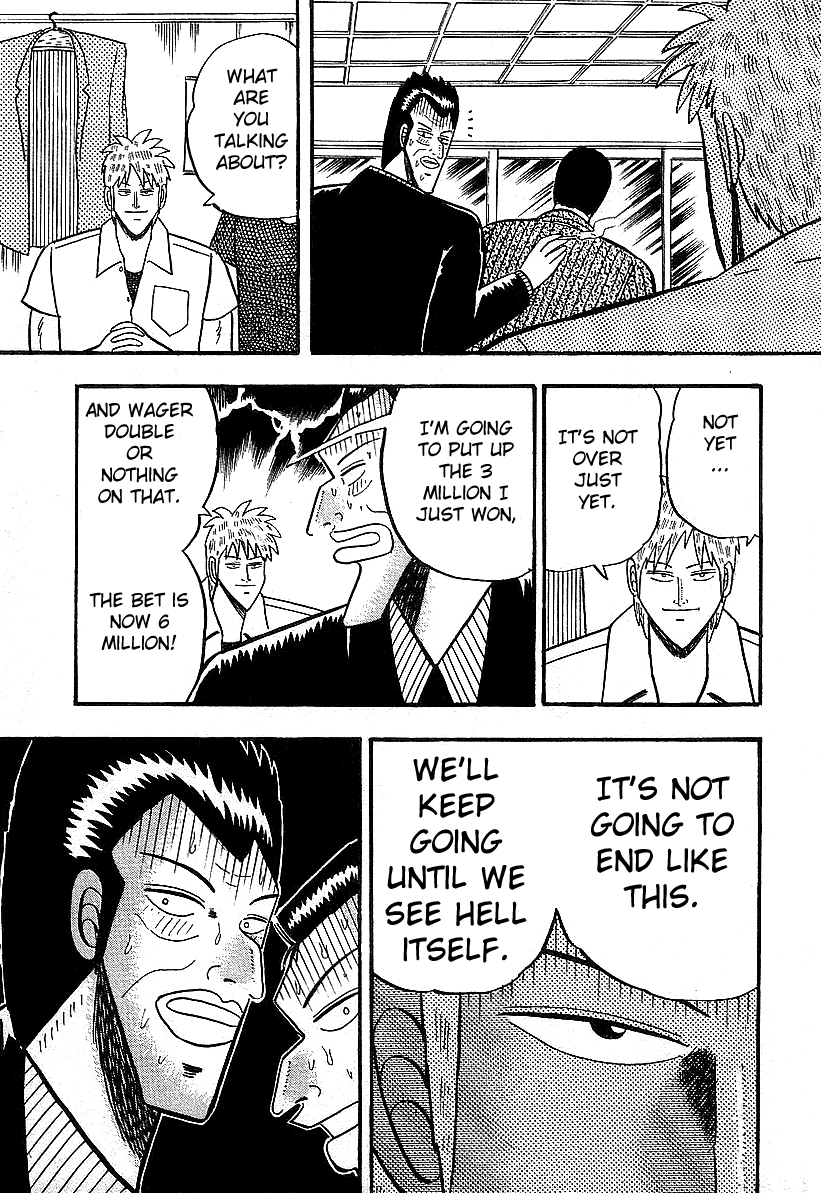
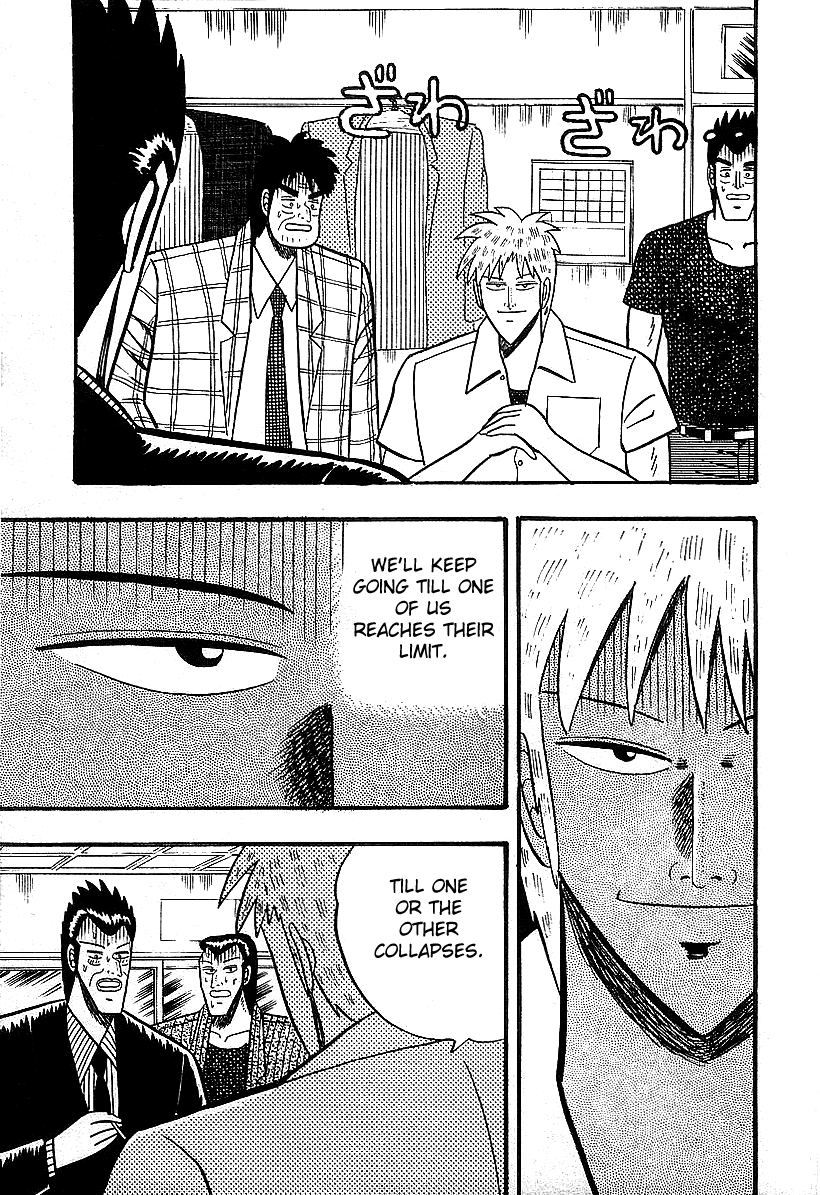
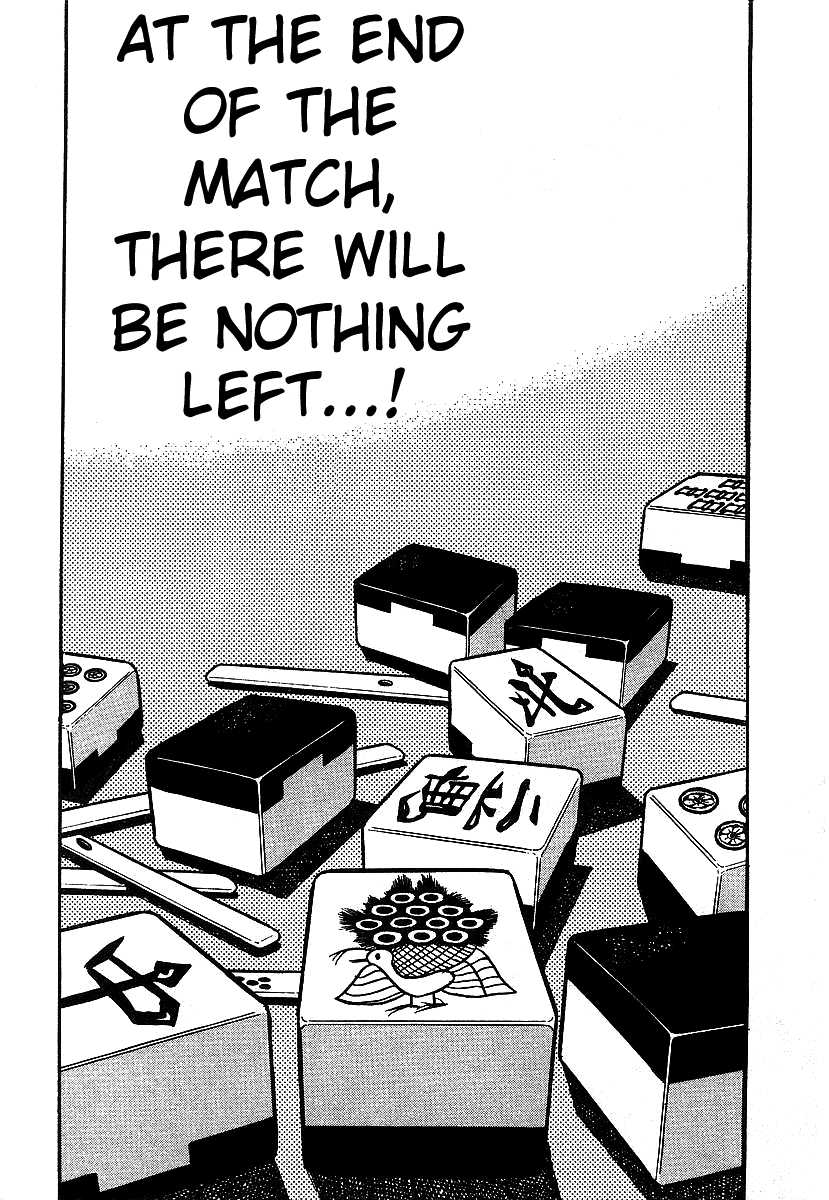
During the poker match between Konata and Miyuki,
Konata says the above line as part of their banter.
This line is in reference to a famous series of lines from the mahjong series "Akagi".
After beating the yakuza's rep player Keiji Yagi and helping character Nangou
repay his debt of 3 million yen, Shigeru Akagi doubles down and rematches Yagi
wagering an additional 3 million yen on top of the 3 million yen debt.
After winning a second time, Akagi doubles down again, leading to him saying the lines in question,
declaring his resolve to beat his opponents to the fullest extent possible.
|
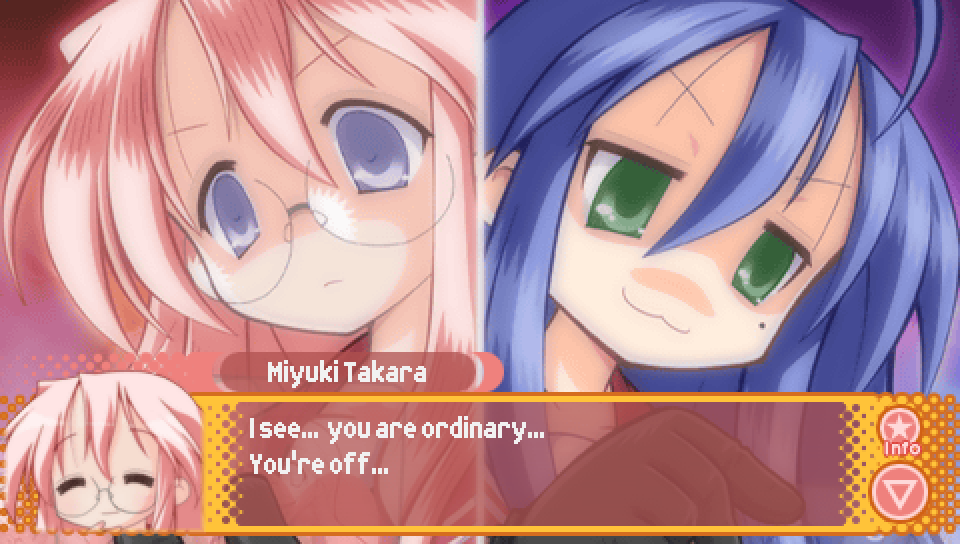
During the poker match between Konata and Miyuki,
Miyuki says the above line as part of their banter.
This line is in reference to a famous series of lines from the mahjong series "Akagi".
In a confrontation against an Akagi imposter, the imposter asks Akagi to predict
what a certain mahjong hand will be. When Akagi correctly predicts it, the false Akagi
goes on to explain how if one understands mahjong and probability theory well enough
that the correct answer is obvious, and thus Akagi's correct prediction was merely that
rather than any greater ability. This then leads to the real Akagi calling out the
imposter as being incorrect in his assertion and that he doesn't operate off of probability.
To operate off of chance is a sign of an ordinary person.
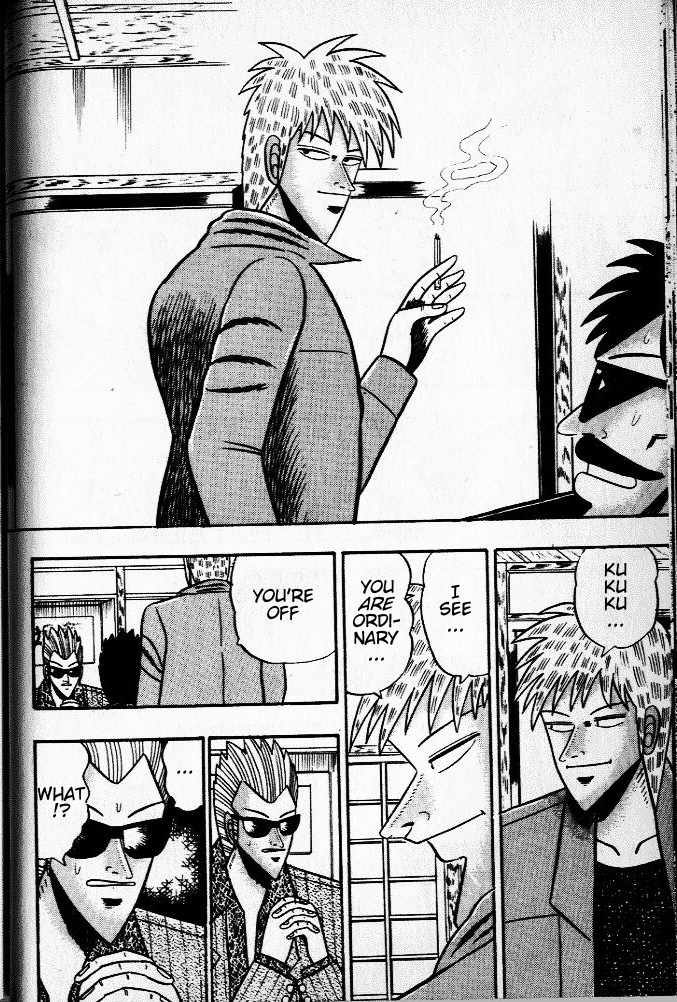
This line from Akagi thus further demonstrates his character of being someone who doesn't
deal with concepts of "fate" and "chance" as seen with the "this madness is interesting" line from before.
It also serves to call out the Akagi imposter as not truly understanding Akagi's true nature,
revealing himself as a fake. Thus, one could interpret Miyuki's choice to reference this line as her
calling Konata out as being nothing but an Akagi impersonator. Someone that can quote his words but doesn't
truly embody his true nature nor possess his true ability.
|
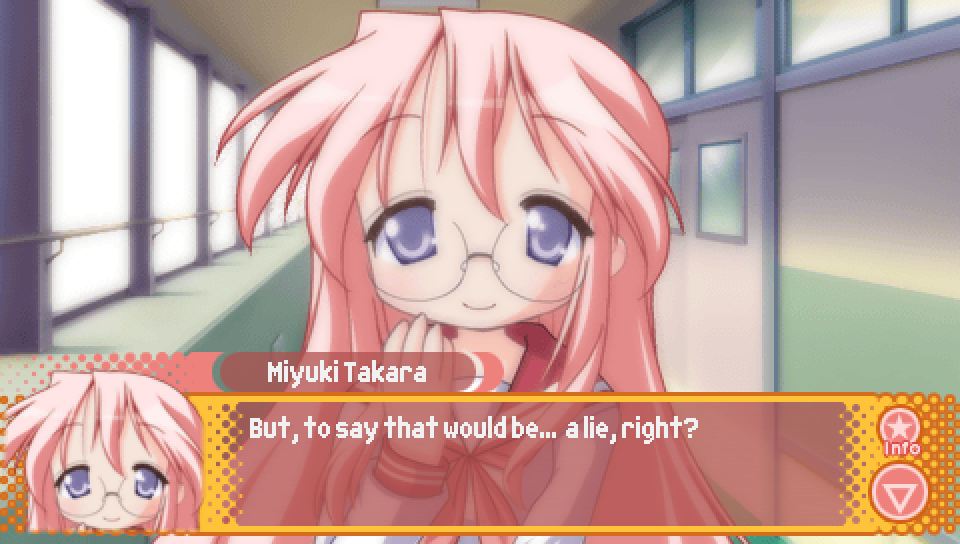
When Miyuki, Kagami, and Nanako interrogate the protagonist about whether he saw anything after
accidentally walking in on Kagami changing, if the protagonist responds by saying that he saw
nothing, the above interaction between the protagonist and Miyuki will play out.
The overall tone of voice and speaking patterns Miyuki uses as she presses the protagonist
to admit that he was lying and that he did in fact see things is based on the tone of voice
and speaking patterns used by Kotonoha Katsura in the ending of "School Days". In that ending,
Kotonoha interrogates Sekai Saionji about her supposed pregnancy, in which she claims to be
carrying protagonist Makoto Itou's child. Through that interrogation and eventual murder of
Sekai to open up her stomach and find no child inside, Kotonoha is able to unwravel Sekai's lie
and show that she was never pregnant, and only pretended to so that she could have Makoto for herself.
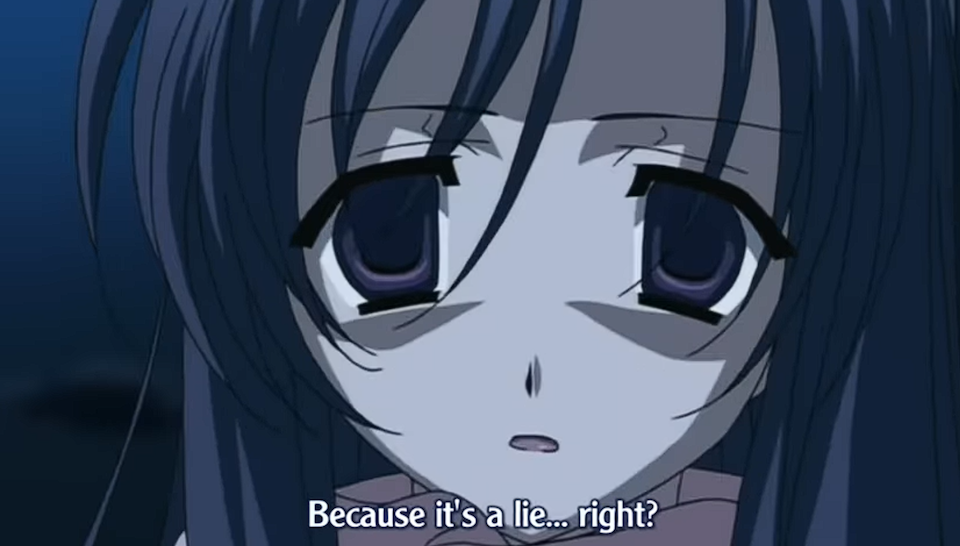
The moment in question can be seen here from 3:55 to 6:38
WARNING -- GRAPHIC CONTENT: https://www.youtube.com/watch?v=9Gd6u8nCIW4&t=235
|
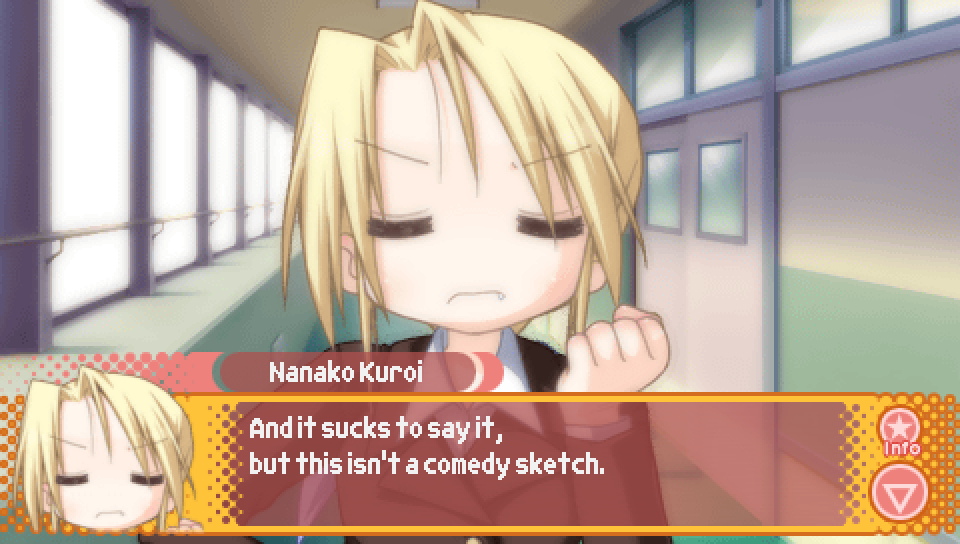
When Miyuki, Kagami, and Nanako interrogate the protagonist about whether he saw anything after
accidentally walking in on Kagami changing, if the protagonist responds by saying that he forgets,
Nanako will tell him that he's funny and should take up comedy. However, she also tells him that,
much to his misfortune, this is not a comedy sketch and ends up punching him.
Though it's something that's a bit lost in translation since the sentence structure cannot match
one-to-one as easily in English since this moment is about how the situation is NOT a comedy sketch,
this is another reference to Sleggar Law's "It sucks, but this is war, after all"
saying from the series "Mobile Suit Gundam", as we've seen in the notes for previous Episodes.
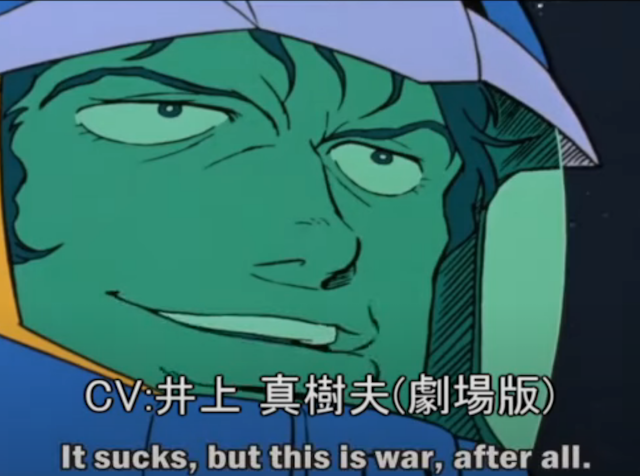
A clip showing two different instances of Sleggar saying the line, each with a different voice actor,
can be seen here.
https://www.youtube.com/watch?v=rxVw5qKx7T8
|
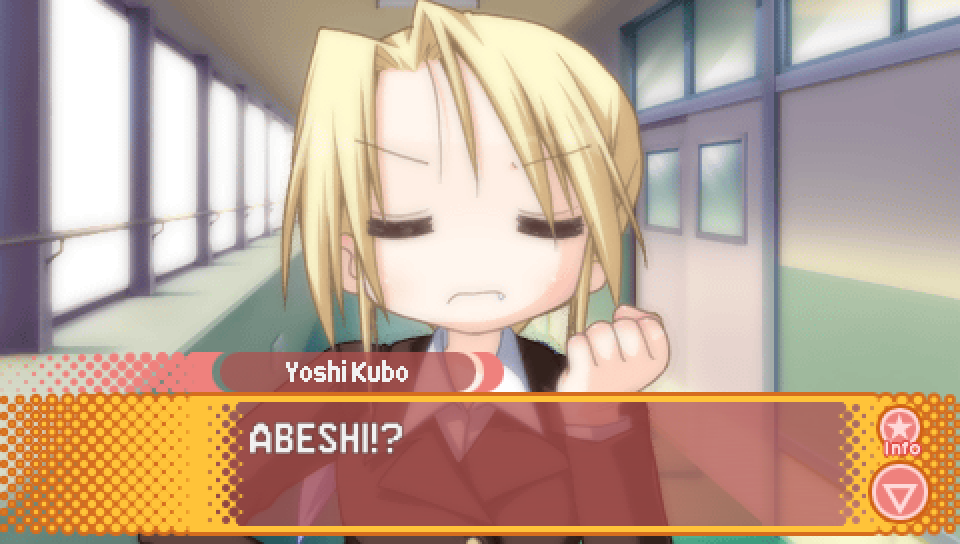
When Miyuki, Kagami, and Nanako interrogate the protagonist about whether he saw anything after
accidentally walking in on Kagami changing, if the protagonist responds by saying that he forgets,
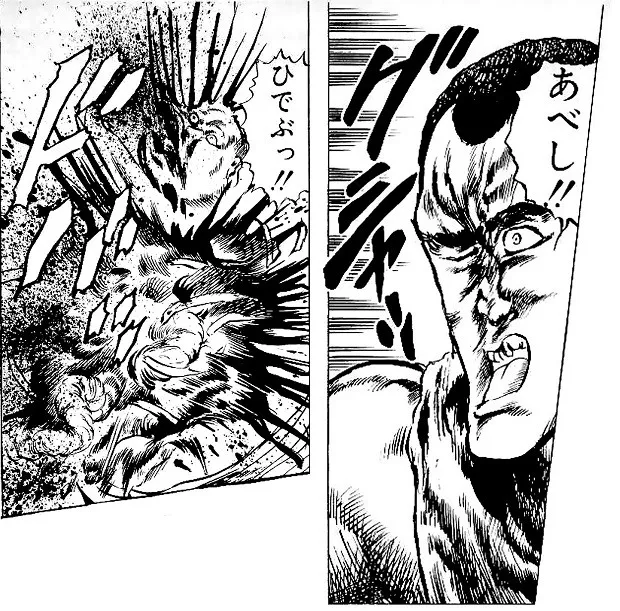
leading to Nanako punching him, the protagonist will utter the nonsensical word "abeshi" as he is hit.
Using the gibberish "abeshi" as an utterance to show someone is in pain is famously associated with
the series "Fist of the North Star", in which protagonist Kenshiro defeats his foes by punching
them in various pressure points on their body in just the right way such that it causes them to
violently explode. Prior to their explosion, they will make such utterances as "abeshi" and "hidebu".
While one might think there may be some particular significance to these utterances, as they are not
standard Japanese otomatopoeia, the reality is actually surprisingly straightforward, that being
they are simply the otomatopoeia that creator Tetsuo Hara came up with to transcribe the kind of noise
someone might make when they are about to explode in such a fashion. Nonetheless, these utterances have gone on
to gain a certain significance in that they can be used to invoke the kind of explosive pain Kenshiro deals
out to his opponents in "Fist of the North Star", which is what is being done here in Ryouou Gakuen Outousai.
|
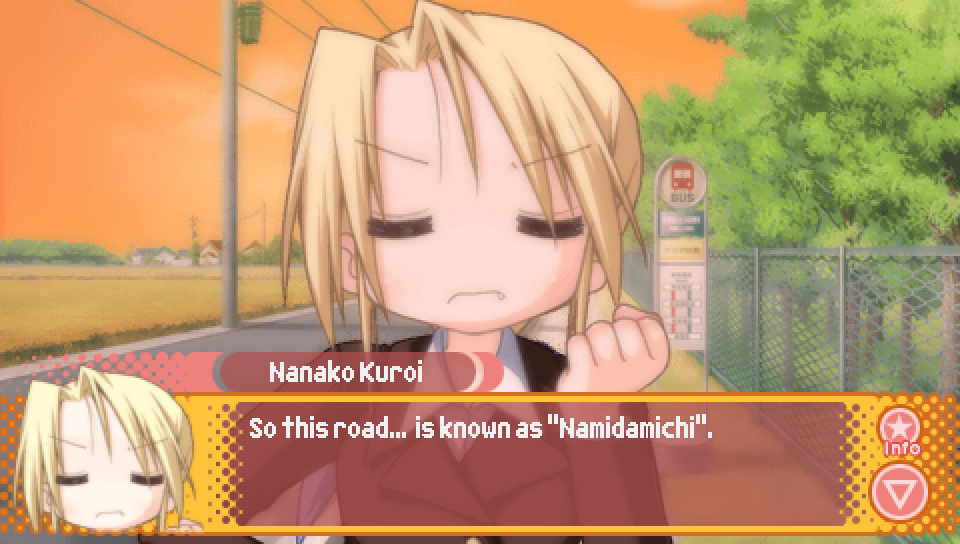
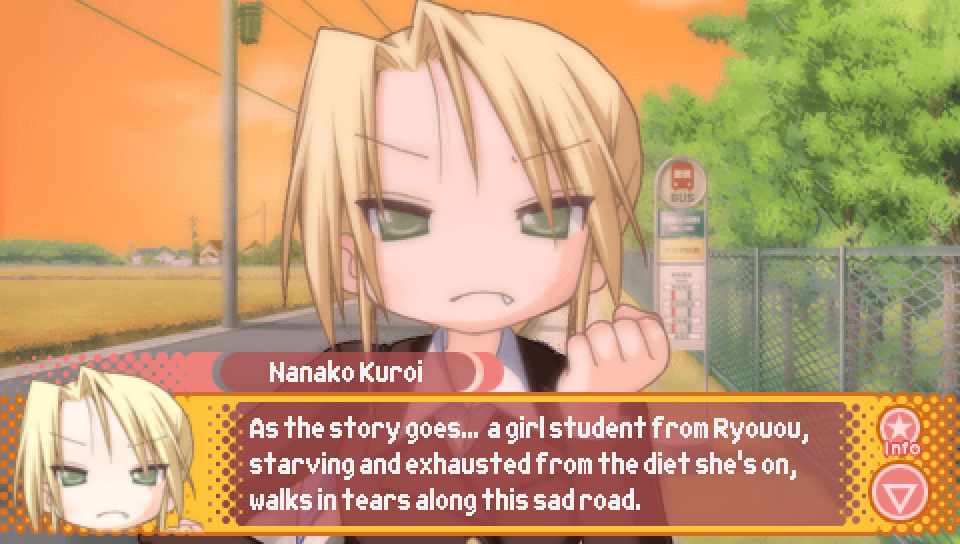
When Nanako accompanies the protagonist on the way home from school, she makes up a story
about how the road they are on is called "Namidamichi".
"Namidamichi" translates to "road of tears" and is a parody of the bridge called "Namidabashi",
which translates to "bridge of tears". As mentioned in the translator's notes for Episode 3,
Namidabashi is a real bridge that existed in Sanya, Tokyo that has since been demolished,
but was so named due to it being the place where criminals would say farewell to family members
before crossing the bridge to be executed at the Kozukappara Execution Grounds.
However, Nanako's reference to the bridge is likely instead based on the bridge's appearance
in the boxing series "Ashita no Joe", which takes place in Sanya. The protagonist, Joe,
crosses this bridge in the first episode to enter Sanya, which is what kicks off the events
of the series.
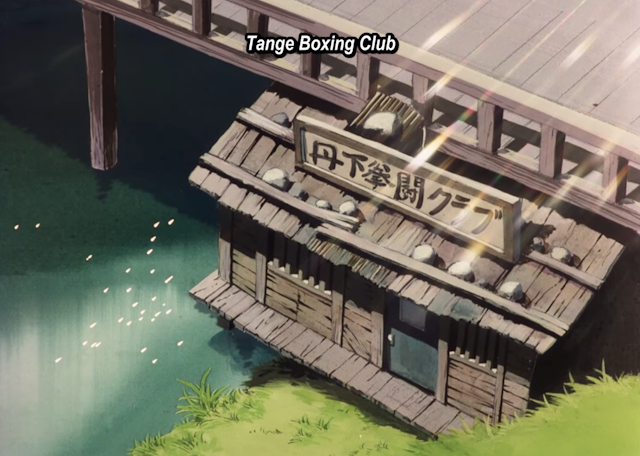
Additionally, Danpei Tange, who takes Joe in and trains him to become a boxer, lives in a shack
located underneath Namidabashi.
|
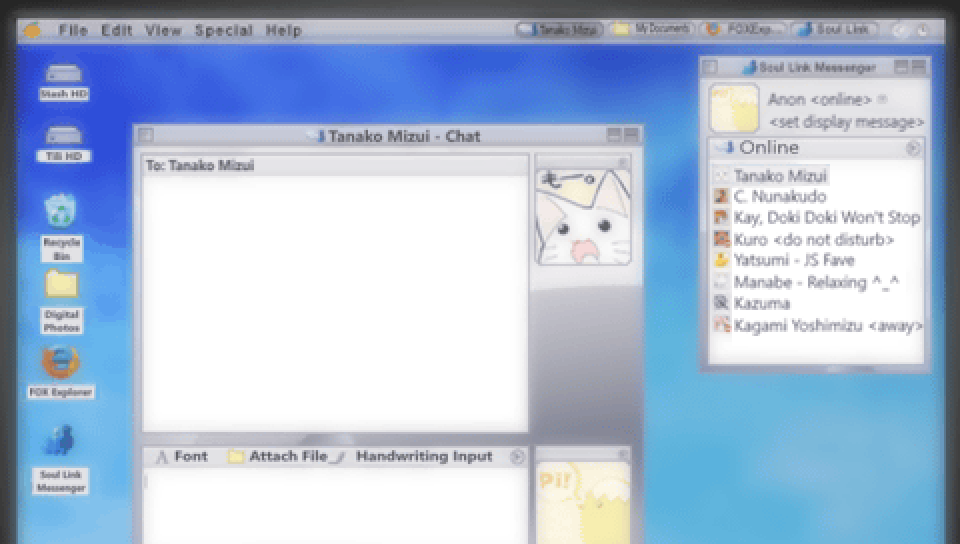
If the protagonist decides to ask Konata for dieting advice, he will contact her via
a chat app called "Soul Link Messenger". As mentioned in the notes for Episode 3,
this application is a parody of Microsoft's former instant messenger application
called "MSN Messenger".
The icon for "Soul Link Messenger", which can be seen on the bottom left of the protagonist's desktop,
is also made to resemble the icon for "MSN Messenger".

Additionally, for the sake of completeness, as was mentioned in Episode 3,
the application "FOXExplorer" that can be seen on the protagonist's desktop is
a combination of the two internet browsers "Mozilla Firefox" and "Internet Explorer".
The icon is also a combination of the two, that being the "Mozilla FireFox" fox wrapped around the
Internet Explorer "e".


|
If the protagonist decides to ask Konata for dieting advice, when he's talking to her on Soul Link Messenger,
his desktop shows her username as "Tanako Mizui". This is an anagram of Konata Izumi, formed by writing
her name in hiragana using Japanese name order, resulting in "いずみ こなた" (Izumi Konata), writing the characters
in reverse order to get "たなこ みずい", and then romanizing that result to get "Tanako Mizui".
In the original Japanese version of Lucky Star: Ryouou Gakuen Outousai, this username was extremely
hard to notice, as not only was "Tanako Mizui" written with in kanji as "棚来 水異", the text was extremely
hard to make out. Even if you were playing on the original PS2 version of the game, which benefited from
a slightly higher resolution, the text is very difficult to read.
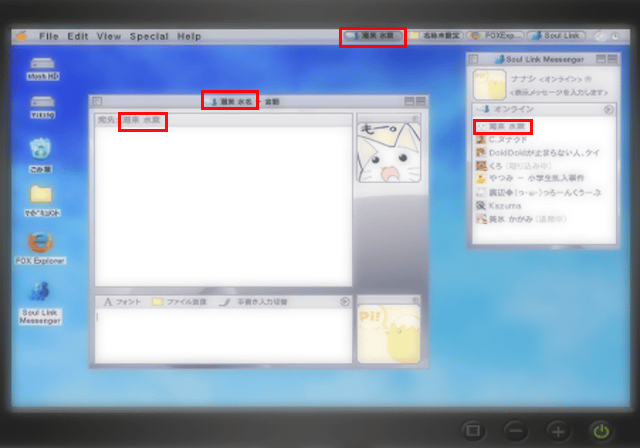
Perhaps it was because it was so hard to notice, that it actually went unnoticed
by the game's developers as well, since they ended up not being consistent with this
username for Konata. In the actual dialogue for this scene, Konata uses the username
"konakona", as she tends to use in other Lucky Star content such as the anime.
Despite this, I decided to keep this image faithful to what was in the original Japanese
in order to preserve this fun detail, even if it's inconsistent.
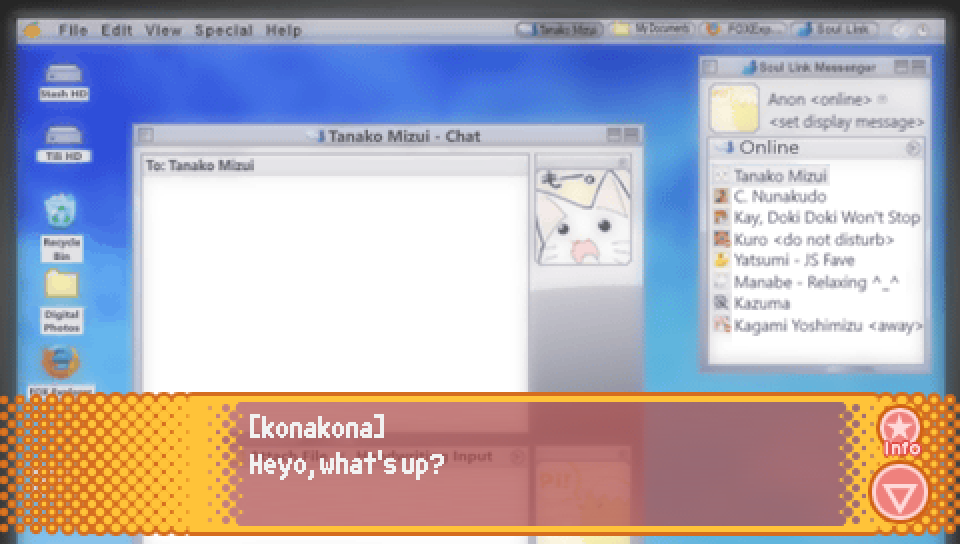
While I'm on the topic of usernames, you can see in the window on the right side
of the protagonist's desktop that his username is "Anon". In the original Japanese,
it was ナンシ (Nanashi), which means "no name" and is sometimes used as a stand-in
for an anonymous person. I decided to go with "Anon" due to its use on imageboards
such as 4chan as a stand-in for the names of anonymous users.
This was actually another point of inconsistency between the CG artist and the script writer,
as in the actual dialogue for this scene, the protagonist's username is derived from
whatever first name you give him. In the original Japanese this was adding the suffix "っち" (cchi)
to the end of his first name. This "cchi" suffix is a common way to form nicknames in Japanese,
similar to the "n" suffix used in Lucky Star for Kagami and Hiyori, forming Kagamin and Hiyorin.
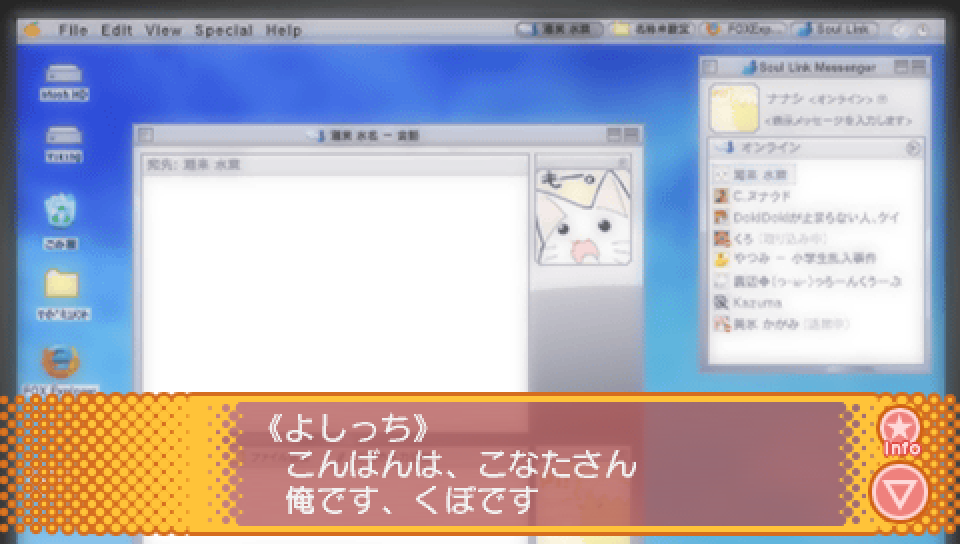
However, this suffix relies on Japanese phonetics and the fact that Japanese names nearly always
end with a vowel to ensure that this suffix would make sense in the vast majority of cases.
For the English translation, I took into consideration the fact that people are likely to
give the protagonist a non-Japanese name, meaning there would be many cases in which this suffix
would not look or sound as good, so I ultimately went with something different. To ensure that
the username would make sense regardless of what the protagonist was named, I settled on having
it simply be "Xx_[first name]_xX". Surrounding your username with "Xx_" and "_xX" was something
people often did on the internet in the early 2000s because it was considered cool-looking,
so this ended up being a fitting solution.
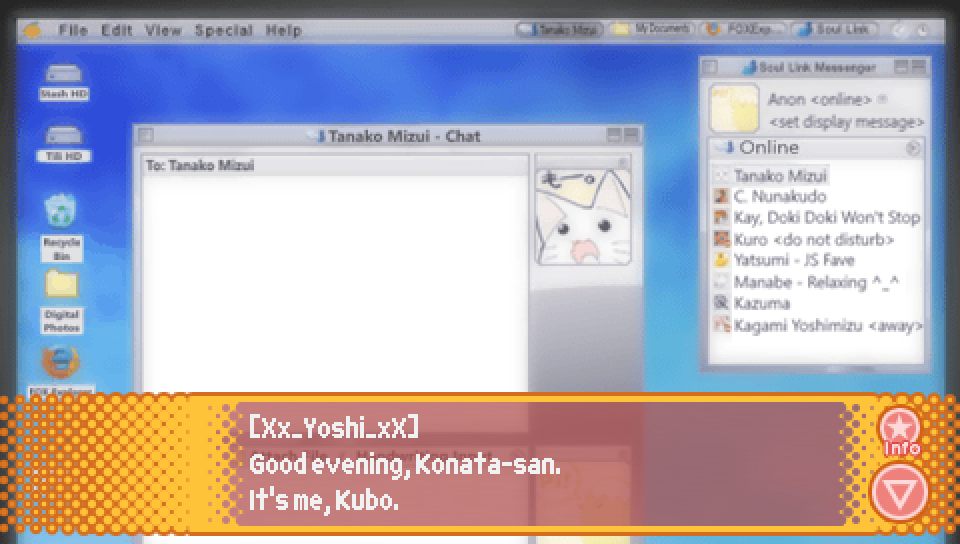
Lastly, if you look at the other people the protagonist has in his Soul Link Messenger contacts,
you'll see Kagami Yoshimizu, the creator of Lucky Star, at the bottom. Konata's profile picture
is also of Nyamou, Kagami Yoshimizu's avatar.
|
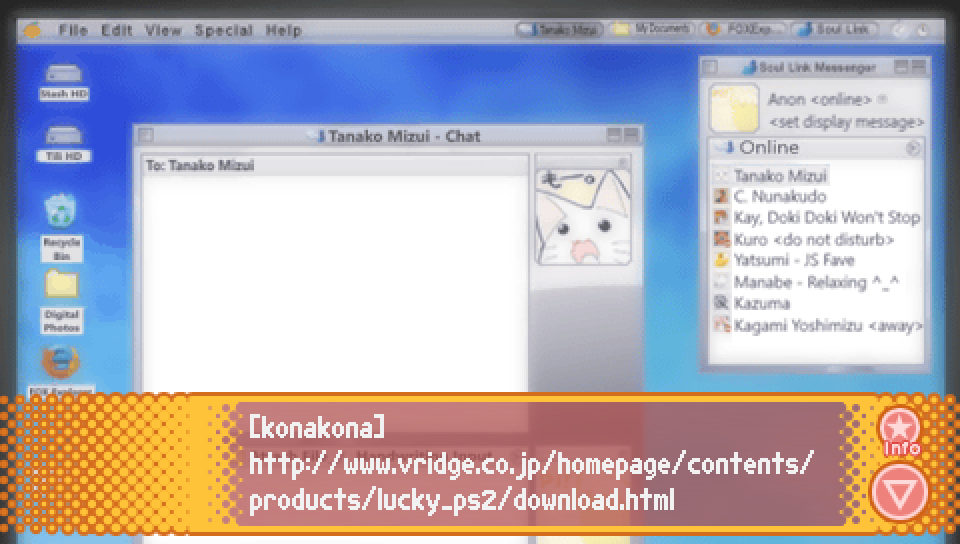
If the protagonist decides to ask Konata for dieting advice, she will end up sending
the protagonist a link to the website for the developer of Lucky Star: Ryouou Gakuen Outousai: VRIDGE.
In the original Japanese version of Lucky Star: Ryouou Gakuen Outousai, the link Konata sent
was slightly different. Originally, it was http://www.vridge.co.jp/star.html.
However, nowadays this is a dead link that just gives you a 404 error on the VRIDGE website.
Rather than disappoint the player, I've decided to update the link to point to where I think this link was originally
meant to take you to. Where is that? Well, you'll have to check it out for yourself to find out!
|

If the protagonist decides to search online for dieting information on the first day of this route,
he will use the search engine "Geagle" to perform his search. As mentioned earlier in these notes,
Geagle is obviously a parody of Google.
Additionally, the two other browser tabs the protagonist has open includes the VRIDGE website,
which as explained before is the developer of this game, and "Uke Uke Dou", which is meant to be
"Uke Uke Douga" but is cut-off. "Uke Uke Douga" is a parody of the Japanese video sharing website,
"Nico Nico Douga", now known as just "Nico Nico".
|

If the protagonist decides to search online for dieting information on the first day of this route,
he will end up on a website promoting "puku seeds", which expand in your stomach in order to suppress hunger.
Puku seeds are based on the real-life chia seeds, which also expand when exposed to moisture
and have a similar property of helping you feel full while eating less. However, chia seeds
only expand 10-12 times their normal size, unlike the 50 times that puku seeds do.
The text on the website is very small and can be difficult to read, but it does actually say something,
so for your convenience, I'll put the text of the website here as well for easy reading.
"Cultivated in South America, this odorless seed is a type of Salvia plant
in the mint family. The Aztec people lauded it as a health food, claiming
that one can survive for 24 hours off just one teaspoon and a cup of water.
Today, it's combined with sugar and coconut milk and enjoyed as a dessert.
Visually, the seeds resemble black tops, expanding rapidly in water.
Being odorless and flavorless, this easily consumed foodstuff is
gaining attention as a dietary aid and source of fiber.
Odorless puku seeds originate from Nepal.
● Puku seeds expand to 50 times their size, suppressing feelings of hunger!
Puku seeds are wrapped in a polysaccharide membrane that when exposed to moisture
turns into a transulecent agar-like substance that expands to roughly 30 times
its original size. By allowing you to obtain the same level of fullness while
reducing the quantity of food consumed, puku seeds take the hardship out of dieting.
● Puku seeds are the perfect aid for those who fail diets due to hunger!
Puku seeds aren't water soluble nor digestible. In fact, they absorb non-nutritious
matter within your stomach, reducing the degree of caloric absorption. If hunger has
ever made you fail your diet, you should definitely give puku seeds a try."
|
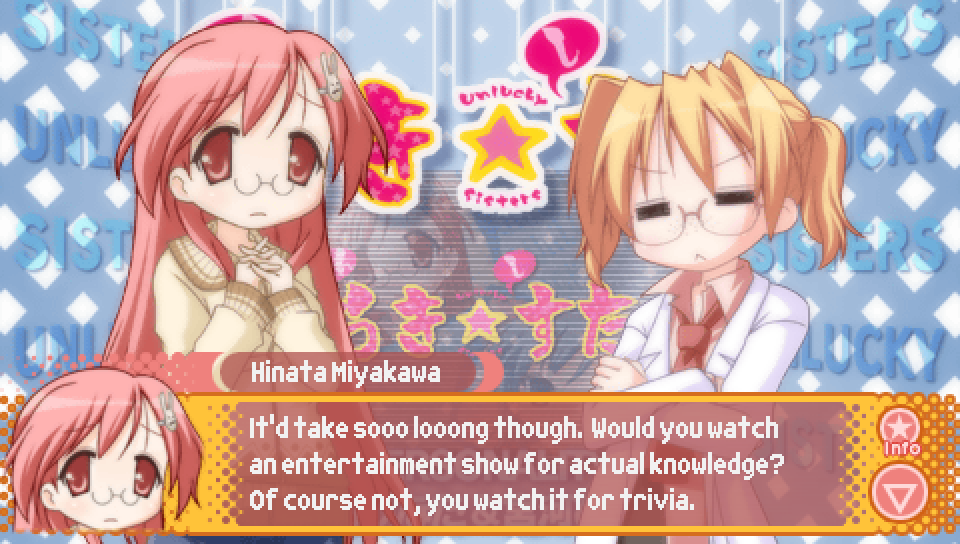
The Unlucky★Sisters segment that plays after the first day of this route, titled "Schrodinger's Kitty" is notable
in that it doesn't really pertain to anything happening in the story and so may feel very out of place.
However, this seems to be intentional, and may in fact be poking fun at the fact that Schrodinger's Cat
is brought up in Japanese visual novels so often that it has become cliche.
Usually, this thought experiment is brought up in the context of trying to explain the concept of parallel universes.
However, in Ryouou Gakuen Outousai, Hinata treats the topic with great disinterest and refuses to properly engage,
treating it merely as just trivial information to throw at the viewer, rather than something to actually educate them.
|
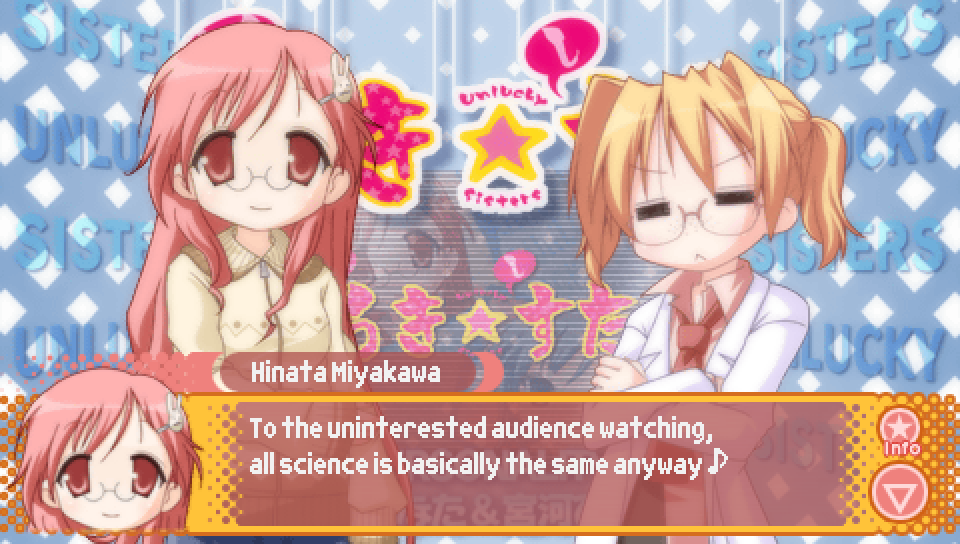
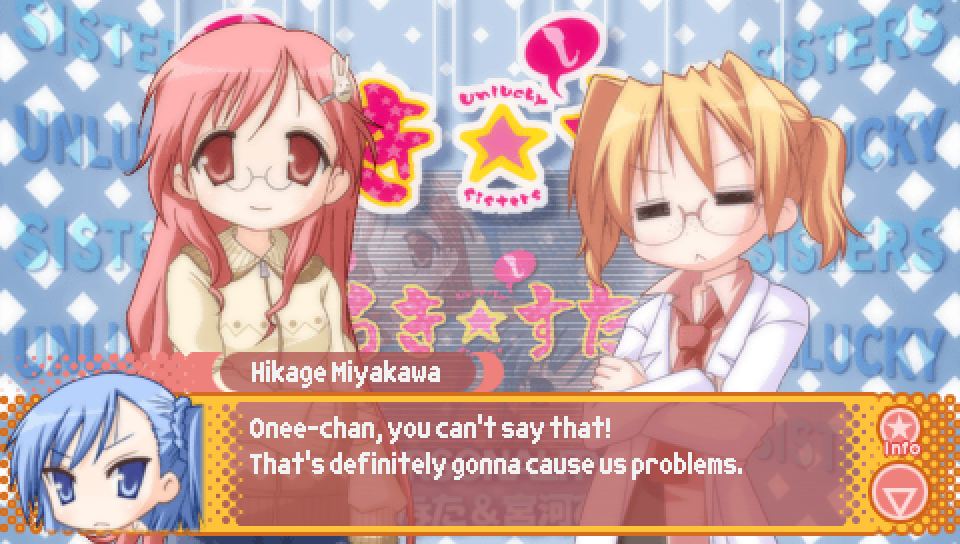
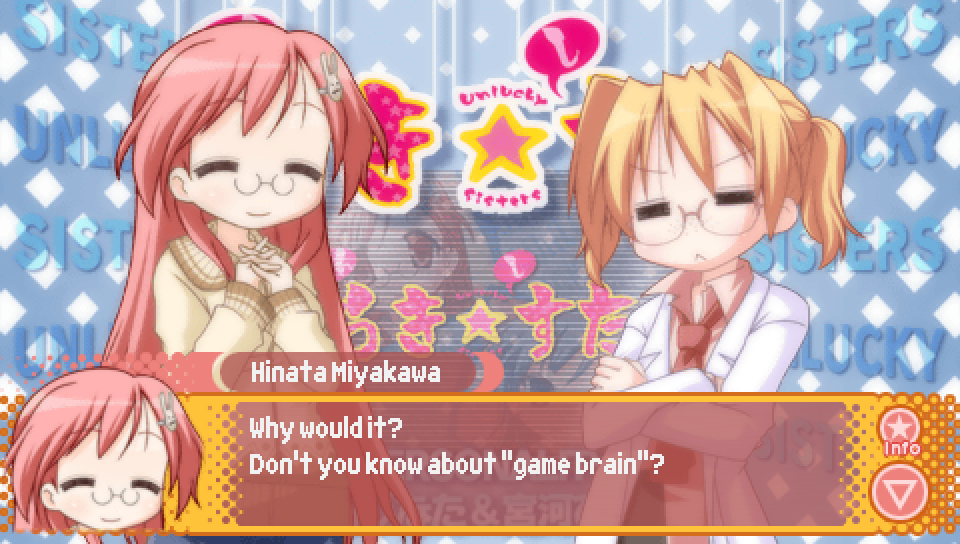
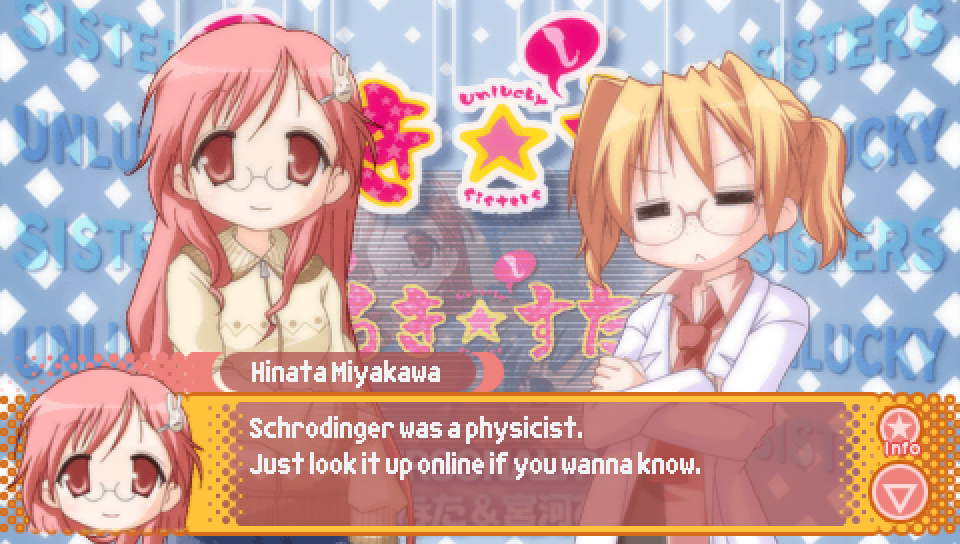
During the "Schrodinger's Kitty" Unlucky★Sisters segment, Hinata and Hikage have the above exchange,
in which Hinata brings up something known as "Game Brain".
"Game Brain" is a concept originating from the Japanese physiologist Akio Mori, in which he claimed
that prolonged video game playing would cause decreased prefrontal brain activity, leading to negative effects
on one's ability to concentrate, control their temper, and socialize with others. Mori's studies on this topic
are nowadays considered to be pseudoscientific, and even were considered so at the time of
Ryouou Gakuen Outousai's release. Ultimately the point being made is that Hinata is claiming that the audience
has such an inability to concentrate due to having developed "Game Brain" that the quality of the segment's content
doesn't really matter.
|
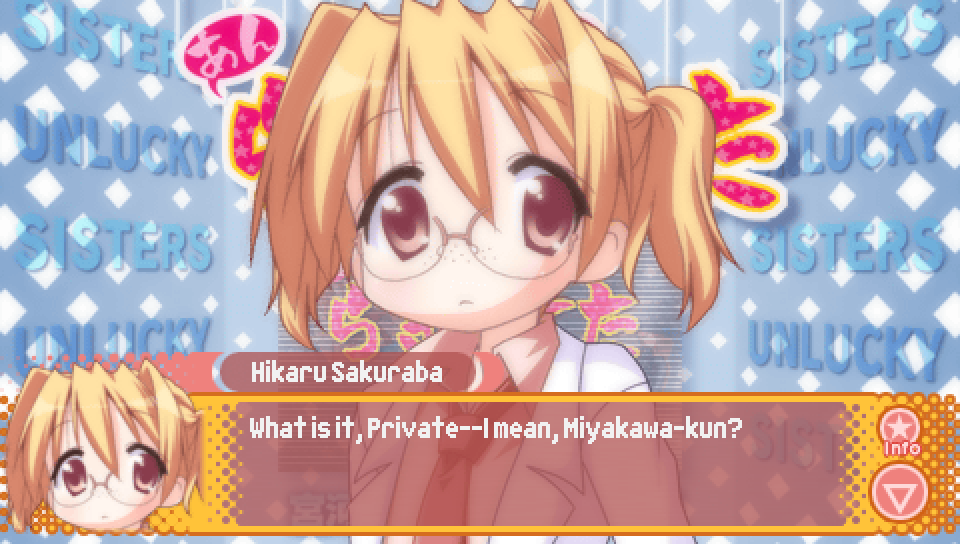
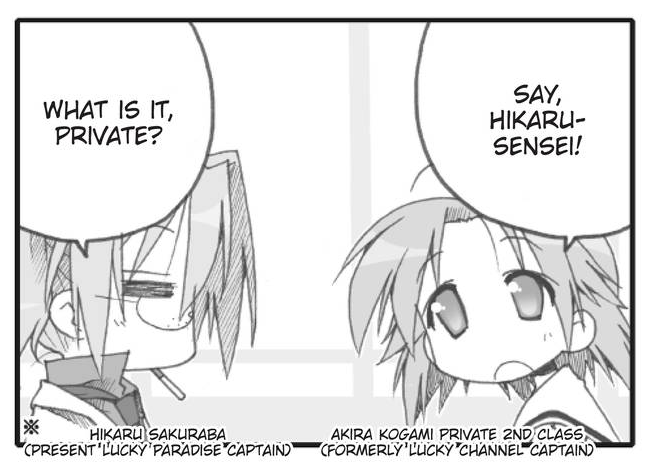
During the "Schrodinger's Kitty" Unlucky★Sisters segment, Hikaru at one point says this when addressing Hinata.
This is a reference to Hikaru's role in the Lucky Star manga as the "Captain" of the bonus "Lucky Paradise"
segments found at the end of some of the manga volumes starting with volume 3. In those segments,
her second-in-command was Akira Kogami, who she referred to as "Private". So what we're seeing here is Hikaru
mixing up Hinata for Akira. Maybe it's because both of them have pink hair!
|
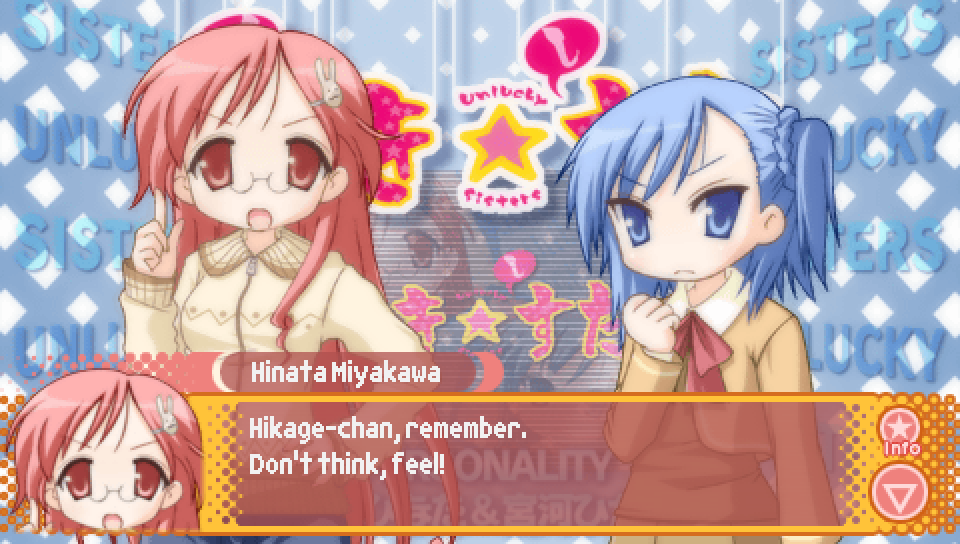
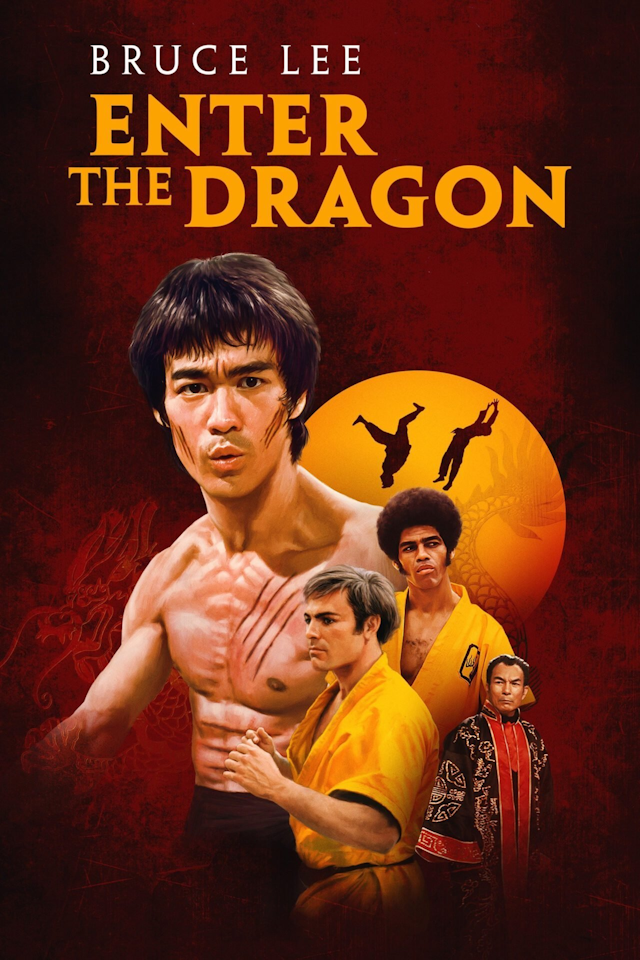
This line from Hinata during the "Schrodinger's Kitty" Unlucky★Sisters segment, in which she says
"Don't think, feel!" is in reference to the 1973 martial arts movie "Enter the Dragon", starring Bruce Lee.
Notably, the movie was released just days after Bruce Lee passed away and was his last completed film appearance.
The scene in which the line is said has Bruce Lee's character giving a lesson to a student about how
one needs to fight with "emotional content" and perform actions with feeling but not anger.
When the student then performs a kick to Bruce Lee's satisfaction, he asks how it felt, leading the student
to pause and think, but Bruce Lee scolds him for this, telling him "Don't think, feel!".
The scene in question can be viewed here:
https://www.youtube.com/watch?v=2d5o8d1kitM
|
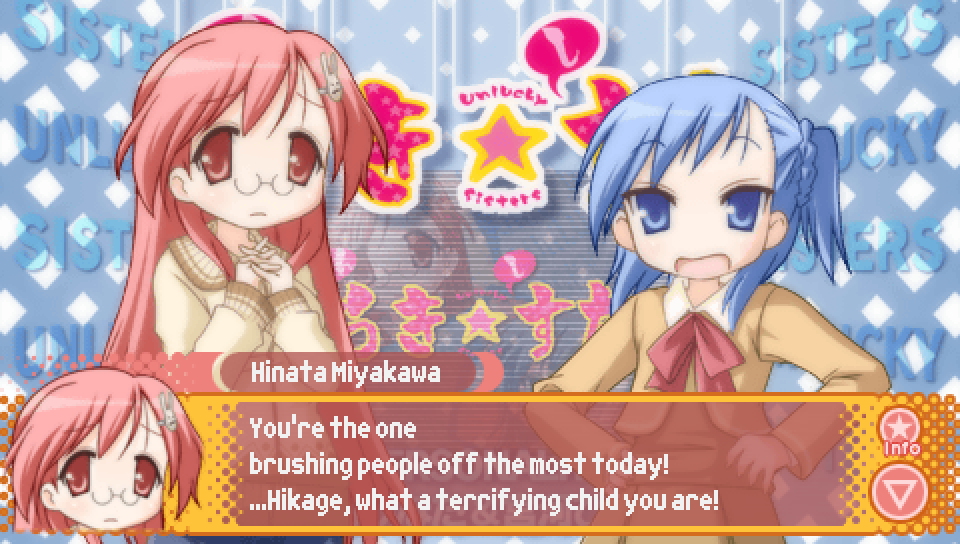
During the "Schrodinger's Kitty" Unlucky★Sisters segment, Hinata calls Hikage a "terrifying child".
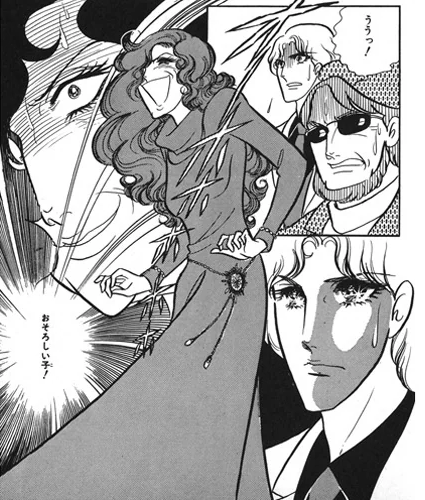
The specific thing said in Japanese "osoroshii ko", which means "terrifying child/girl", is a
famous line from the girl's manga "Glass Mask".
In "Glass Mask", upon seeing 13 year old protagonist Maya Kitajima act out a three hour long play
from memory without making any mistakes, veteran actress Chigusa Tsukikage shouts "osoroshii ko",
shocked by such an incredible display of ability for someone so young.
|
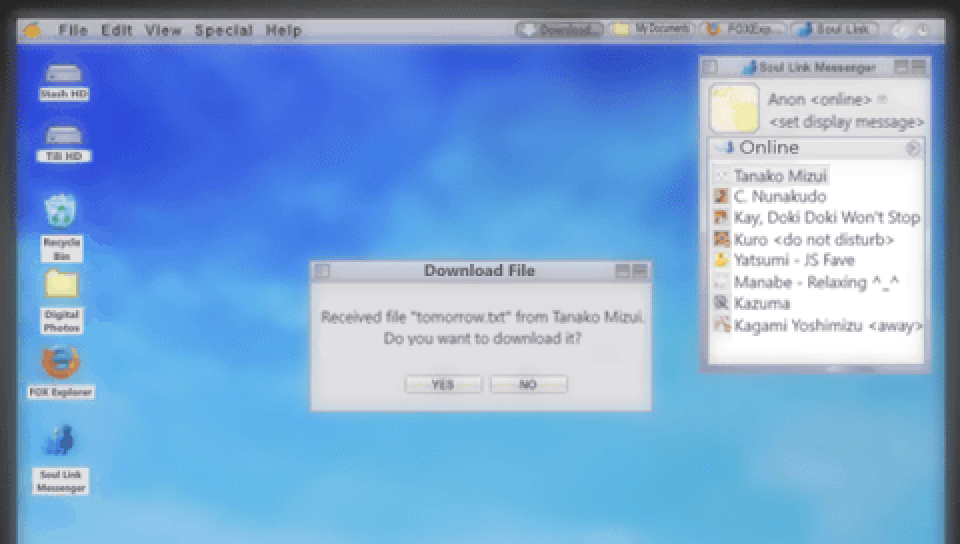
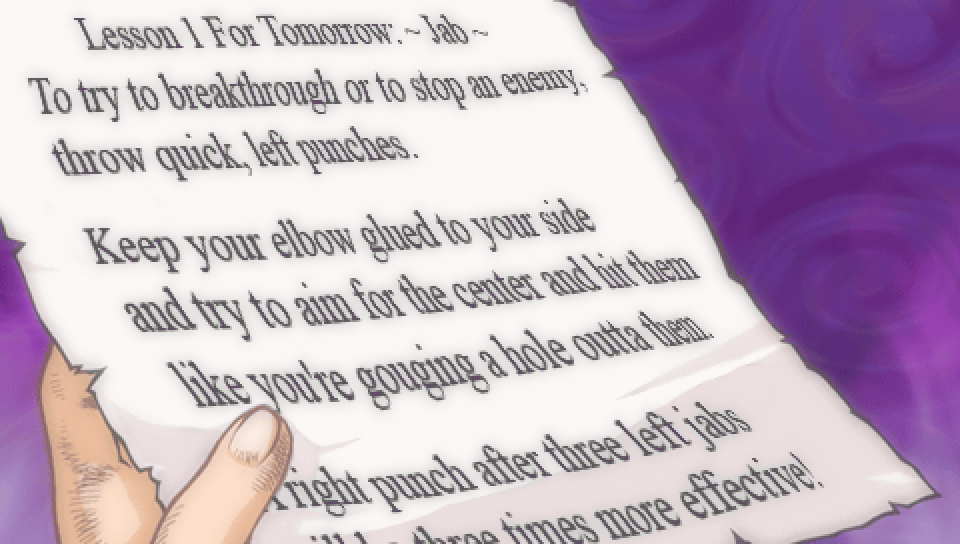
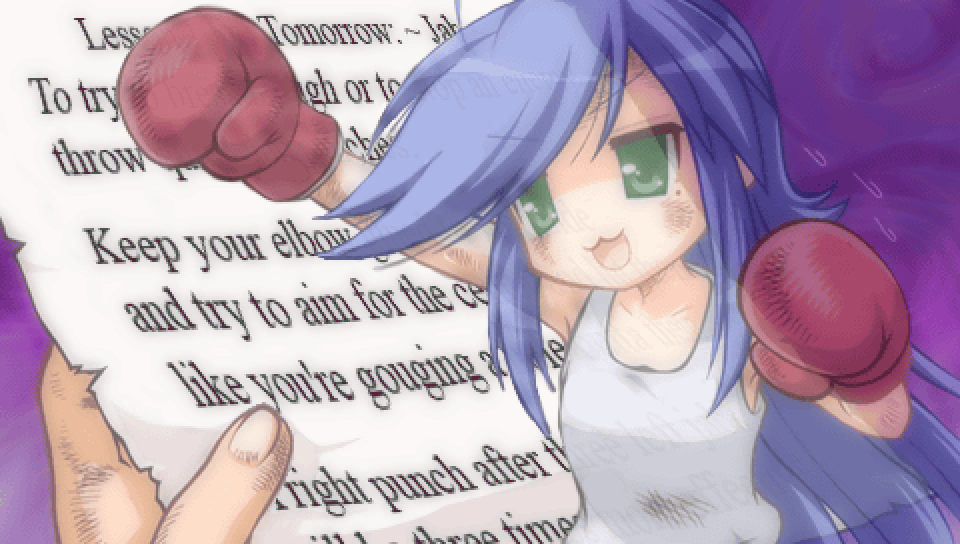
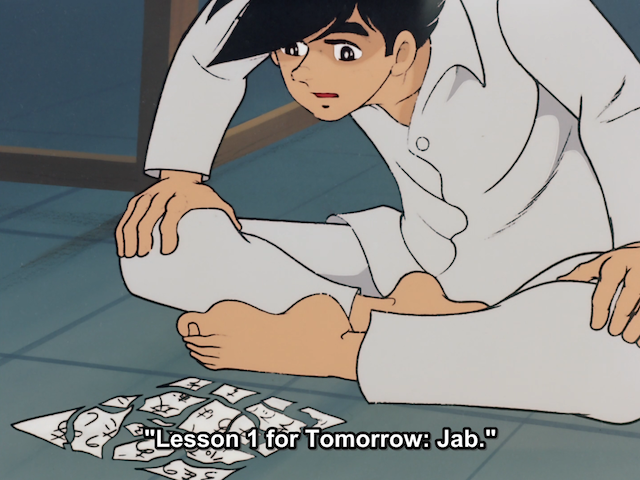
When reading the text document "tomorrow.txt" that Konata sent the protagonist as he presents
"Throw a Punch ★ Boxercise" to the girls, it's revealed to be a document describing how to perform
a jab. This document is also shown to be the first "Lesson For Tomorrow".
This document Konata sent is a verbatim copy of the first "Lesson For Tomorrow" that character
Danpei Tange sends to protagonist Joe Yabuki in the boxing series "Ashita no Joe". Which translates
to "Tomorrow's Joe".
As an aside to provide some useful context, the concept of "tomorrow" and doing things "for tomorrow"
is a common theme in this series due to Joe, Danpei, and most of the main cast living in the slums of Tokyo.
Danpei sees Joe as having the potential to give the people of the slums a brighter tomorrow by becoming
a famous boxer.
Getting back to the "Lesson For Tomorrow", Danpei sends Joe a letter containing this lesson while Joe is in jail
awaiting trial for committing fraud, in the hopes that Danpei could train Joe to become a boxer even while he's away.
Joe refuses to read the letter at first, tearing it up, as he is uninterested in Danpei's attempts to
teach him boxing, but ends up piecing it back together and reading it out of boredom.
The knowledge gained from this letter ends up helping Joe win a fight against a gang of juvenile delinquents later,
and is one of the inciting incidents that sets Joe on the path to becoming a boxer.
In the "Ashita no Joe" anime, this moment can be seen during Episode 5.
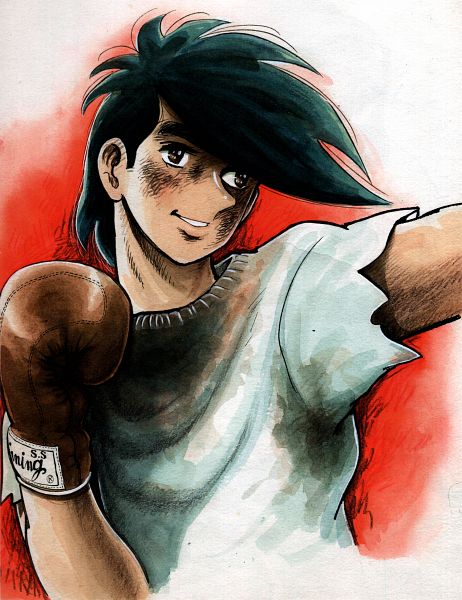
Additionally, Konata's appearance, in particular her hairstyle during this scene,
is meant to resemble that of Joe Yabuki.
|
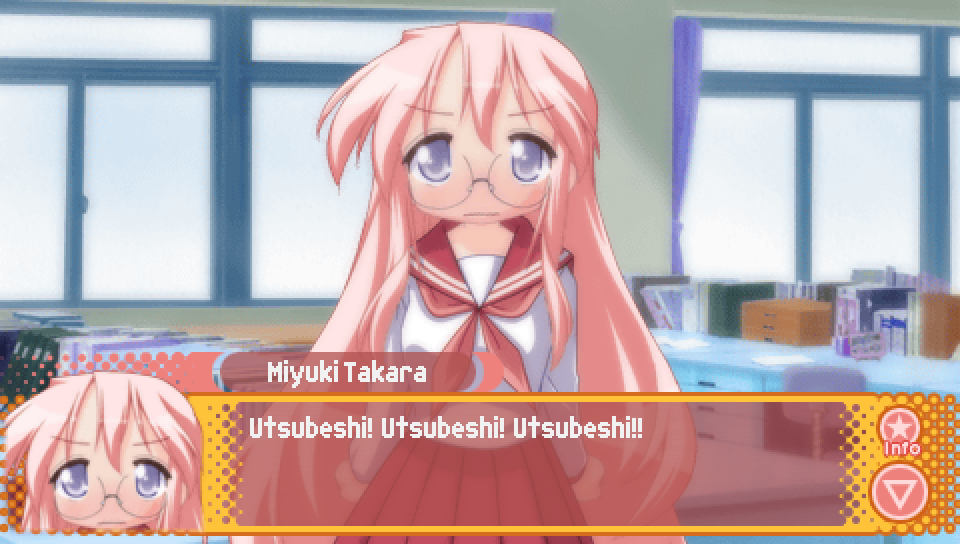
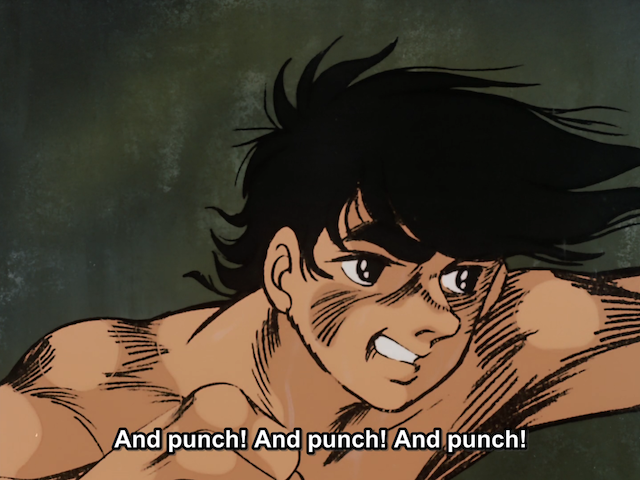
The word that Miyuki shouts as she punches, "utsubeshi", is also in reference to "Ashita no Joe",
as it's the word that Joe Yabuki shouted after each punch when first using the jab taught to him
in Tange Danpei's "Lesson 1 For Tomorrow".
In the "Ashita no Joe" anime, this moment can be seen during Episode 6. The official subtitles
translated it as "and punch", but the utterance "utsubeshi" is strongly associated with Ashita no Joe
in Japan and is known among fans of the series as being the specific thing Joe says during this moment,
and so was left untranslated.
|
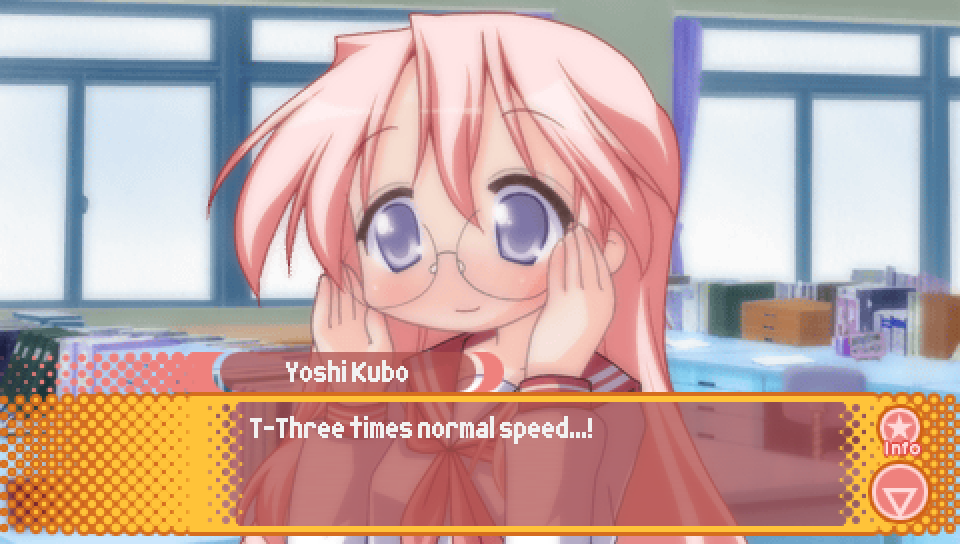
When Miyuki practices performing a right punch after three left jabs, which according to "Lesson 1 For Tomorrow"
will be three times more effective, she ends up hitting the protagonist by mistake. This then leads the protagonist
to say the above line.
The protagonist saying that the punch was "three times normal speed" is not the "three times more effective"
spoken about in "Lesson 1 For Tomorrow", but is actually a different reference entirely. It is in reference
to the character Char Aznable from the series "Mobile Suit Gundam", in which there's a running joke in the
Gundam series and fan community related to him being "three times the usual", often in reference to speed.
The origin of these jokes comes from a moment in "Mobile Suit Gundam" in which character Bright Noa
is made aware of an approaching mobile suit that's moving at "three times normal speed" and very quickly
realizes that the person piloting the suit is Char based on that description.
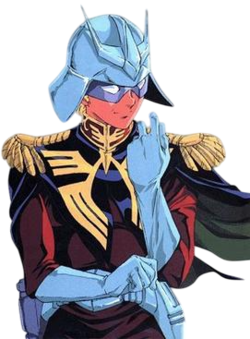
An edit related to this running joke, featuring the above referenced moment from "Mobile Suit Gundam"
can be seen here: https://www.youtube.com/watch?v=1IwY7XxgvAo
|
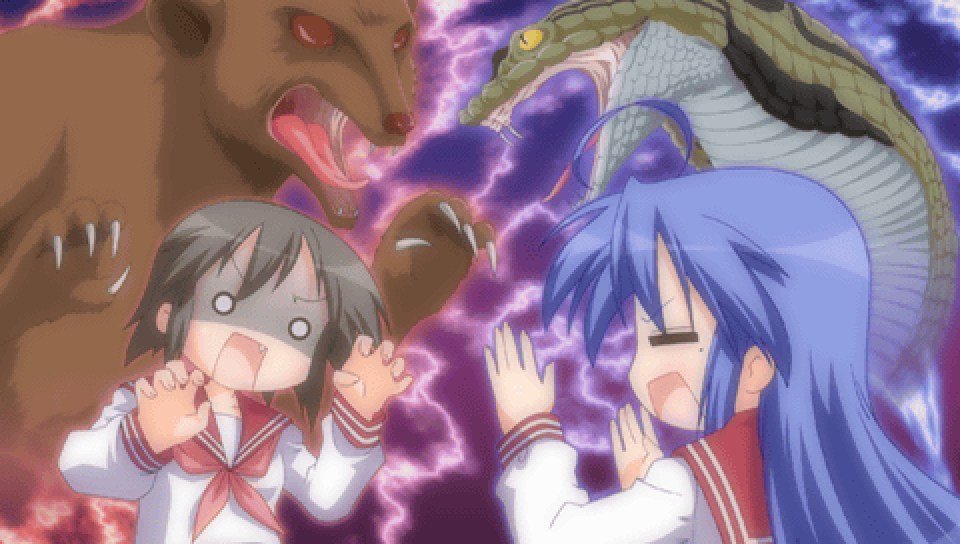
When Konata and Misao feud over Kagami after school, this CG featuring a mongoose and a cobra is shown.
While this is not a reference to anything in particular, it may not be known to everyone that these two
animals are considered great rivals, both in real life as well as in fiction.
The most famous example of this rivalry in fiction is arguably the Rudyard Kipling story "Rikki-Tikki-Tavi",
though there are many others.

|
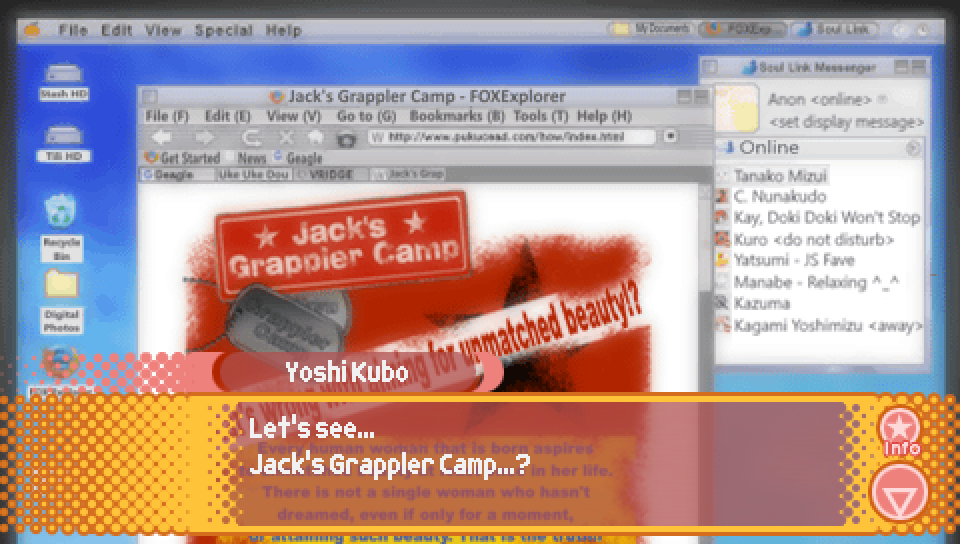
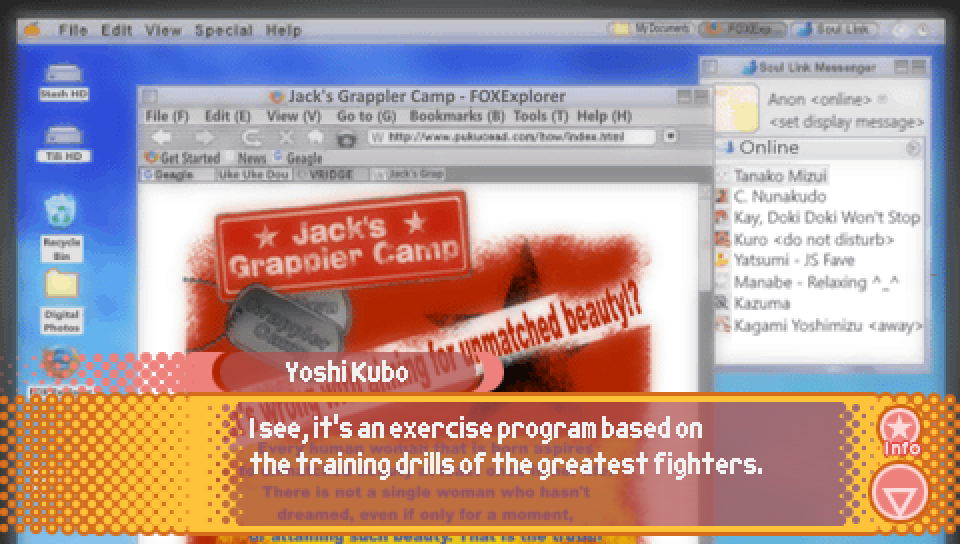
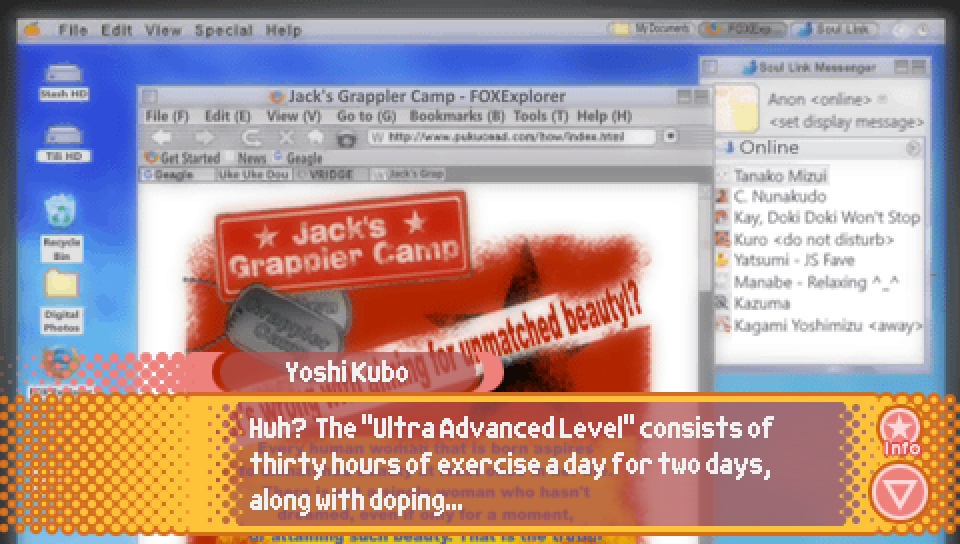
On the night after teaching Nanako, Miyuki, and Kagami the first dieting method, if the protagonist
decides to research another dieting method online and searches for one that has "amazing results",
he'll find a webpage for an exercise program called "Jack's Grappler Camp".
This is in reference to two different things. The first is something that's been mentioned in the
translator's notes for Episode 4 and is the exercise program "Billy's Bootcamp", developed by
American fitness personality Billy Blanks. This program went on to become a cultural phenomenon
in Japan in 2007 and even had a video game for the Nintendo Wii based on it.
 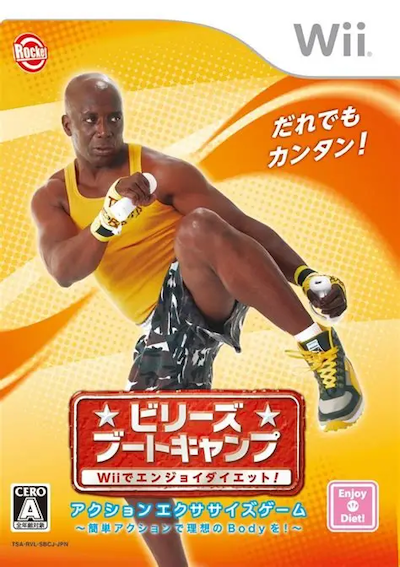
One of the Billy's Bootcamp workout videos can be viewed here:
https://www.youtube.com/watch?v=abUtY-RThKI
Footage of the Billy's Bootcamp game for the Nintendo Wii,
"Billy's Bootcamp: Enjoy Dieting with the Wii" can be viewed here.
https://www.youtube.com/watch?v=fqk30MZ_qBs
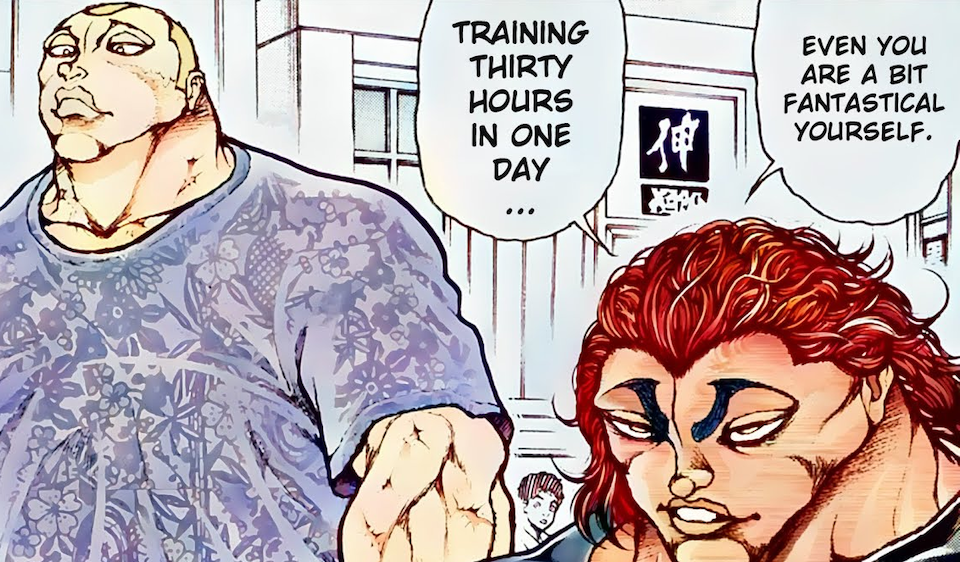
The other thing "Jack's Grappler Camp" is in reference to is the character Jack Hanma from the series
"Baki the Grappler". He's the half-brother of the series protagonist, Baki Hanma, and is a powerful
fighter whose training regiment consists of taking specially developed steroids and claims of training
for "thirty hours a day" despite that being physically impossible. This is also why the
"Ultra Advanced Level" of "Jack's Grappler Camp" is described as also consisting of thirty hours of
exercise a day and taking performance-enhancing drugs.
|
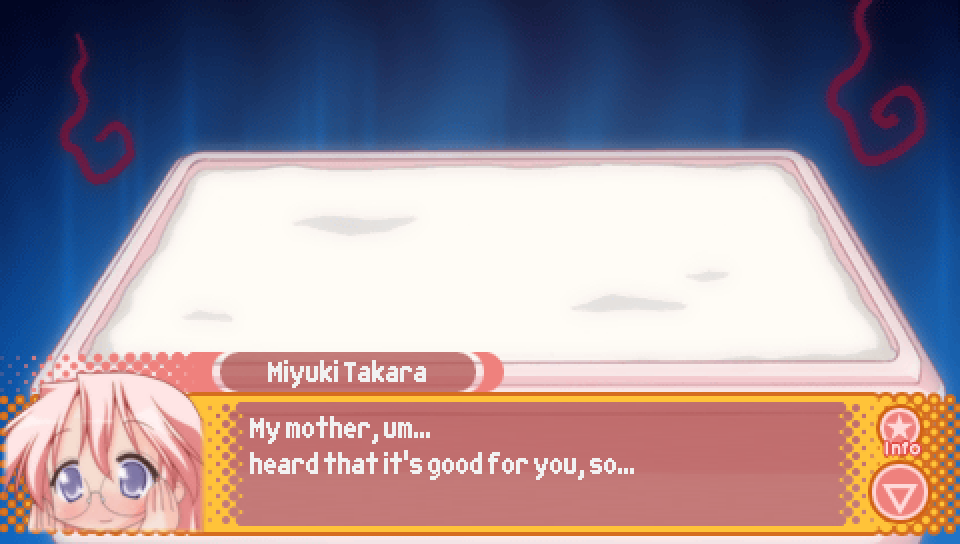
During the lunch scene taking place two days after the protagonist tells Nanako, Miyuki, and Kagami
about the first dieting method, Miyuki reveals she brought a bento filled with only yogurt for lunch.
She then goes on to explain that she did it because her mother had heard that yogurt was good for you.
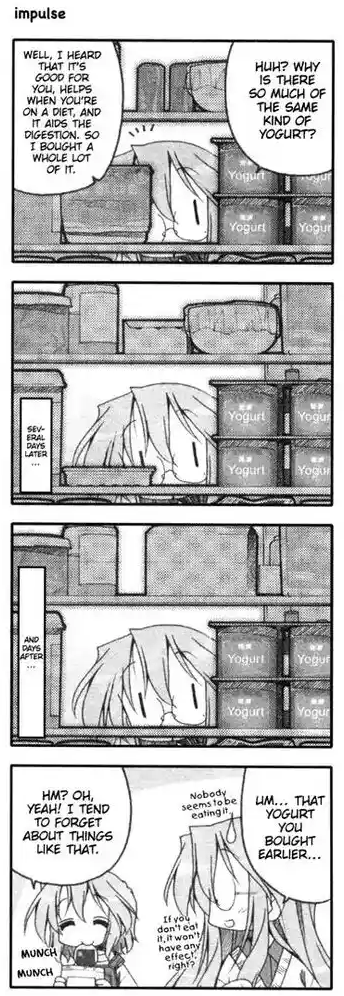
This moment is based on the comic strip "impulse" from volume 5 of the Lucky Star manga, in which
Yukari buys a bunch of yogurt for the supposed health benefits, but doesn't end up eating any of it.
|
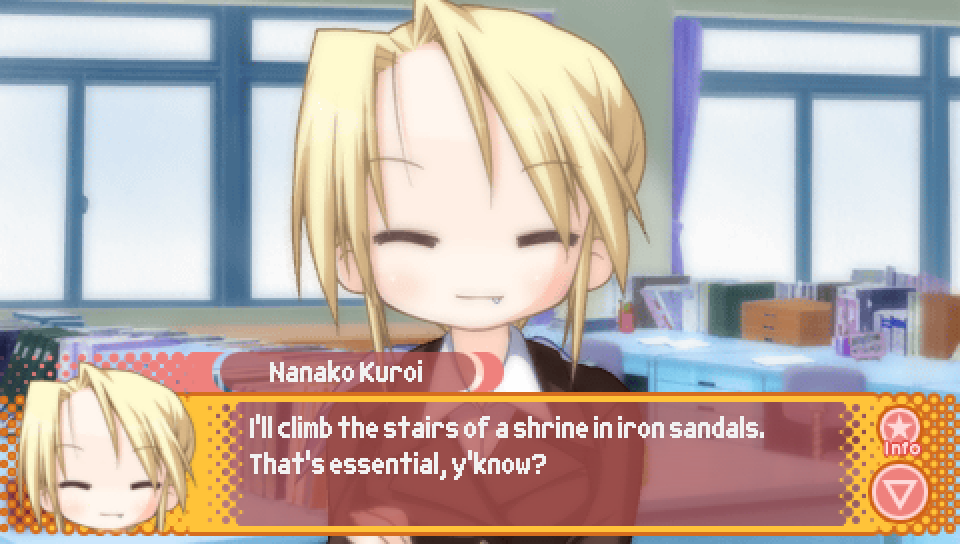
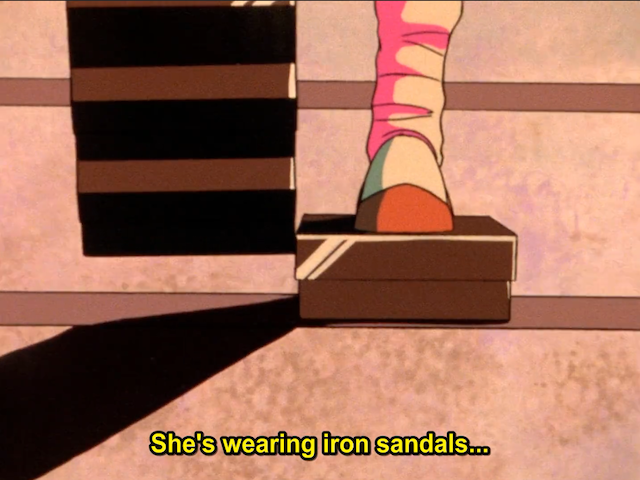
During the discussion between the protagonist and Nanako, Miyuki, and Kagami following their
failure with the first dieting plan, if the protagonist didn't do research on a second diet plan
and defaults to suggesting the girls try jogging, Nanako will end up taking it a step further by
saying that she'll climb stairs while wearing iron sandals.
This is in reference to a moment from the first episode of the OVA series "Gunbuster", in which
protagonist Noriko Takaya witnesses fellow student Kazumi Amano running up stairs while wearing
iron sandals. This is used to represent how, despite Noriko's belief that she is not cut out to be
a Machine Weapon pilot due to a lack of talent, she can become one through hard work and determination.
This is because Kazumi Amano is looked up to by all the other girl students and believed to be greatly
talented, but her running up the stairs in iron sandals shows that she also had to work hard to get to where she is.
|
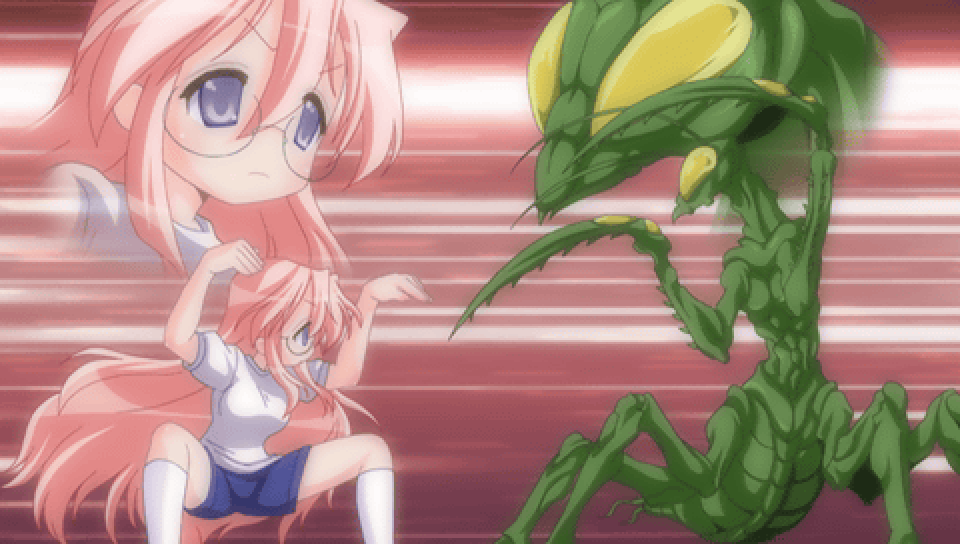
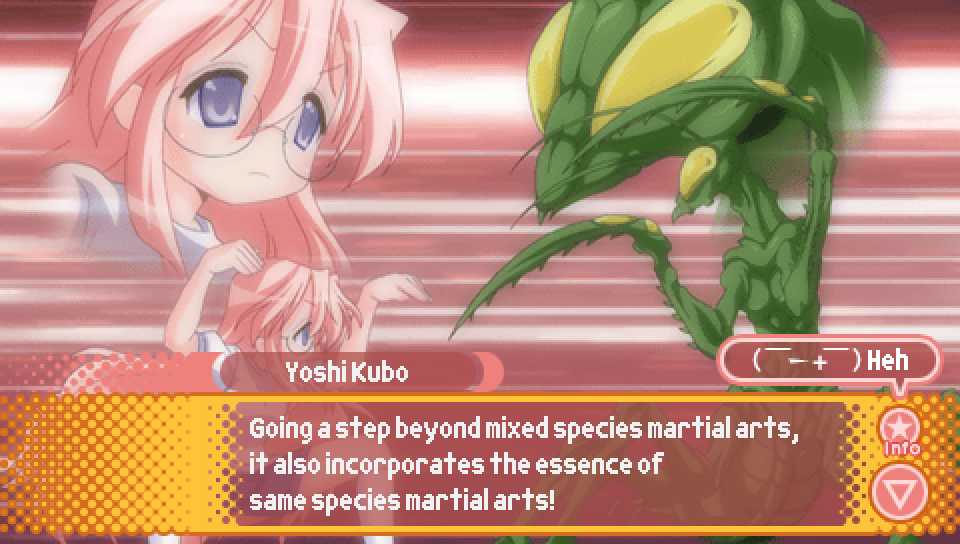
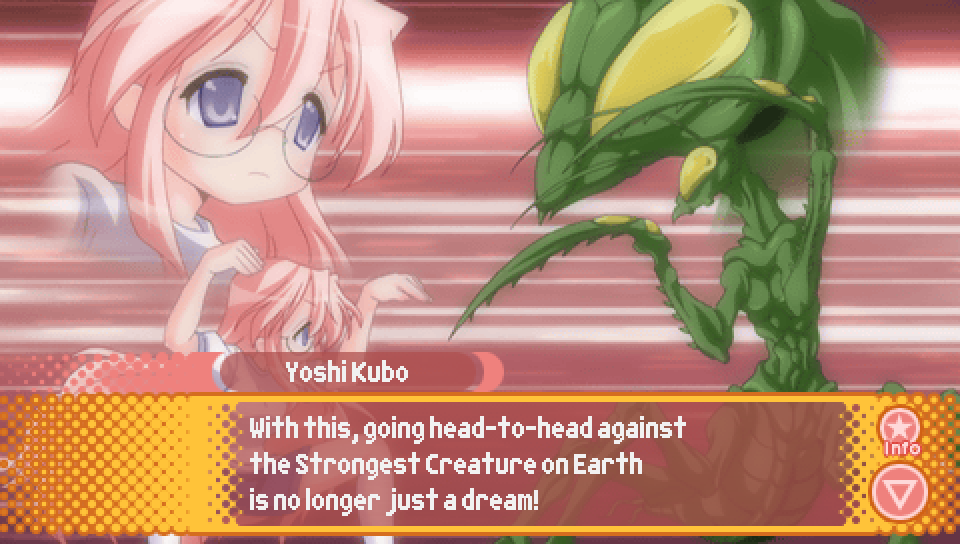
During the discussion between the protagonist and Nanako, Miyuki, and Kagami following their
failure with the first dieting plan, if the protagonist did further research on a second diet plan
and found "Jack's Grappler Camp", this CG depicting Miyuki fighting against a praying mantis will be shown.
This is in reference to a moment from the third "Baki the Grappler" manga series, "Hanma Baki",
in which the titular character and protagonist Baki trains himself by pretending to battle against a
100 kilogram praying mantis he conjured up in his imagination. The part about mixed species martial arts
that incorporates the essence of same species martial arts is in reference to the method by which Baki
is able to defeat this imaginary praying mantis, which was by no longer trying to fight it using
human fighting techniques but instead copying the fighting techniques of a praying mantis. In this way,
he was no longer fighting the praying mantis using "mixed species martial arts" but "same species martial arts".
As for this "Strongest Creature on Earth", this is one of the titles that the main antagonist of the
Baki series is called, that being Baki's father, Yuujirou Hanma.
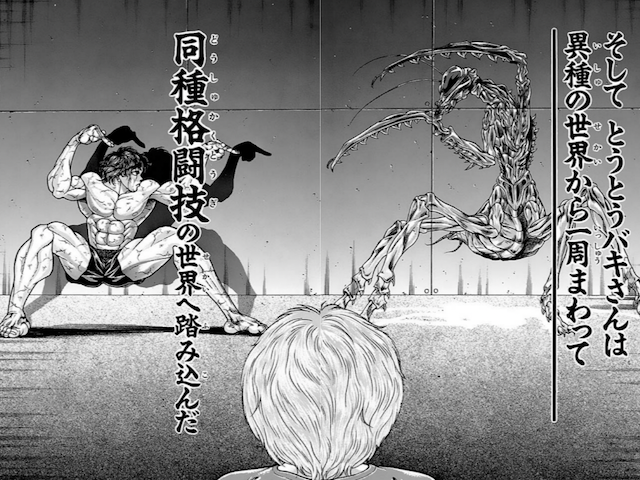
A clip of this moment from the "Hanma Baki" anime can be seen here:
https://www.youtube.com/watch?v=7ZwYJow3Blw
|
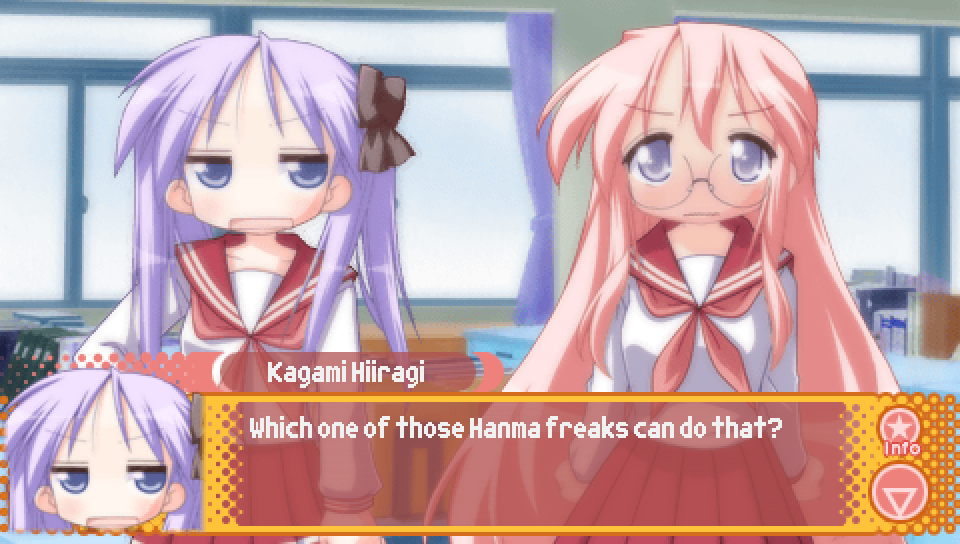
Following the protagonist's explanation of "Jack's Grappler Camp" to Nanako, Miyuki, and Kagami,
Kagami ends up saying the above line in response.
As you might be able to guess from the previous notes on "Jack's Grappler Camp", Hanma is the surname
of the program's namesake, Jack Hanma, as well as the protagonist of "Baki the Grappler", Baki Hanma.
Additionally, the main antagonist of the series is Baki's father, Yuujirou Hanma.
All three of these characters are extremely powerful and capable of things that would be considered
superhuman in real life. Of course, as mentioned in a previous note, the person capable of training
for thirty hours a day is Jack Hanma.
|
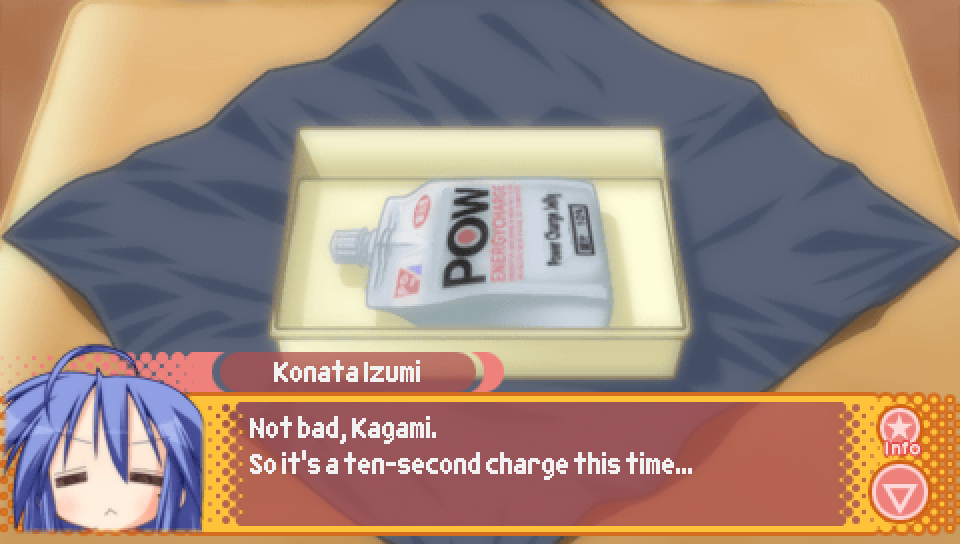
During the lunch scene taking place two days after Nanako, Miyuki, and Kagami start their second diet plan,
Tsukasa and Kagami's bento get mixed up for a second time, revealing that Kagami had brought something called
a "POW Energy Charge" for lunch.
This is a parody of the real world product "Weider In Jelly", which is a type of packaged jelly drink
that's used as a meal alternative. One of its taglines is "ten-second charge" due to its ability to be
consumed quickly.

A commercial for "weider in jelly" can be seen here:
https://www.youtube.com/watch?v=6vetCVY01M8
|
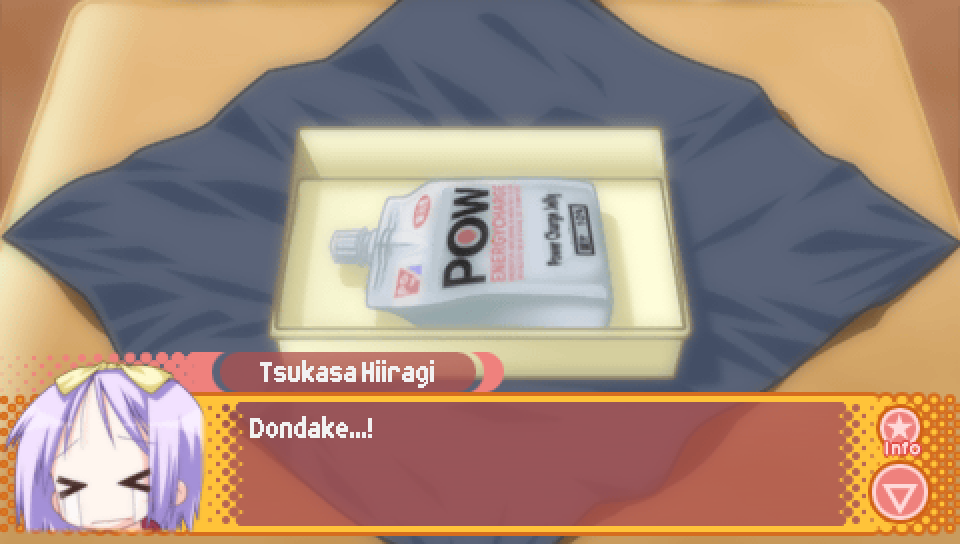
Immediately following the above line referencing the "weider in jelly",
Tsukasa reacts with her catchphrase "Dondake!".
As explained in the Episode 2, Episode 3, and Episode 4 translator's notes, "dondake" is a slang term that is
derived from the Japanese "doredake", meaning "how much?" or "to what extent?". However, "dondake" is mostly
just used by Japanese high school girls as a general exclamation of surprise, and is similar to "oh my god" in English.
However, Tsukasa's use of "dondake" is also likely a reference to its use in Gintama, being described as an
exclamation for the "tsukkomi" or "straight man" to use in response to any antics performed by the "boke" or
"funnyman" type characters in Japanese comedy. The fact that Tsukasa is meant to be a boke gives her usage
of it a humorous irony. This is why it is left untranslated.
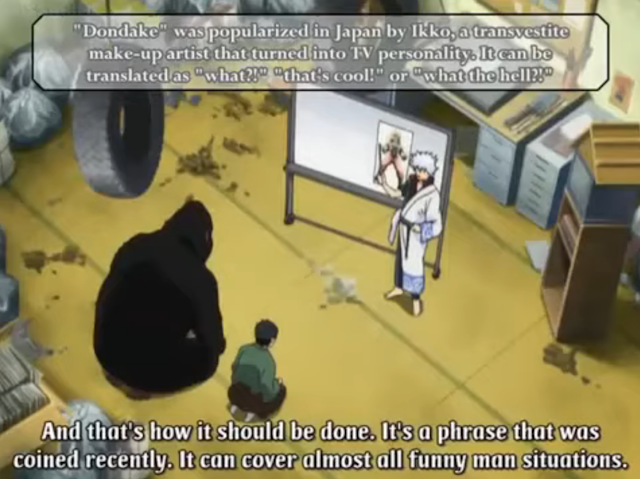
The clip from Gintama can be seen here:
https://www.youtube.com/watch?v=6kdZEcZFIkA
|
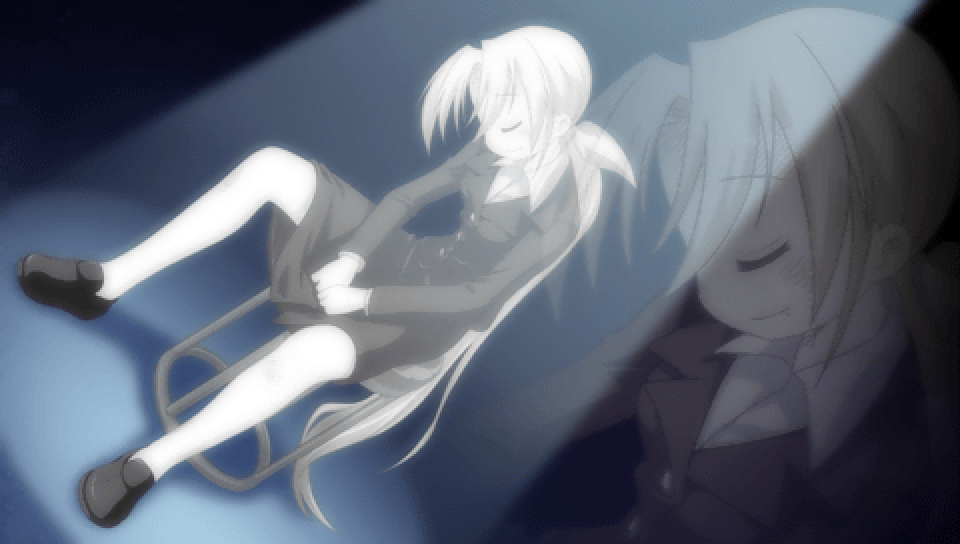
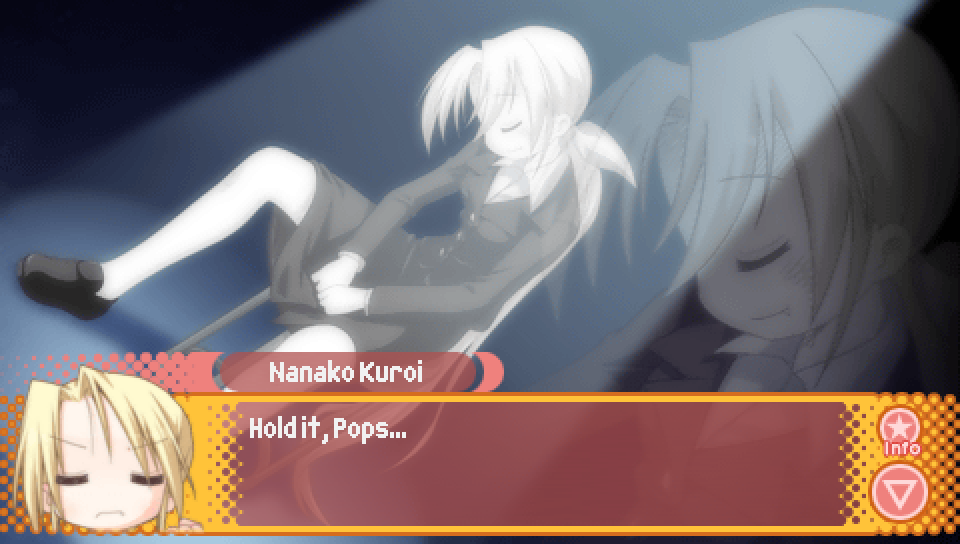
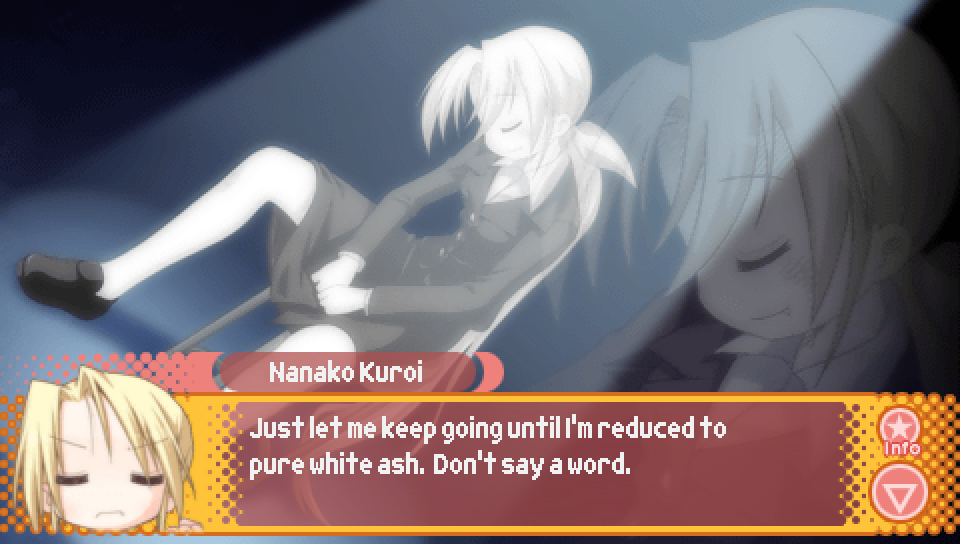
This moment involving Nanako sitting dramatically on a chair in the staff room as
she, Miyuki, and Kagami decide that they'll see their dieting through to the end is in reference
to the ending of "Ashita no Joe".
To start, "Pops" is the way that protagonist Joe Yabuki often addresses his coach, Danpei Tange.
As for the part about "pure white ash", it's in reference to the idea that Joe devotes his entire being
to boxing with absolutely no compromise. Unlike other boxers who may retire early and live the rest of
their lives damaged and chasing their dreams left unachieved through other means, such as what happened
to Danpei Tange himself and other boxers Joe fights during the series, Joe gave absolutely everything
he had and so has no regrets. This is what is meant by pure white ash, the result of a fire burning
something completely and with no impurities left behind.
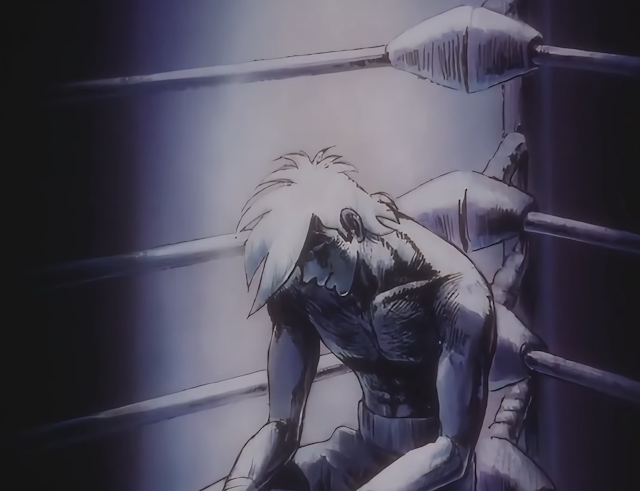
The shot of Nanako sitting in the chair is a direct parody of the final shot of "Ashita no Joe",
in which Joe sits in the corner of the ring, smiling in content, at the end of his final match.
|
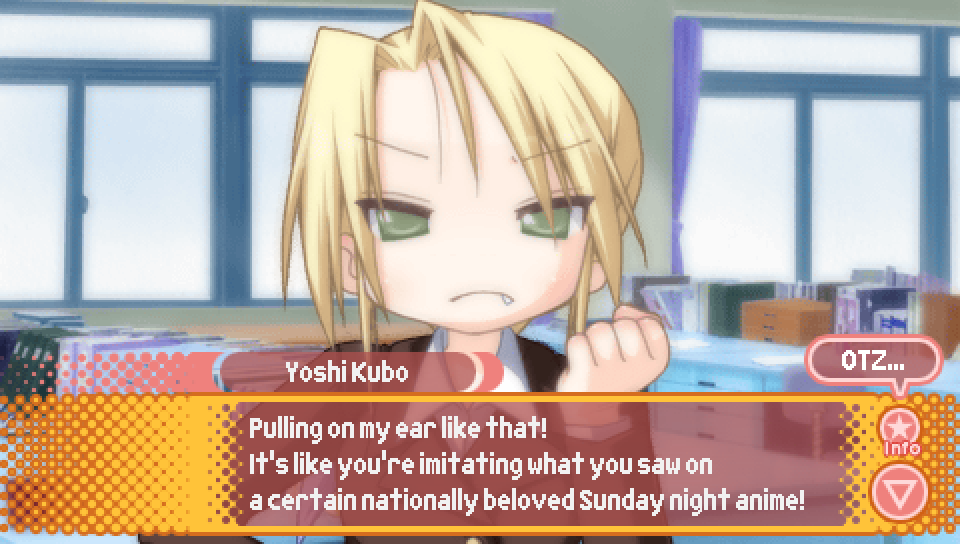
If the protagonist decides to leave class to give Nanako one last pep-talk to cheer her on,
she'll pull on his ear as part of scolding him for leaving class, leading to the protagonist
saying the above line.
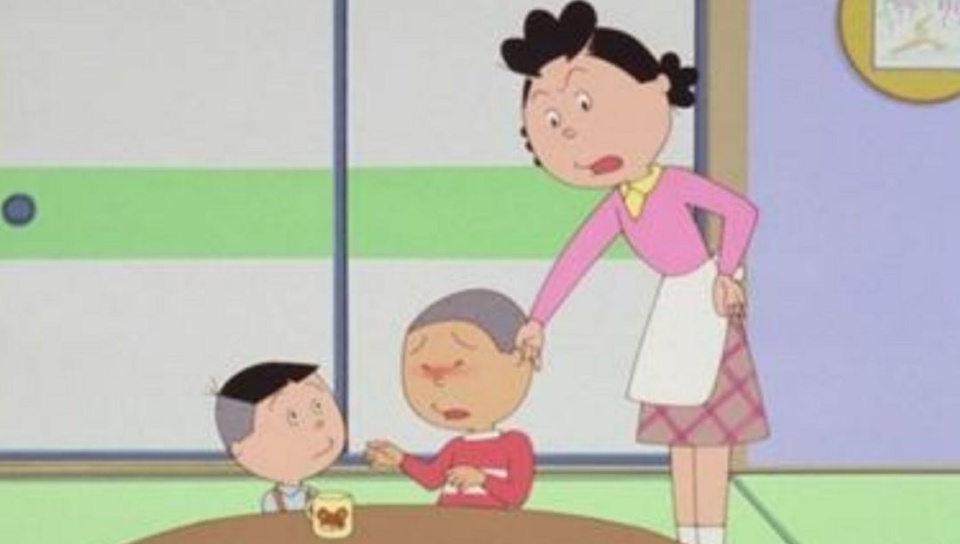
The "certain nationally beloved Sunday night anime" the protagonist is talking about is "Sazae-san",
which indeed is a very beloved anime, as it has been running since October 1969 and still
gets new episodes to this day. Having over 9000 episodes as of 2026 (not a DBZ joke, I swear),
it's currently the longest running animated TV show in history.
It airing on Sunday night in particular is also something very strongly tied to the show,
as it has occupied the same Sunday night timeslot from 6:30-7:00 p.m. ever since its inception.
Additionally, the word that has been translated as "nationally beloved", 国民的 (kokuminteki),
is a word that is often used to described Sazae-san in particular due to its long history
and unchanging presence in Japanese culture.
With all that said though, while the titular character Sazae does pull on her children's ears
as a form of punishment at times, this does not seem to be something that's particularly
iconic about her character based on my research. Instead it's just another detail that helps
to communicate to the reader that Sazae-san is the show that the protagonist is talking about.
|
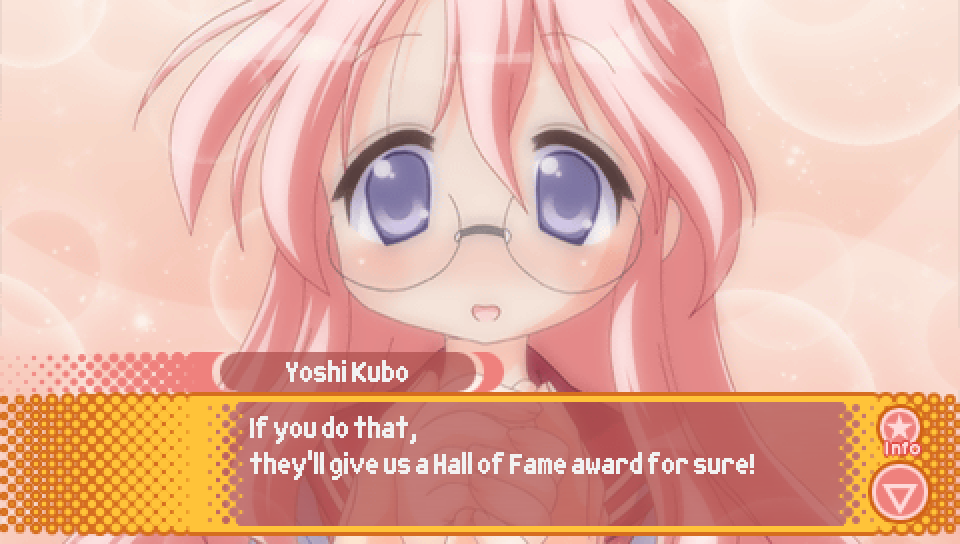
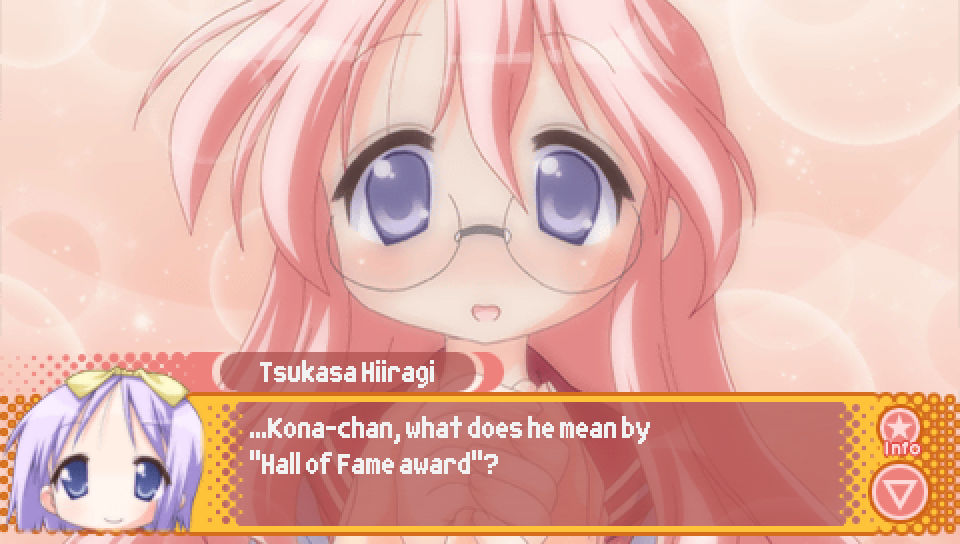
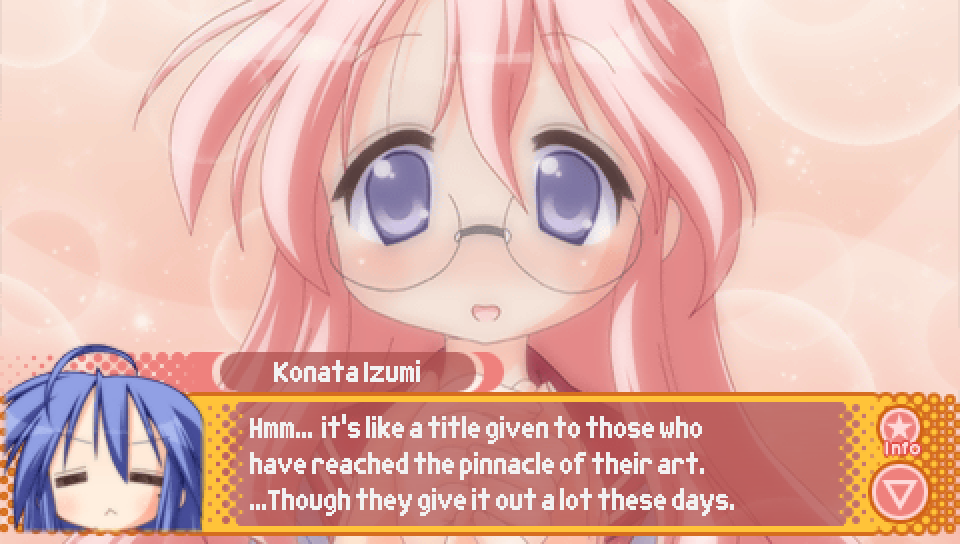
If the protagonist decides to give Miyuki one last pep-talk to cheer her on,
you'll see the above lines as part of that interaction, encouraging her to not give up and
appear in the beauty pageant so that "they'll give us a Hall of Fame award".
The "they" the protagonist is referring to is the Japanese gaming magazine Famitsu,
which has an award called the "Hall of Fame" that is given out to games that receive
a high enough review score from the magazine. Famitsu reviews games using a four-person
system, in which each reviewer gives a 0-10 rating, resulting in a final score of 0-40.
Games that receive at least a score of 30 are eligible to receive a silver, gold, or platinum
medal depending on the specific rating, with scores of 30-31 getting silver, 32-34 getting gold,
and 35-40 getting platinum. Furthermore, games that receive either a gold or platinum medal are
considered inductees into Famitsu's "Hall of Fame".
So, essentially, the protagonist is breaking the fourth wall and suggesting that Miyuki appearing
in the beauty pageant will cause the game to receive a high enough review score from Famitsu
such that they enter the Famitsu Hall of Fame.
As for whether this ended up paying off, unfortunately I could not find any review scores for
Lucky Star: Ryouou Gakuen Outousai from Famitsu or any other Japanese gaming outlet at the time.
However, this inability to find anything likely points to it not being reviewed by Famitsu
or it receiving a score below 30.
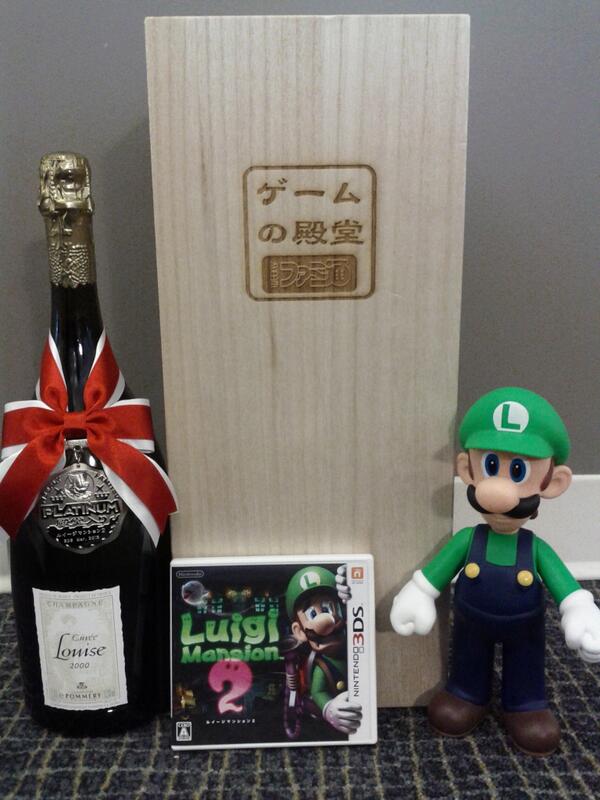
The platinum medal that the Nintendo 3DS game "Luigi's Mansion 2" received from Famitsu.
|
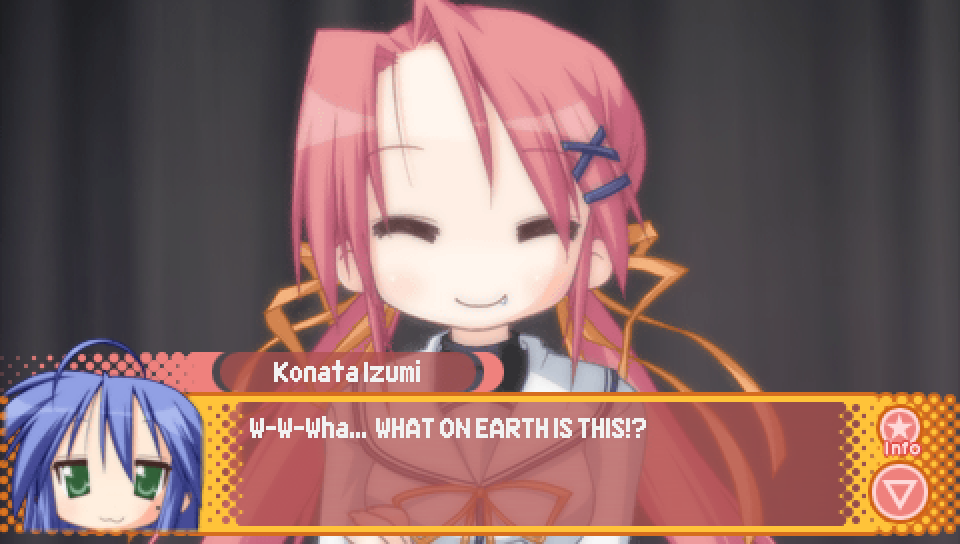
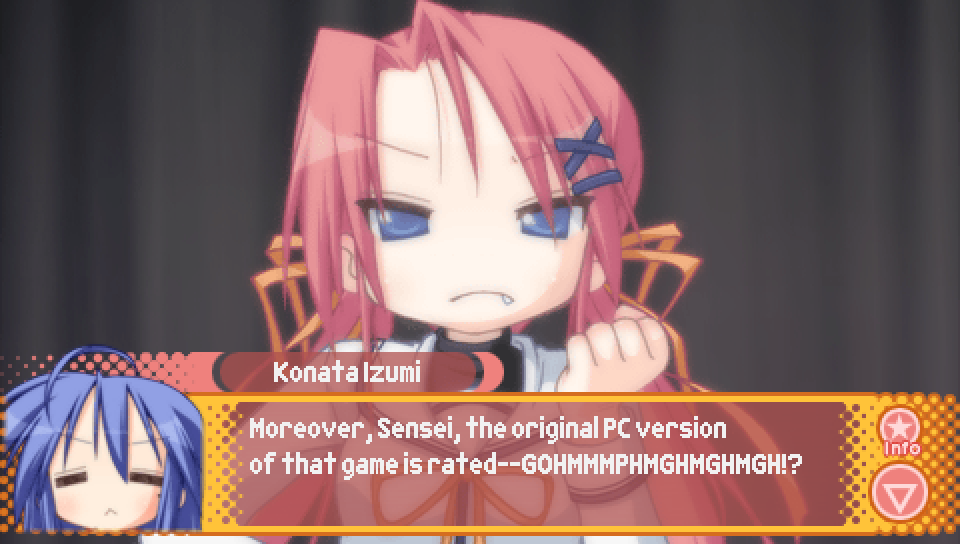
In the neutral good ending of "Girlish Body Restoration ★ Lucky Revo!!", when Nanako shows off her costume
for the beauty pageant, Konata is in a state of total shock and shouts the above line.
This is in reference to a famous moment and line from the detective drama "Taiyou ni Hoero!".
In the final episode in which character Jun Shibata appears, he is shot in a gunfight,
but gets up easily as if it was nothing, frightening his opponent. However, after taking
a look at his hand, bloodied as a result of placing them over his abdomen where he was shot,
Jun begins to properly realize what happened and shouts "nanjya korya!!" (What on earth is this!?),
dying shortly afterwards.
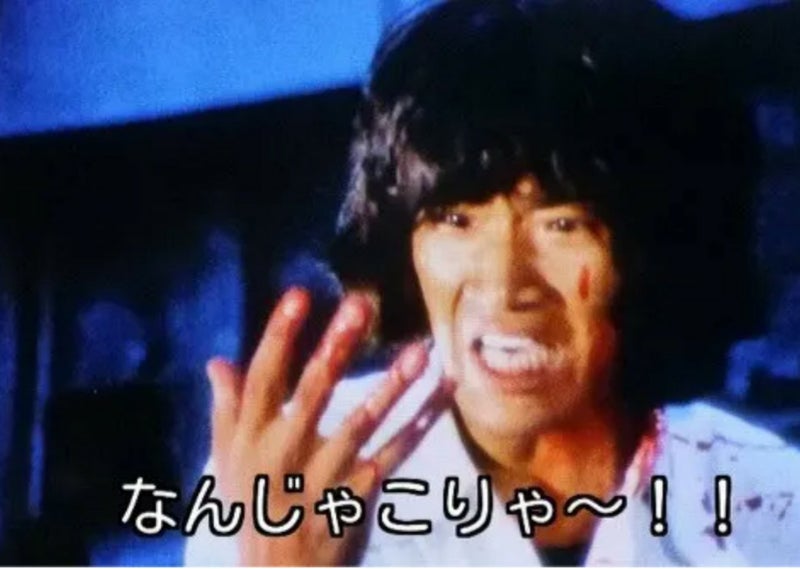
The moment in question can be seen here:
https://www.youtube.com/watch?v=Eh7tzexOilc
|

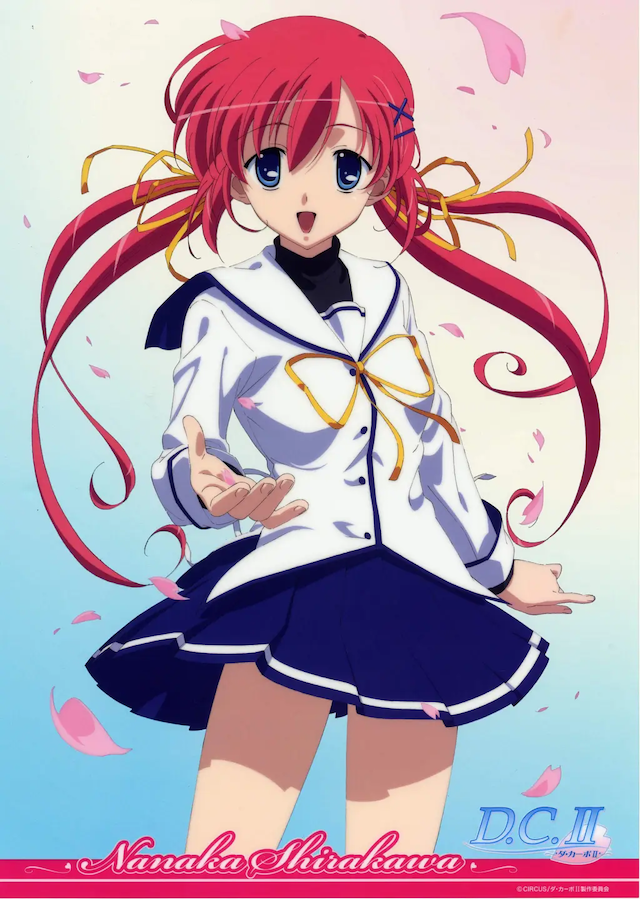
In the neutral good ending of "Girlish Body Restoration ★ Lucky Revo!!", the costume that Nanako wears
for the beauty pageant is a cosplay of the Da Capo II character, Nanaka Shirakawa.
As Konata tries to mention before being stopped by the protagonist, Da Capo II was originally an 18+
visual novel and contained some sex scenes, which is why Konata is so shocked to see Nanako cosplaying
as one of its characters.
|
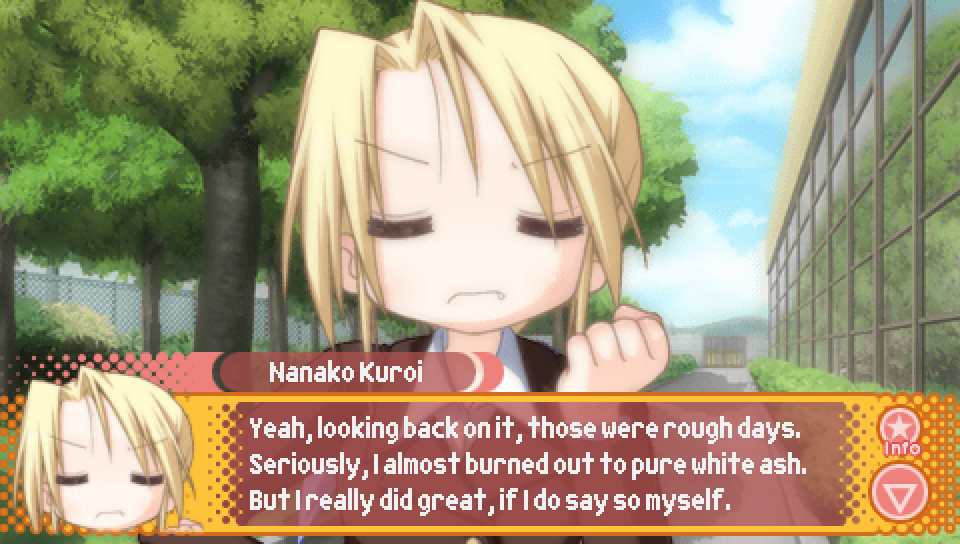
In the Nanako good ending of "Girlish Body Restoration ★ Lucky Revo!!", Nanako says this to the protagonist
as part of the conversation where he congratulates her for winning the beauty pageant.
As mentioned earlier in these notes, "pure white ash" is in reference to the ending of "Ashita no Joe".
|
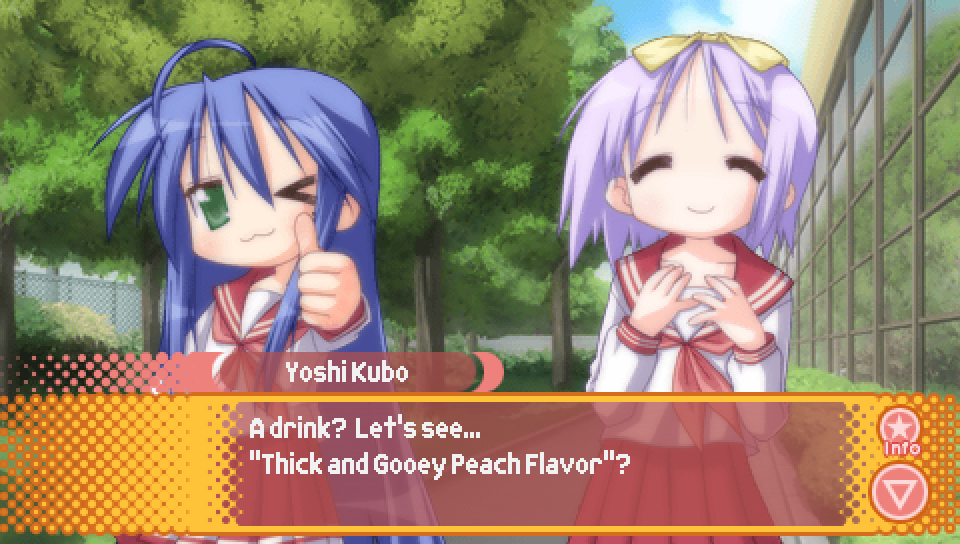
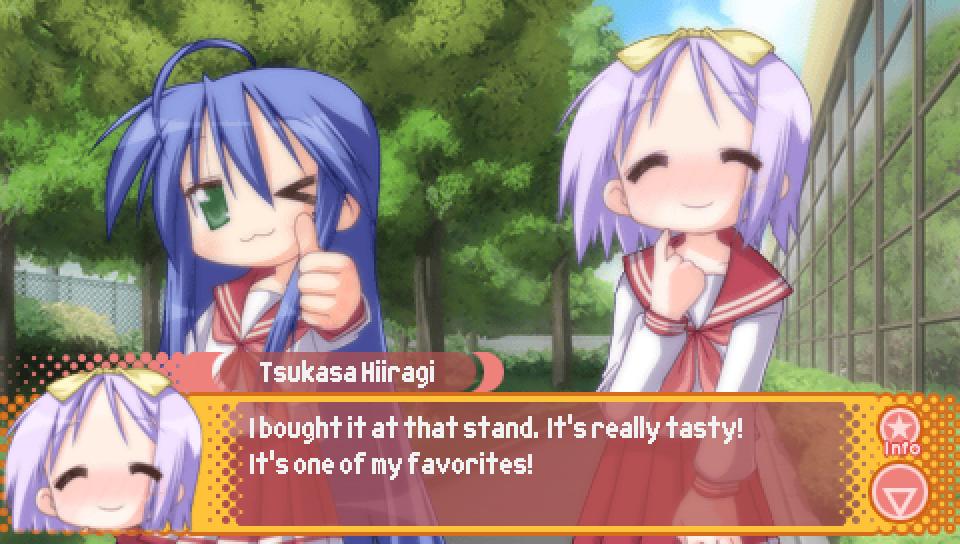
In any of the character-specific good endings of "Girlish Body Restoration ★ Lucky Revo!!", if the protagonist
didn't give Nanako, Miyuki, and Kagami the pills from Fuyuki, whether that be as a result of choosing not to
or from not receiving the pills in the first place, then after congratulating the winner of the pageant,
Konata and Tsukasa will approach the protagonist and Tsukasa will give him a drink.
This drink that Tsukasa gives the protagonist, "Thick and Gooey Peach Flavor", is meant to be the same drink that
Misuzu Kamio gives Yukito Kunisaki in the visual novel "AIR" upon first meeting him. Though it's one of Misuzu's
favorite drinks, Yukito ends up pouring it all out on the ground after being disgusted by its thick consistency.
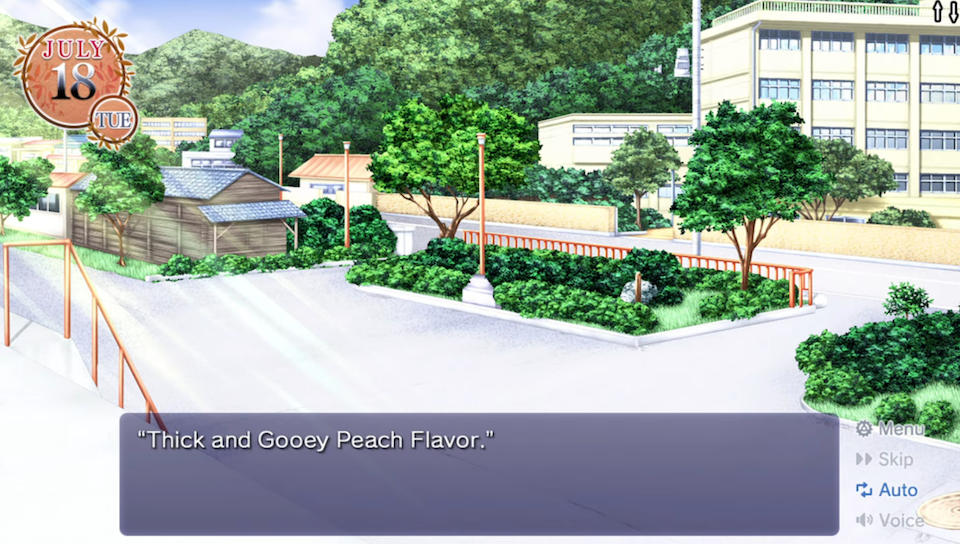
The moment in question can be seen here from 15:20 to 17:20:
https://www.youtube.com/watch?v=uxGvZs1-GYE&t=920s
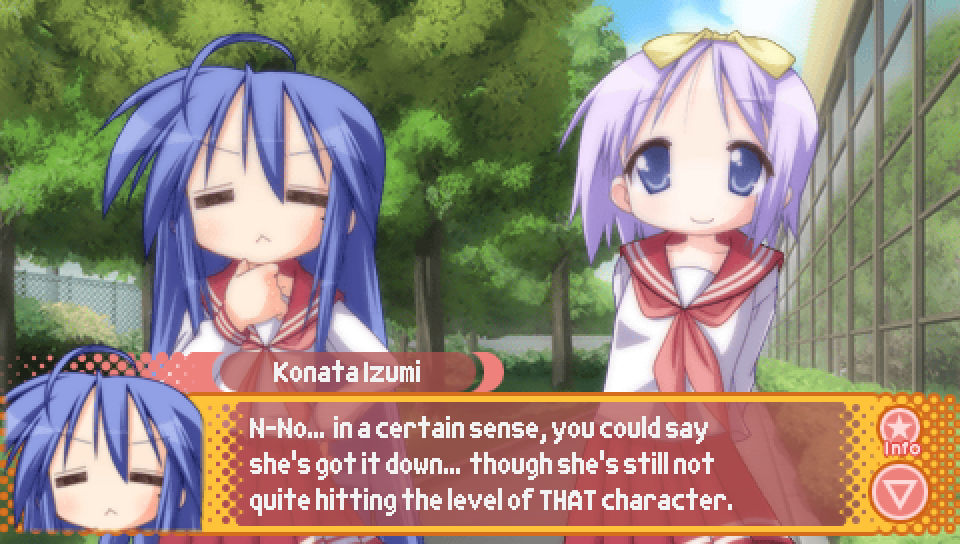
Additionally, when Konata later says Tsukasa "has it down" but not to the level of "THAT character",
she is most likely talking about Misuzu Kamio as well, as both Tsukasa and Misuzu are innocent and naive characters.
|
In any of the character-specific good endings of "Girlish Body Restoration ★ Lucky Revo!!", if the protagonist
didn't give Nanako, Miyuki, and Kagami the pills from Fuyuki, whether that be as a result of choosing not to
or from not receiving the pills in the first place, then after congratulating the winner of the pageant,
Konata and Tsukasa will approach the protagonist and Tsukasa will give him a drink.
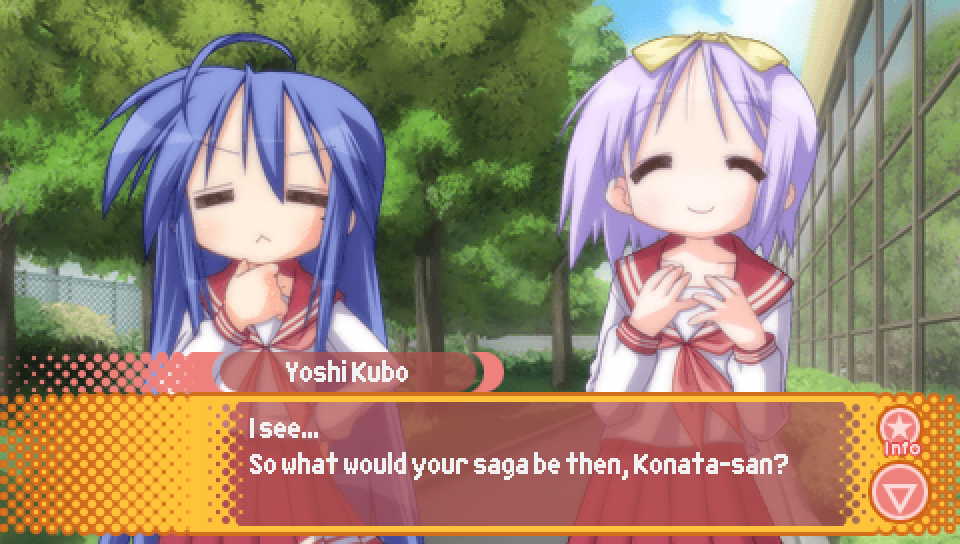
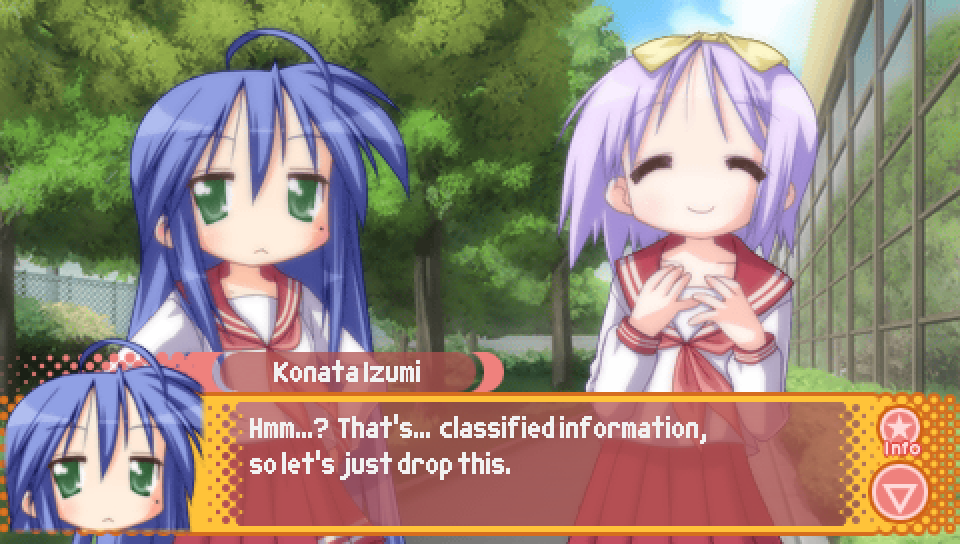
Later on in the conversation, Konata remarks on how being so determined in trying to lose weight is the
"saga" of a woman, and how she could never do such a thing despite being a woman herself. This then prompts
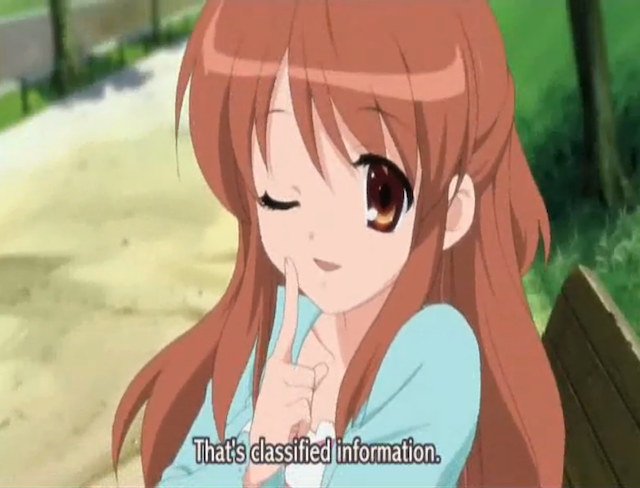
the protagonist to ask Konata what her "saga" would be, to which she responds that it's "classified information".
Though it's a rather minor and inconsequential reference that we've seen previously in Episode 4, for completeness
I'll once again point out that this is a reference to the "Haruhi Suzumiya" series. In that series, the character
Mikuru Asahina is a time traveler from the future who often says that things are "classified information" since she's
not supposed to divulge too many details on what the future is like. However, Mikuru also uses "classified information"
as a fall-back excuse to not explain herself in general, even if it's not necessarily relevant. It's this usage of the term
that Konata is making reference to.
|
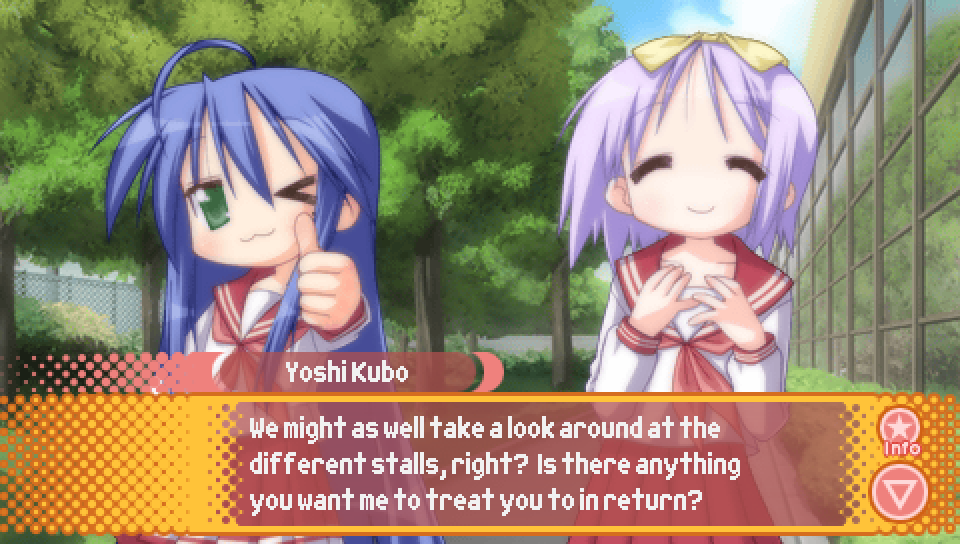
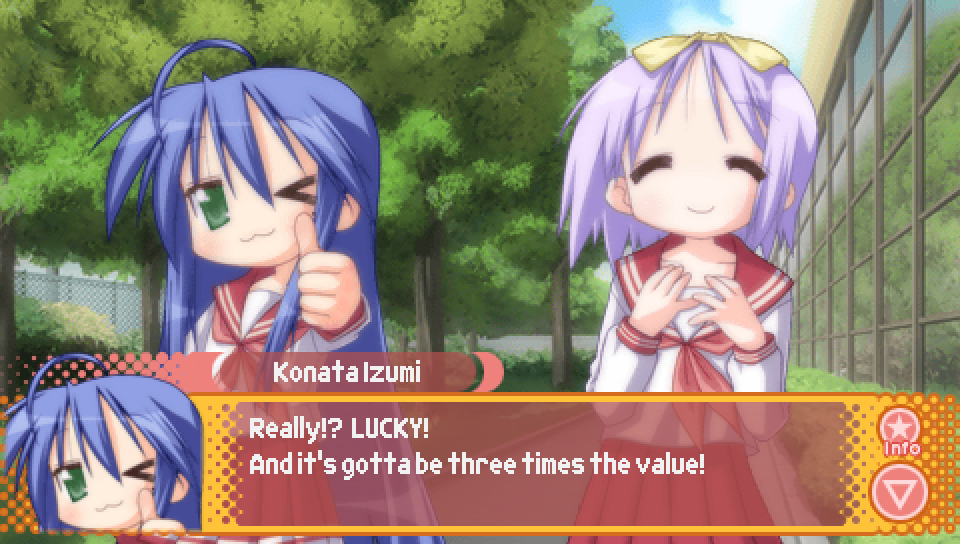
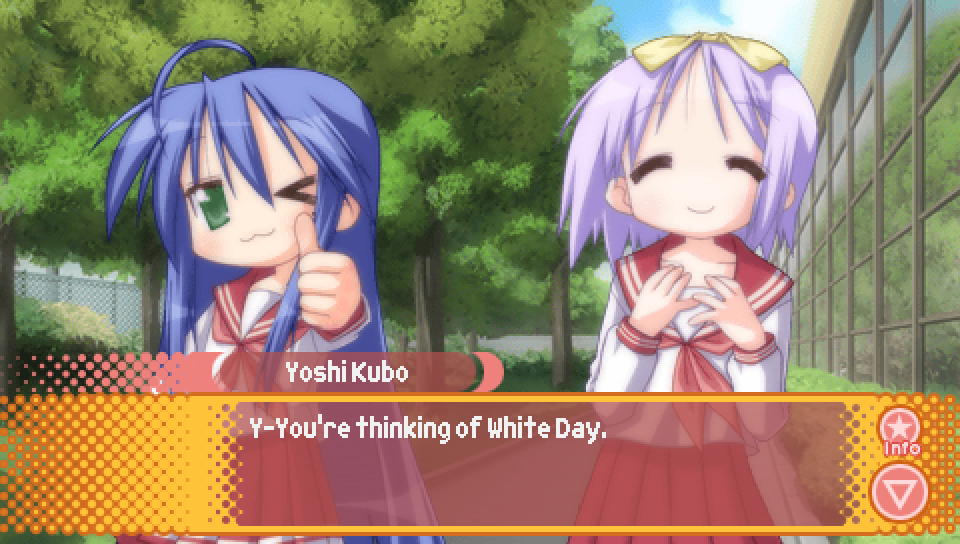
In any of the character-specific good endings of "Girlish Body Restoration ★ Lucky Revo!!", if the protagonist
didn't give Nanako, Miyuki, and Kagami the pills from Fuyuki, whether that be as a result of choosing not to
or from not receiving the pills in the first place, then after congratulating the winner of the pageant,
Konata and Tsukasa will approach the protagonist and give him a chocolate cornet and a drink.
Later on in the conversation, the protagonist offers to treat Konata and Tsukasa to something in order
to return the favor, leading to the above exchange.
White Day is a holiday mostly celebrated in Japan and a few other parts of East Asia and serves as a
follow up to Valentines Day. Unlike in the West, in which Valentines Day can involve people of either sex
showing their appreciation and love for each other, in Japan, Valentines Day is mostly intended for girls
to be the one giving presents. These presents (usually chocolate), are given either to other girls as a sign
of appreciation and friendship, or to boys as an expression of love.
If you are a boy who has been given a present from a girl on Valentines Day, it's tradition in Japan to
return the favor on White Day, which takes place exactly a month after Valentines Day on March 14th.
It's also tradition that the gift the boy gives to the girl is three times the value of the gift he receieved,
which is what Konata is referring to.
|
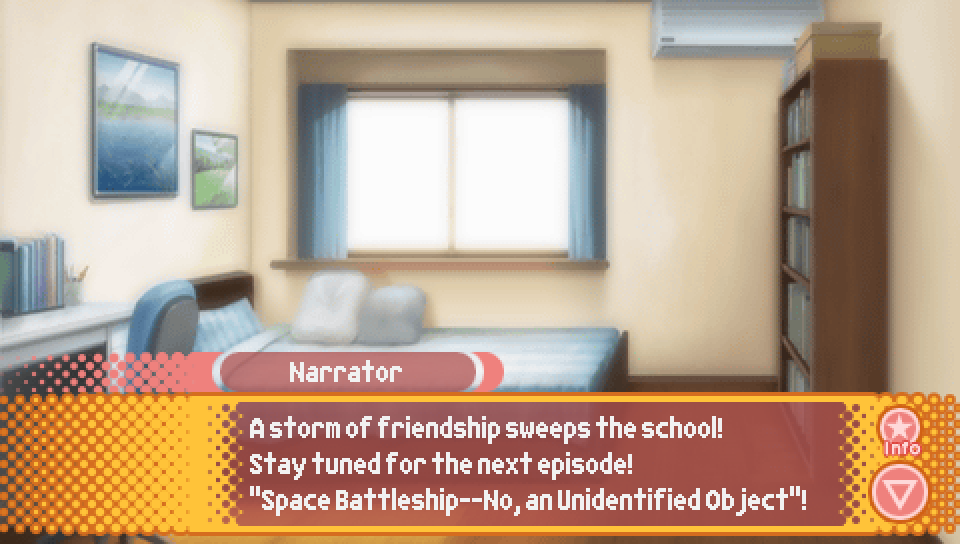
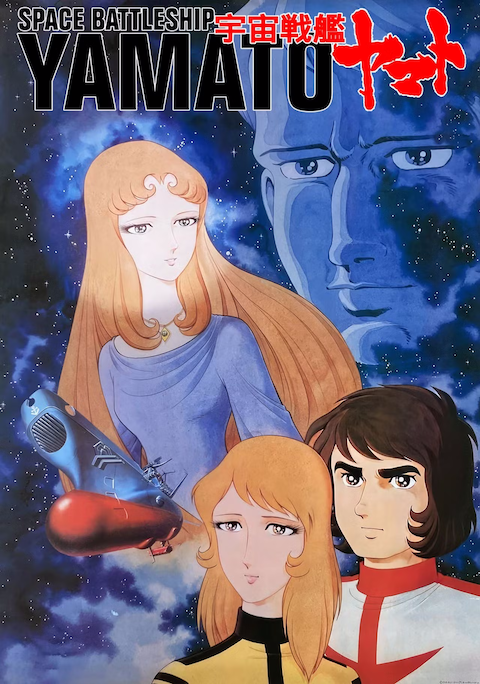
In the ending scene, the name of the next episode of Kyluc★Star, "Space Battleship--No, an Unidentified Object",
is a reference to the series "Space Battleship Yamato". The reason for this should be obvious if you think about it,
but I will refrain from explaining further due to the fact that further explanation would involve giving spoilers.
|
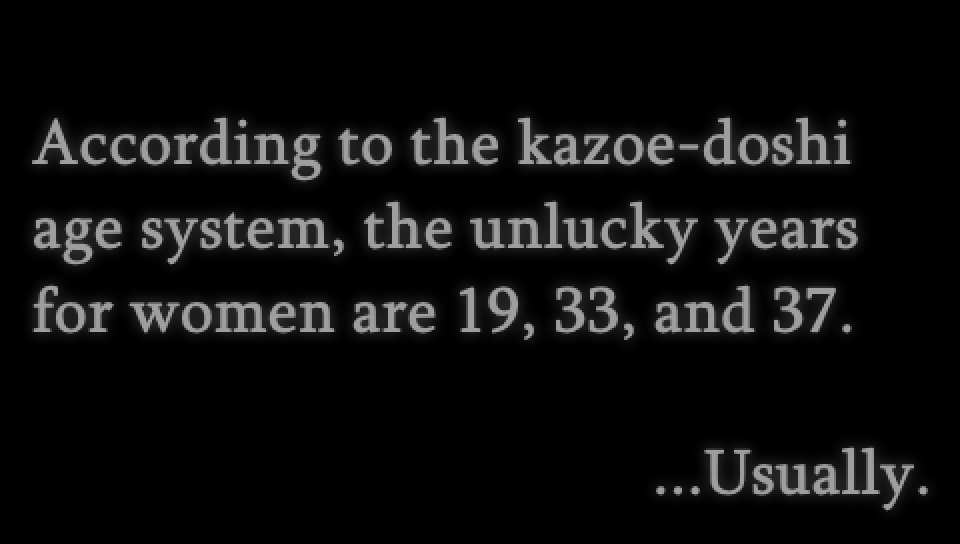
At two points in the Nanako mini scenario, this CG is shown on screen in response to Nanako claiming
that being 27 years old is an unlucky year. The "kazoe-doshi" (literally "counting year") age system
refers to a traditional method of calculating age in Japan, in which each person starts out as 1 year old
when they are born, as opposed to being 0 years old at birth like is done today. Additionally, unlike how
it's done today where your age goes up by one on the day of the year in which you were born,
in this kazoe-doshi system, your age goes up by one at the start of the new year, regardless of when
in the year you were born. This effectively makes everyone born in a given year the same age,
which made things a bit more convenient back then when it came to keeping track of people's ages.
As the above CG explains, there are certain years within this system that are considered unlucky.
For women, it's 19, 33, and 37, with 33 being considered especially unlucky.
For men, the unlucky years are 25, 42, and 61, with 42 being considered especially unlucky.
|
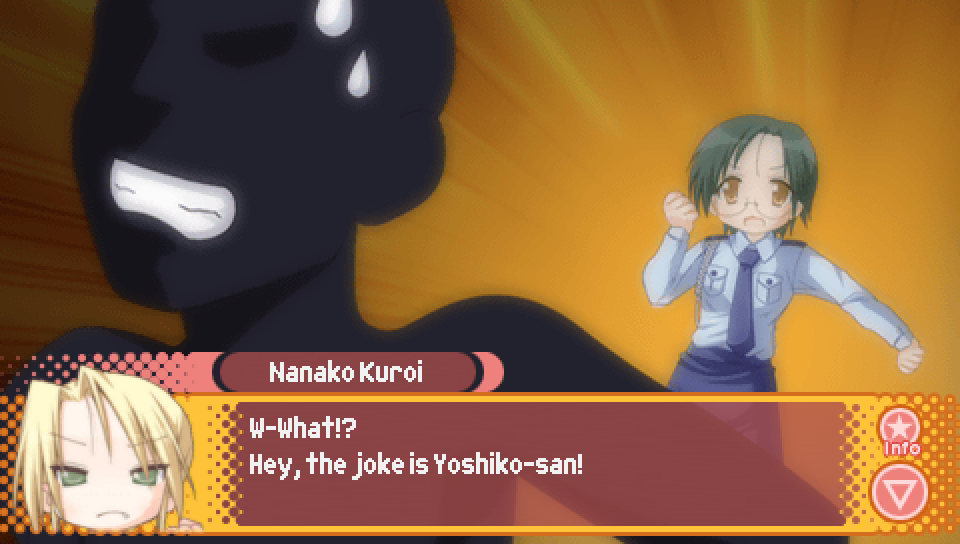
In the Nanako mini scenario, when the serial warehouse thief is running towards her,
Nanako says this peculiar line in disbelief.
You're likely wondering who this "Yoshiko-san" is, or what the expression "the joke is Yoshiko-san" even means.
Put simply, it's not actually referring to a specific person, but it's instead sort of a "dad joke" type expression
in Japanese that basically means "quit joking around". It's a play on the expression "jyoudan wa yoshite"
(stop joking) but you change "yoshite" to "Yoshiko-san". It's not something that can be easily appreciated unless
you understand Japanese and the Japanese sense of humor, but it's going for a similar kind of humor that you'd get
from saying "I checked my watch, and it doesn't say it's joking time!" in English.
The reason I decided to keep the expression as-is instead of changing it to something more easily understood
by English speakers is because this particular expression has an association with the 1980s due to it being
at its peak popularity during this time. As such, it serves the purpose of dating Nanako, since she grew up
during this time period.
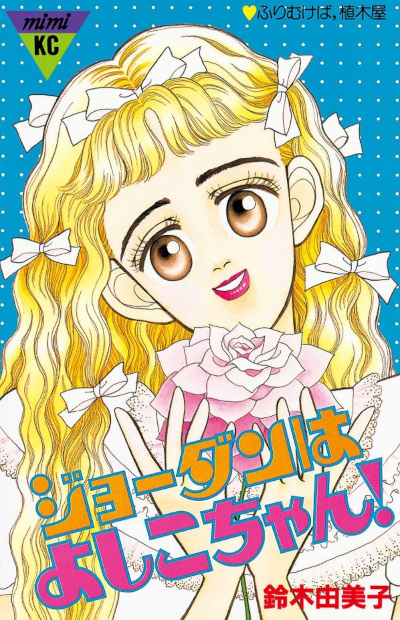
As for the expression's origin, this appears to be unclear. There is a manga from 1986 titled
"Jyoudan wa Yoshiko-chan" (Jordan is Yoshiko-chan) where people are unsure whether the expression came first
and the manga's title is a pun based on it, or if the manga came first and the expression is a pun based on the
manga's title. The possible connection to this manga is another reason I've chosen to keep the expression unchanged.
|
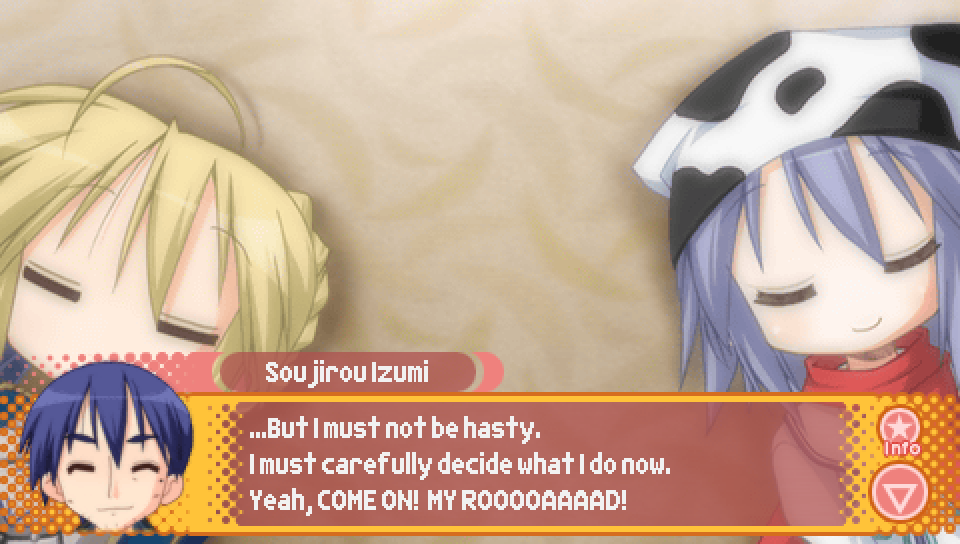
In the Soujirou mini scenario, prior to laying down in between Konata and Yutaka,
Soujirou shouts "Come on! My Road!" for no apparent reason.
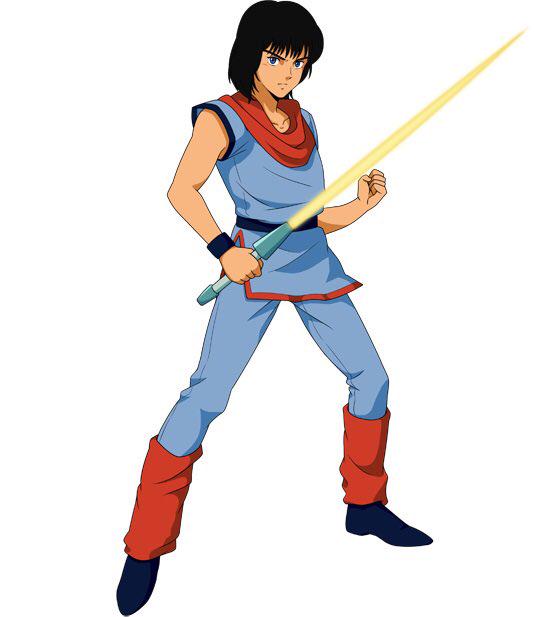
This is in reference to the fact that Soujirou's voice actor, Hirokazu Hiramatsu, also voiced the character
"Daba Myroad", the protagonist of the anime "Heavy Metal L-Gaim". However, while the character is referred to
and best known as "Daba Myroad", part of the story of "Heavy Metal L-Gaim" is that Daba's real name is actually
"Kamon Myroad". Soujirou's shouting of "Come on! My Road!" is a joke about how "Kamon Myroad" sounds just like
the English "come on, my road".
|
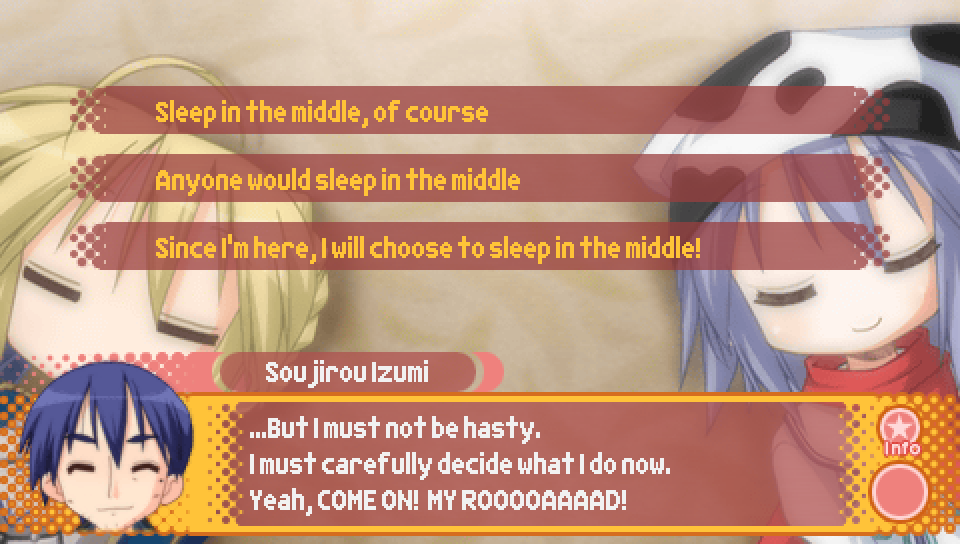
The third option in the Soujirou mini scenario for the fake choice before Soujirou decides to sleep
between Konata and Yutaka on the floor is a reference to an infamous line from the infamously bad
Sega Saturn game called "Death Crimson".
As mentioned in the translator's notes for Episode 4, Death Crimson is a rail shooter that was
released only in Japan, and is remembered by Japanese people as one of, if not the, worst game on
the Sega Saturn.
The line in question comes from the game's opening cutscene, in which protagonist Kousuke Echizen,
while fighting in the army under the coe name "Combat Echizen", comes across some ancient ruins
and decides to open a "red door". In Japanese he says "せっかくだから俺はこの赤の扉を選ぶぜ!"
(sekkaku dakara ore wa kono aka no tobira o erabuze!), which can be translated as
"Since I'm here, I will choose the red door".
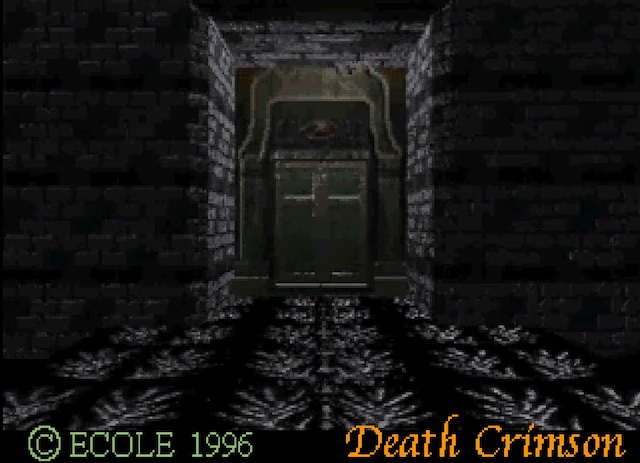
This line is famously associated with Death Crimson due to the "since I'm here" part of it
being rather nonchalant given Echizen had supposedly just survived passing through enemy gunfire.
Additionally, given that there is only one door that appears in the scene, which is not even red,
but simply has a red jewel above it, for him to say that he is "choosing" the "red" door comes across
as very strange. Lastly, there's just the general idea that this line exists as part of a game that's
very bad in myriad other ways,and the line is delivered with poor voice acting and with goofy music
playing in the background.
The opening cutscene to "Death Crimson", which contains this infamous line can be seen here.
The line itself occurs at 2:03.
https://www.youtube.com/watch?v=BOz1mSvrAys
|
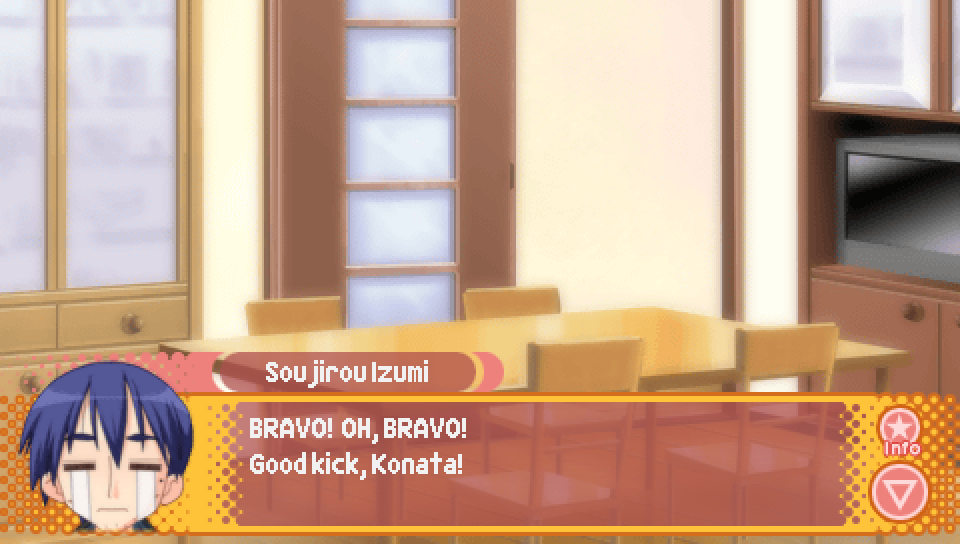
In the Soujirou mini scenario, after Konata kicks Soujirou for sleeping in between her and Yutaka,
Soujirou says the above line.
As mentioned in the translator's notes for Episode 4, the "Bravo! Oh, bravo!" is a reference to a
famous line said by the character Polnareff from part 3 of "Jojo's Bizarre Adventure", "Stardust Crusaders".
In the chapters where Polnareff is introduced, "Steel Chariot" parts 1 through 3, an ally of Joseph Joestar,
Avdol, battles against Polnareff. After being hit by a powerful fire attack from Avdol's stand,
Joseph and crew think Polnareff is dead. However, all of a sudden, the armor of Polnareff's stand,
Steel Chariot, is blown off in explosive fashion and Polnareff goes flying into the air.
It's while in the air that Polnareff says the "Bravo! Oh, bravo!" line mentioned above.
Upon returning to the ground, Polnareff reveals that Steel Chariot's armor sustained the attack,
leaving himself relatively unharmed.
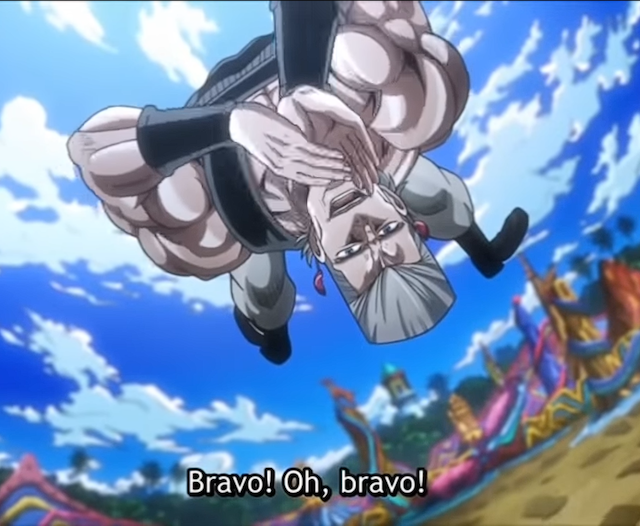
A clip from this scene can be viewed here.
https://www.youtube.com/watch?v=WqlSgzFSTMQ
|
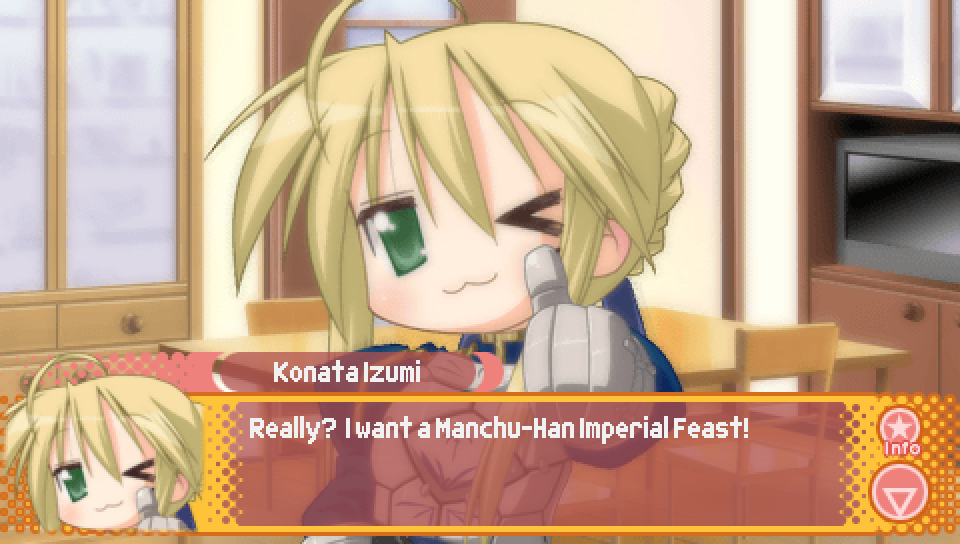
In the Soujirou mini scenario, when Soujirou suggests that they eat out, Konata says that she wants
a "Manchu-Han Imperial Feast".
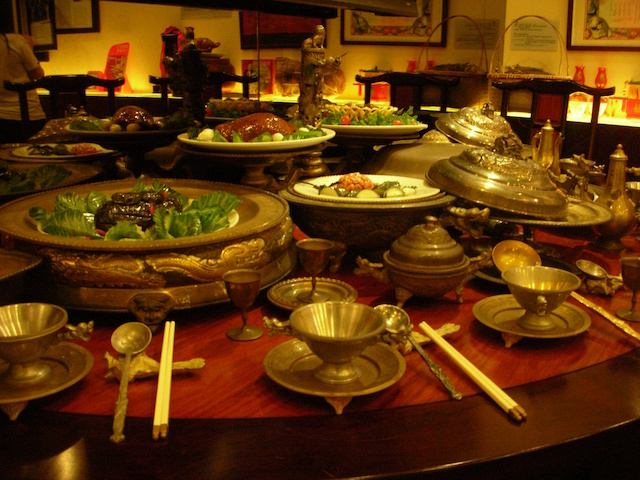
A Manchu-Han Imperial Feast refers to a legendary banquet said to have occurred during
the Qing dynasty in China consisting of 108 dishes and served over three days. Due to the
incredible size of the feast and due to some of its dishes using endangered species, one cannot
realistically enjoy such a feast in the modern day, though some restaurants may offer meals based on it
that are of a more reasonable size.
In Konata's case, however, she is likely just saying this to be hyperbolic.
|
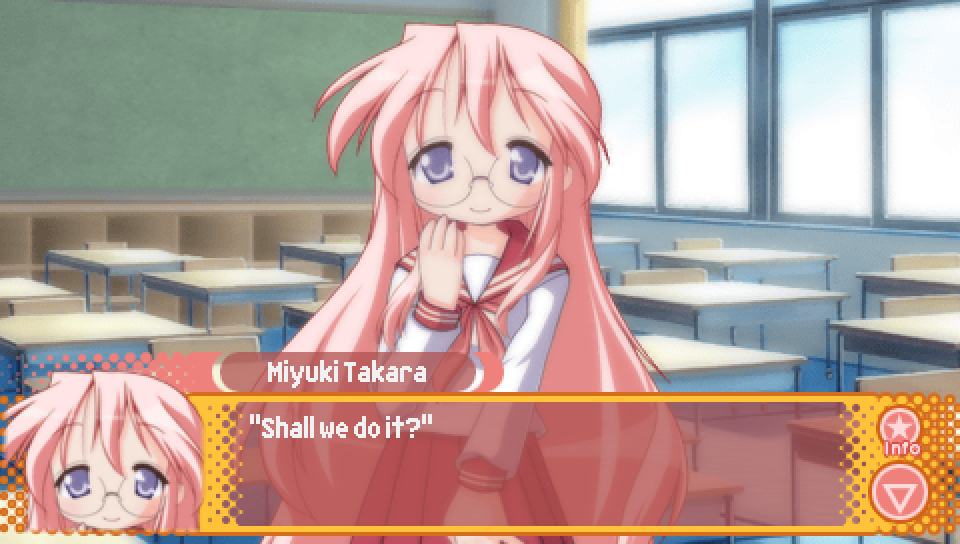
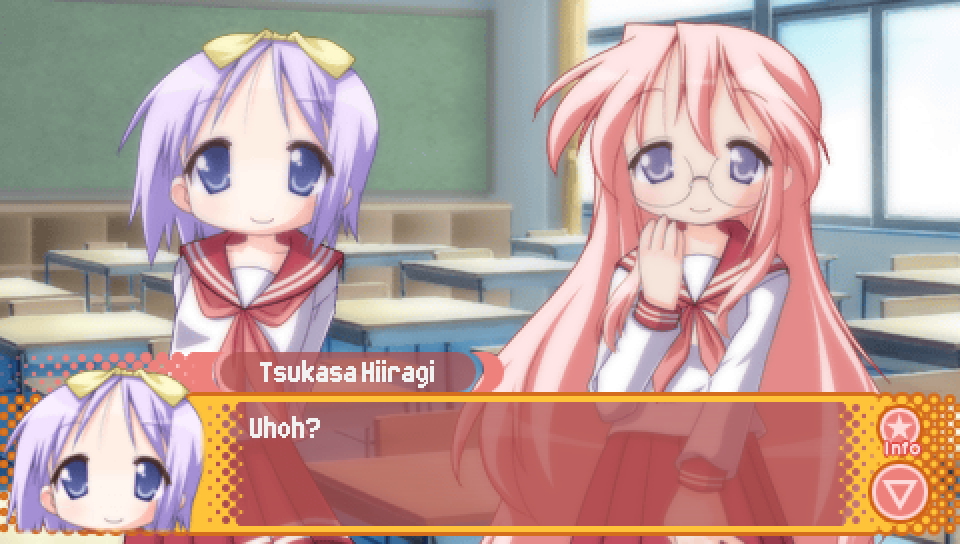
These above lines appearing in both the Kagami and Konata mini scenarios, in which Miyuki
repeats the subject line of Konata's email to Kagami, followed by Tsukasa's reaction,
are both in reference to the infamous homosexual pornographic manga one-shot, Kuso Miso Technique.
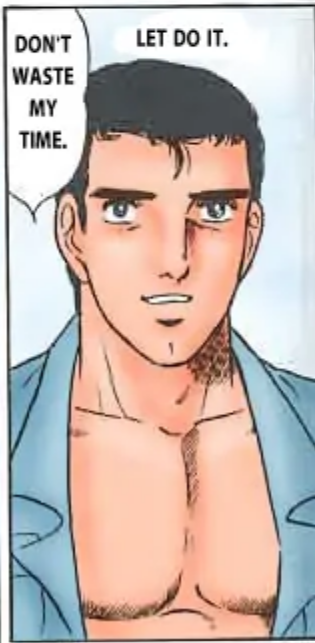
As mentioned in the translator notes for Episode 3, the line "Shall we do it?" comes from the
opening scene, in which Takakazu Abe greets Masakichi Michishita by unzipping his jumpsuit
revealing his genitalia before saying the line in question as an invitation to have sex with him.
Note that the "Let do it." below is just the result of poor translation. It is normally referenced
either by keeping it in Japanese as "yaranaika" or by translating it as "shall we do it?".
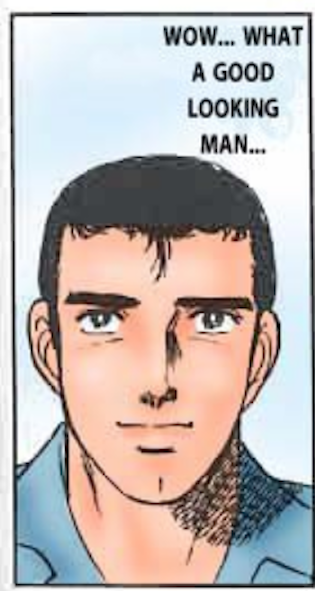
Tsukasa's reaction of "Uhoh" is also in reference to Kuso Miso Technique, with it being a portion of
a line Takakazu Abe says on the page before the "Shall we do it?" line, occurring when Abe first notices
Masakichi Michishita. The full line he says is translated in English as "Wow... what a good looking man",
but in Japanese the "wow" is instead (ウホッ) "uhoh". This particular interjection written this particular way
is strongly associated with this line from Kuso Miso Technique in Japanese internet culture.
|
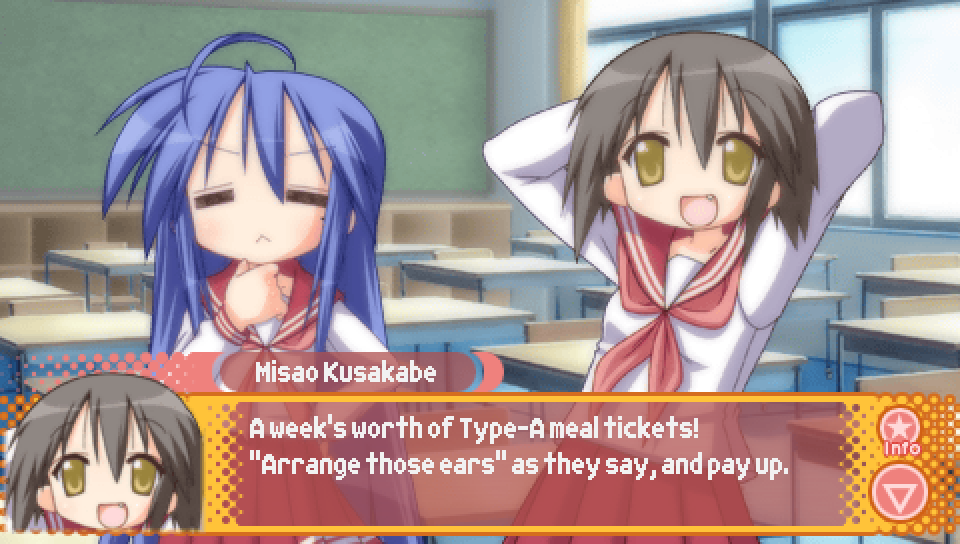
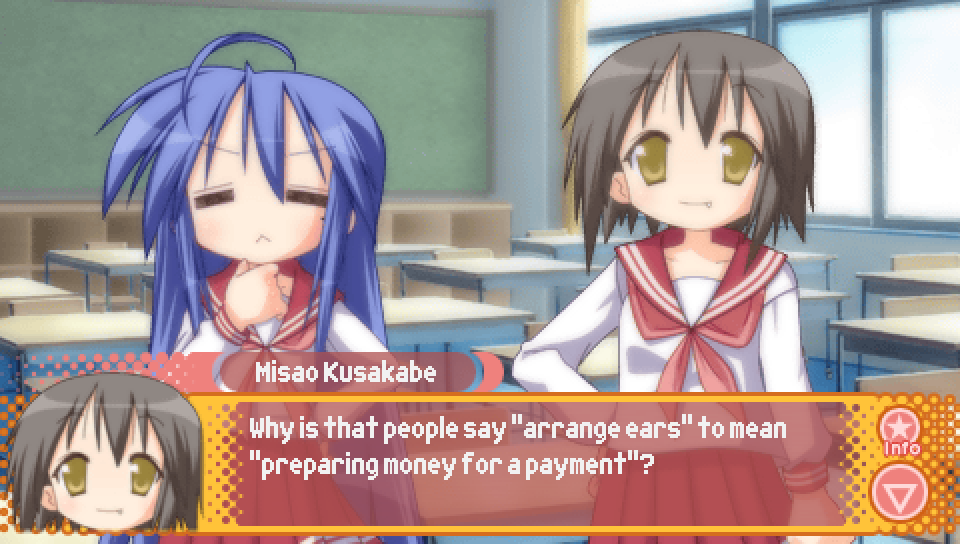
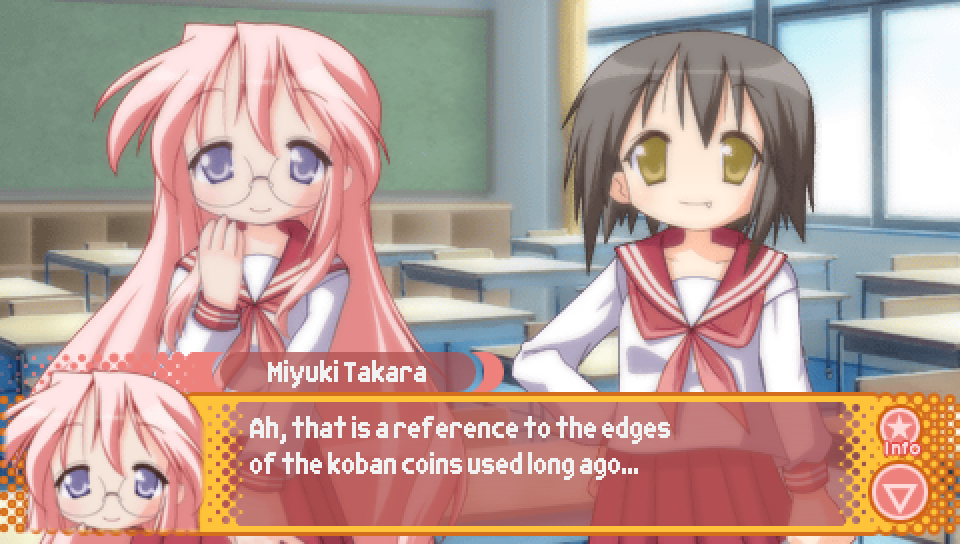
Though this is partially explained by Miyuki in the game itself, this moment from the Kagami mini scenario
when Kagami chooses not to kiss Konata revolves around a certain Japanese expression,
"耳をそろえる" (mimi o soroeru). This literally means "to arrange ears", but has the actual meaning of
putting together the necessary amount of money in order to pay for something. The word for "arranging"
and "putting things together" are both そろえる (soroeru), so that part should hopefully make sense.
However, what's probably not so clear is why money would be referred to as "ears". Well, like Miyuki says,
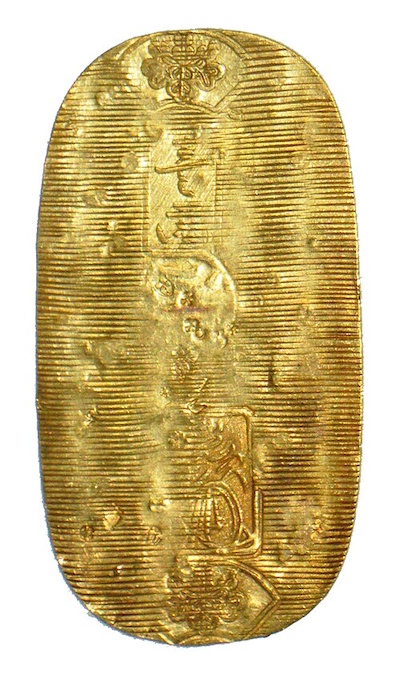
during the Edo period of Japan, there was a type of oval gold coin used as currency called the koban.
The edges of these coins were called the "ears" since the flat side of the coin was considered it's "face",
and the ears on a human face are located on the "edge" of the face. In general, Japanese as a language has
a trend of calling the edges of certain flat objects the "ears". Another example is that the crust of
a bread slice is called its "ears" as well.
So, if you were going to use koban coins to pay for something, you might stack the coins one by one to make
sure you're paying the right amount. In doing so, you would be aligning or "arranging" the edges or "ears"
of the coins.
|
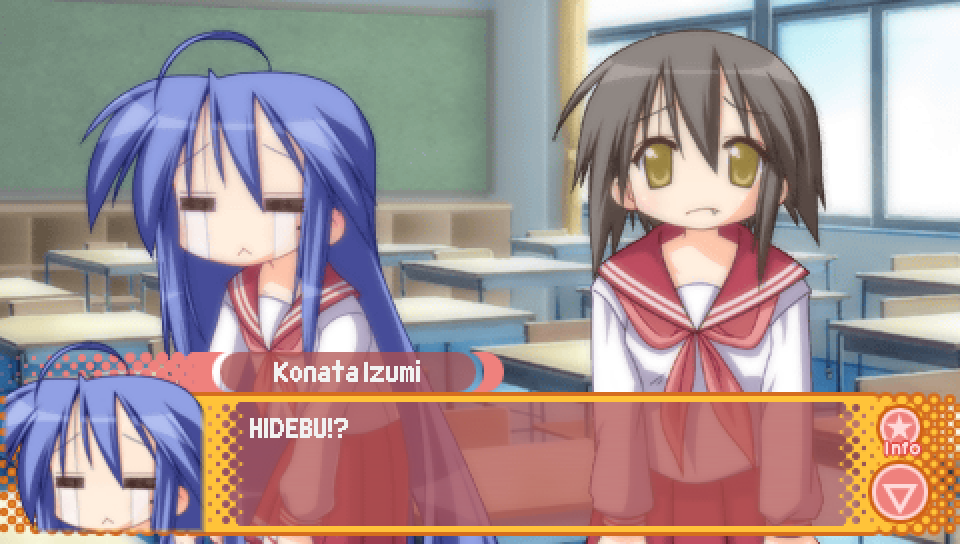
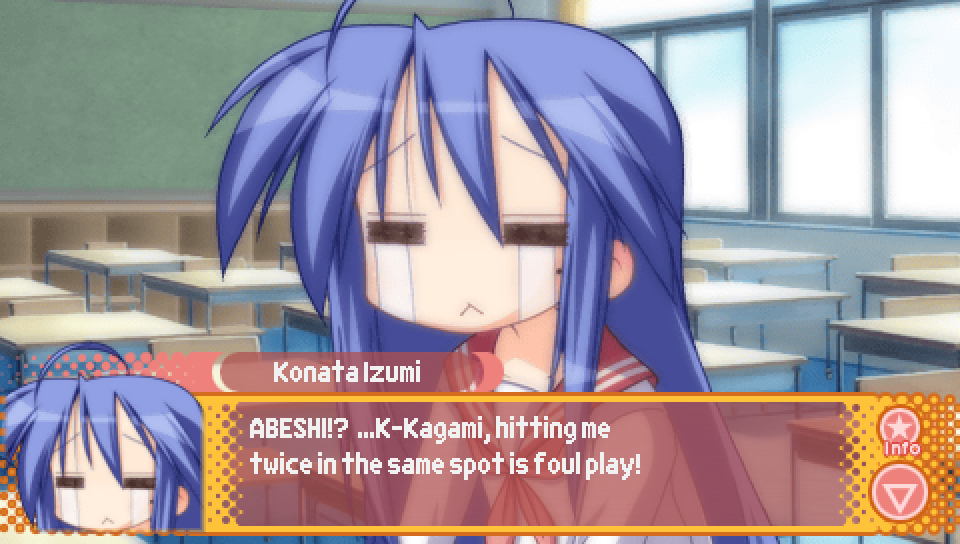
The above utterances of "HIDEBU" and "ABESHI" made by Konata as she is hit by Kagami during the
Kagami mini scenario if Kagami chooses to kiss Konata are in reference to "Fist of the North Star",
as explained earlier in these notes.
|
|